What’s up everyone, and thanks for stopping by today’s blog. If you’ve ever worked in aerospace, medical devices, high-end manufacturing, or even energy tech, you’ve probably stumbled across refractory metals at some point. Maybe you needed a part that had to survive intense heat, extreme pressure, or super corrosive environments, and you heard folks tossing around names like tungsten, molybdenum, tantalum, niobium, rhenium, or even osmium. These aren’t your average everyday metals—they’re the tough guys of the metal world, built to hold their own when regular steel or aluminum would melt like butter. But here’s the thing: even the toughest refractory metals don’t always work right out of the furnace. That’s where heat treatment comes in. And as a heat treatment supplier that’s been in the game for years, I’m here to break this down like we’re chatting over a coffee, no stuffy textbook jargon (promise). Heat Treatment

First off, let’s get the basics straight, no confusion here. Refractory metals are officially defined as metals with an extremely high melting point—usually 2,000°C (3,632°F) or higher, which is way hotter than what most standard heat treatments use on regular metals. Tungsten, for example, melts at a wild 3,422°C (6,192°F)—that’s like twice the temperature of lava. Molybdenum isn’t far behind at 2,623°C (4,753°F). Tantalum, niobium, and rhenium round out the main crew, each bringing their own superpower to the table. The problem? As awesome as they are raw, they’re often too brittle, too soft, or prone to weird defects from manufacturing processes like forging, casting, or welding. That’s where heat treatment steps in—it’s not just “heating metal up real hot.” It’s a controlled process that tweaks the metal’s microstructure, fixes flaws, and makes it actually usable for real-world jobs.
Let’s talk about why heat treatment for refractory metals is different from, say, heat treating a car part or a kitchen appliance steel. Regular metals might only need heating to a few hundred degrees, hold it for a while, then cool at a set rate. Refractory metals? We’re dealing with temps that can hit 2,500°C or more, which means every step has to be hyper-controlled. Air is basically the enemy here too—at super high temps, these metals oxidize like crazy. Tungsten will turn into powdery tungsten oxide if you heat it up in open air, which is useless for parts that need to be strong. So we work in atmospheres like pure argon, vacuum, or even high-purity hydrogen to stop oxidation dead in its tracks. That’s a big part of what makes our job different—we can’t skip the atmosphere part, or we ruin a $10,000 part before we even get to the fun stuff.
Now, what are the actual heat treatments we use for these bad boys? Let’s go through the main ones, keep it simple. First up, annealing. This is probably the most common one, and it’s all about making the metal less brittle and more workable. For refractory metals, annealing usually means heating them to just below their melting point—like, for molybdenum, we might heat it to 1,800°C (3,272°F) in a vacuum, hold it there for a few hours, then cool it slowly. This relieves all the stress that builds up when we forge or bend the metal, and it turns that super brittle raw material into something that can be machined or formed without cracking. I remember a customer a few years back who was trying to machine a tungsten component for a rocket nozzle—he kept snapping parts because the raw tungsten was way too brittle. We annealed it for 4 hours, and suddenly he was running 10x more parts without a single break. That’s the difference right there.
Next, there’s quenching. Wait, hold on—quench is usually for hardening, right? For refractory metals, quenching is a bit different, but it still has its place. Some refractory alloys, like tungsten heavy alloys (which are mixed with nickel, copper, or iron), can be quenched from high temps to get a specific combination of strength and hardness. We heat the alloy up to around 1,400°C, then dunk it in oil or water (yes, even at those temps, we use specialized quenching fluids) to cool it fast. This locks the microstructure in a way that makes it way stronger than the annealed version. We use this a lot for parts like radiation shields or electrical contacts that need to handle a lot of wear and tear.
Then there’s surface treatment heat treatments, which are super important for parts that have to deal with harsh environments. Tantalum is great for corrosion, but if you need a refractory metal part that’s going to be in a chemical plant or a high-voltage electrical system, you might need to coat it or change the surface properties. For example, nitriding—we heat niobium in a nitrogen-rich atmosphere to around 1,000°C, and nitrogen atoms diffuse into the top layer of the metal, making it way harder and more resistant to wear. Or carburizing, for tungsten parts—adding carbon to the surface makes the outer layer harder, perfect for components that rub against other parts at high speeds. We also do something called thermal spraying, where we heat a coating material (like titanium carbide) until it’s molten, then spray it onto the refractory part to add an extra layer of protection. This is used a ton in aerospace turbine parts, where the blades have to survive both heat and friction.
Wait, I can’t skip over something called recrystallization heat treatment—this is a big one for refractory metals because they’re prone to something called “cold working.” If you bend or stretch a refractory metal when it’s cold, it gets work-hardened, which makes it super brittle. Recrystallization treatment heats the metal high enough that the deformed grains in the metal’s structure break apart and form new, strain-free grains. For example, niobium used in superconducting magnets is often cold-worked to get the right shape, then we do a recrystallization anneal at around 1,200°C to make sure it’s not brittle when it’s being assembled into the magnet. If we skip that step, the magnet would crack during assembly, and that’s a huge waste—superconducting niobium parts are not cheap, I can tell you that.
Now, let’s talk about what can go wrong, because heat treatment for refractory metals is tricky. Like I said earlier, oxidation is the biggest pain point. If even a tiny little leak in our vacuum furnace lets air in when we’re heating tungsten, we get that powdery oxide, and the part is trash. Another issue is grain growth—if we hold the metal at high temps too long, the grains get way too big, which makes the part weaker and more prone to cracking. We have to monitor the time and temperature super closely, sometimes to the minute. And then there’s contamination—any impurity in the atmosphere, even something as small as a water molecule, can react with the refractory metal and ruin its properties. That’s why we use ultra-high-purity atmospheres, and our furnaces get checked and calibrated every single week, no exceptions.
Over the years, we’ve worked with all kinds of clients, from big aerospace companies making rocket engine components to small medical device shops needing tantalum implants. Let me tell you a quick story that shows why this matters so much. A couple years back, a startup that makes satellite parts hit us up. They had a component made from molybdenum that had to survive being launched into space—shock, vibration, and temps that swing from -200°C to +1,500°C on orbit. They tried annealing it themselves in a regular box furnace, and the part came out pitted and brittle, because their furnace had air in it. They sent it to us, we did a high-vacuum anneal at 1,900°C, held it for 3 hours, slow-cooled it, and suddenly the part passed all their space qualification tests. That’s the value of specialized heat treatment—we know these metals, we know their quirks, and we avoid the mistakes that people make when they try to do this in their own shop.
Now, if you’re reading this, you might be thinking, “When would I need heat treatment for refractory metals?” Let’s list some common use cases, just to give you an idea. Aerospace: rocket nozzles, turbine blades, heat shields for re-entry vehicles. Medical: tantalum implants for bone replacement, because tantalum is biocompatible and corrosion-resistant, and heat treatment makes it strong enough to last decades. Energy: components for nuclear reactors, because refractory metals can handle high radiation and heat, or parts for solar thermal systems that get super hot. Industrial: crucibles for melting other metals (you need a crucible that doesn’t melt itself), welding electrodes that handle high current, or high-temperature furnaces parts.
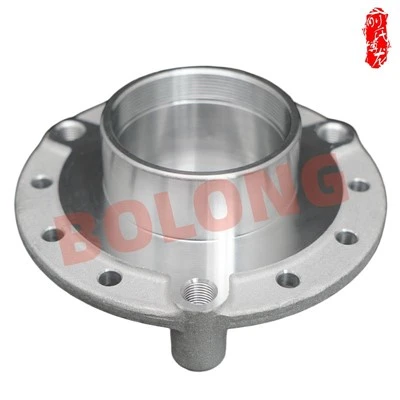
Here’s the thing I want you to take away: refractory metals are game-changers for industries that need extreme performance, but their raw form is not always ready to work. Heat treatment is the secret sauce that turns a good metal into a great part. It’s not just heating stuff up—it’s a precise, controlled process that changes the metal at the microscopic level, making it stronger, less brittle, more corrosion-resistant, or whatever you need for your application.
Process If you’re working with refractory metals right now, or if you have a project that needs a part that has to survive tough conditions, I’d be happy to chat. We’ve got the furnaces, the expertise, and the attention to detail to get the heat treatment right the first time, no messed up parts, no wasted time or money. Whether you’re a small shop testing a new design or a big company needing high-volume production, we can work with you to figure out exactly what heat treatment your metal needs to perform how it should. Just reach out, and we can talk through your project, answer any questions you have, and get you on the right track.
References
- Ashby, M. F., & Jones, D. R. H. (2012). Engineering Materials 1: An Introduction to Properties, Applications, and Design. Butterworth-Heinemann.
- Brandes, E. A., & Brook, G. B. (1992). Smithells Metals Reference Book. Butterworth-Heinemann.
- Frost, P. D., & DeHoff, R. T. (2002). Heat Treatment of Refractory Metals and Alloys. Journal of Materials Engineering and Performance.
- Kim, Y. W., & Hanada, S. (2005). Refractory Metals and Alloys: Processing, Properties, and Applications. Materials Science and Engineering: A.
- Kluge, R. (1990). Vacuum Heat Treatment of Refractory Metals. Vacuum.
Ningbo Fenghua Bolong Machinery Manufacturing Co., Ltd.
Ningbo Fenghua Bolong Machinery Manufacturing Co., Ltd. is one of the most professional heat treatment manufacturers and suppliers in China, also supports high quality customized service. With abundant experience, we warmly welcome you to buy durable heat treatment made in China here from our factory.
Address: No. 27 Hehai Road, Binhai New Area, Fenghua Economic Development Zone, Ningbo City, Zhejiang Province
E-mail: seven@nbbolongmachinery.com
WebSite: https://www.nbbolongmachinery.com/
