A typical arbor press is a versatile and essential tool in many workshops, manufacturing facilities, and even home garages. As a supplier of arbor presses, I have in – depth knowledge of their dimensions, which play a crucial role in determining their functionality, usability, and suitability for various applications. Arbor Press
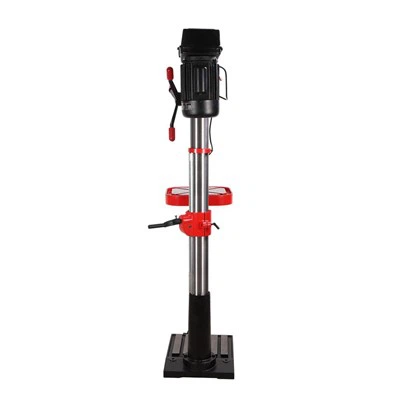
Overall Height
The overall height of a typical arbor press can vary significantly depending on its design and intended use. Generally, smaller bench – top arbor presses have an overall height ranging from about 12 inches (30.5 cm) to 24 inches (61 cm). These compact presses are ideal for light – duty tasks, such as staking, riveting small parts, or making minor adjustments.
On the other hand, larger floor – standing arbor presses can reach heights of 36 inches (91.4 cm) to 60 inches (152.4 cm) or even more. These taller presses are designed for heavy – duty applications, where greater force and more space are required. For example, in a manufacturing plant, a tall floor – standing arbor press might be used to press bearings into large machinery components.
The height of the arbor press is important for several reasons. Firstly, it affects the user’s comfort during operation. A press that is too short may require the user to bend over uncomfortably, leading to fatigue and potential back problems. Conversely, a press that is too tall may be difficult to reach the working area, especially for shorter individuals. Secondly, the height can also influence the press’s stability. Taller presses need to have a wider base to ensure they do not tip over during operation.
Base Dimensions
The base of an arbor press provides stability and support for the entire structure. The size of the base is directly related to the press’s overall size and the amount of force it can exert.
For bench – top arbor presses, the base typically has a length and width ranging from 6 inches (15.2 cm) to 12 inches (30.5 cm). These smaller bases are suitable for use on a workbench, where space is often limited. The base is usually made of cast iron or steel, which provides a heavy and stable platform.
Floor – standing arbor presses have much larger bases. The length and width of the base can range from 18 inches (45.7 cm) to 36 inches (91.4 cm) or more. The larger base is necessary to counteract the greater forces exerted by the press during heavy – duty operations. A wider base also helps to distribute the weight of the press evenly on the floor, reducing the risk of damage to the floor surface.
The shape of the base can also vary. Some arbor presses have a rectangular base, which provides a simple and stable design. Others may have a more complex shape, such as a T – shaped or cross – shaped base, which can offer additional stability in different directions.
Throat Depth
The throat depth of an arbor press refers to the distance from the front of the press frame to the center of the ram. This dimension is important because it determines the size of the workpiece that can be accommodated in the press.
Typical throat depths for arbor presses range from 3 inches (7.6 cm) to 10 inches (25.4 cm). Smaller throat depths are suitable for working on smaller parts, such as jewelry components or small electronic parts. Larger throat depths are required for larger workpieces, such as automotive parts or large – scale machinery components.
When choosing an arbor press, it is essential to consider the throat depth based on the types of workpieces you will be working with. If you frequently work with large parts, a press with a larger throat depth will be necessary. However, if you mainly work with small parts, a press with a smaller throat depth may be more cost – effective and space – efficient.
Ram Diameter
The ram is the part of the arbor press that applies the force to the workpiece. The diameter of the ram is an important factor in determining the amount of force the press can generate.
Typical ram diameters for arbor presses range from 0.75 inches (1.9 cm) to 2 inches (5.1 cm). Smaller ram diameters are found in light – duty arbor presses, which are suitable for tasks that require less force, such as pressing small pins or making minor adjustments. Larger ram diameters are used in heavy – duty arbor presses, which can generate significant force for tasks like pressing large bearings or stamping thick metal sheets.
The material of the ram also affects its performance. Rams are usually made of high – strength steel, which can withstand the high pressures generated during operation. A well – made ram with a proper diameter is essential for ensuring accurate and consistent force application.
Stroke Length
The stroke length of an arbor press is the distance that the ram can travel from its fully retracted position to its fully extended position. This dimension is important because it determines the maximum height of the workpiece that can be pressed.
Typical stroke lengths for arbor presses range from 1 inch (2.5 cm) to 4 inches (10.2 cm). A shorter stroke length is suitable for tasks that require a small amount of movement, such as pressing small parts or making minor adjustments. A longer stroke length is necessary for tasks that involve larger workpieces or require more significant compression, such as pressing large bearings or forming thick metal sheets.
The stroke length can also affect the speed of operation. A press with a longer stroke length may take more time to complete a cycle, but it can handle larger workpieces. Conversely, a press with a shorter stroke length can operate more quickly but is limited in the size of the workpieces it can handle.
Considerations for Choosing the Right Dimensions
When selecting an arbor press, it is crucial to consider the specific requirements of your application. If you are working in a small workshop with limited space, a bench – top arbor press with smaller dimensions may be the best choice. However, if you are in a large manufacturing facility and need to handle heavy – duty tasks, a floor – standing arbor press with larger dimensions will be more suitable.
It is also important to consider the future growth of your business. If you anticipate an increase in the size or complexity of the workpieces you will be working with, it may be wise to invest in an arbor press with larger dimensions, even if it is not immediately necessary.
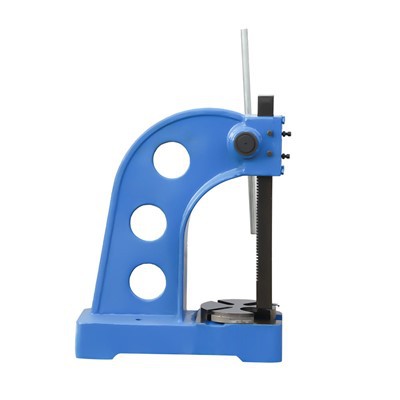
As a supplier of arbor presses, I understand the importance of getting the right dimensions for your needs. We offer a wide range of arbor presses with different dimensions to meet the diverse requirements of our customers. Whether you are a hobbyist looking for a small bench – top press or a large – scale manufacturer in need of a heavy – duty floor – standing press, we have the right solution for you.
Arbor Press If you are interested in purchasing an arbor press or need more information about the dimensions and features of our products, please do not hesitate to contact us. Our team of experts is ready to assist you in making the right choice for your specific application. We can provide detailed product specifications, answer your questions, and help you find the perfect arbor press for your workshop or manufacturing facility.
References
- Machinery’s Handbook, 30th Edition. This comprehensive reference book provides detailed information on the design, operation, and dimensions of various industrial tools, including arbor presses.
- Industrial Press Handbook. It offers in – depth knowledge about the different types of presses used in industrial settings, with a focus on their technical specifications and performance.
YS Machine Tools Co., Ltd.
We’re well-known as one of the leading arbor press suppliers in China, featured by quality products and good service. Please rest assured to buy customized arbor press at competitive price from our factory. Contact us for more details.
Address: 300 Sandusky st, Ohio, 43611, USA
E-mail: yishoumachinetools@gmail.com
WebSite: https://www.ysmachinetool.com/
