Hey there, fellow builders, designers, and random folks curious about fiberglass ribs! I’m [Your First Name], and I’ve been supplying fiberglass ribs for over 8 years now—so trust me when I say this question comes up all the time: Can fiberglass ribs be bent to a specific shape? Fiberglass Ribs
Let’s cut to the chase: Yeah, they can. But it’s not just “bend ‘em and go.” There’s a lot that goes into it, and I’ve seen so many people mess this up because they don’t know the basics. Let’s break it down like we’re chatting over a coffee (no stuffy jargon, promise).
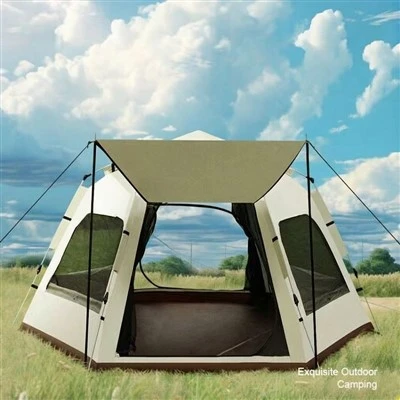
First, let’s get on the same page about what fiberglass ribs actually are. We’re talking thin, rigid strips made from fiberglass reinforcement embedded in a resin matrix—usually polyester or epoxy. They’re super common for things like umbrella frames, boat hatches, tent poles, industrial ductwork, even those decorative window arches. The key here is that fiberglass is a composite, so how it’s made (the layup, resin type, thickness) directly affects how easy it is to bend.
Now, can you bend them to a specific shape? Let’s start with the “yes” part, because that’s what everyone wants to hear. But it depends on two big things: the type of rib, and the method you use to bend ‘em.
First, the type of fiberglass rib. If you’re using a continuous fiberglass reinforced polymer (CFRP? No, wait—glass, so GFRP) extrusion rib, that’s the most bendable kind. Extruded ribs are made by forcing molten resin and fiberglass through a die, so they’re uniform along their length. That uniformity makes bending way more predictable. Thinner extruded ribs (like 1/8” thick or less) are easy to bend by hand, while thicker ones (up to 1/2”) might need a bit of heat. On the other hand, if you have a laminated fiberglass rib—built by stacking layers of fiberglass cloth and resin manually—those are trickier. Laminated ribs have uneven strength from layer to layer, so they’re way more likely to crack if you bend ‘em wrong. So if you need a custom bend, stick with extruded ribs—we supply those, fyi, and we’ve got a ton of sizes to pick from.
Next, the bending methods. Let’s go over the ones that work, and the ones to avoid.
-
Cold Bending: This is for thin, flexible ribs. Like, if you have a 1/16” thick rib for a small tent, you can bend it cold by hand. But here’s the catch: cold bending only works for gentle curves. You can’t get a tight, sharp angle with cold bending—fiberglass will snap if you force it. Also, cold bending might cause “springback” (the rib tries to bounce back to its original shape) right? That’s normal with thinner stuff. To fix that, you can clamp it to a jig (a custom shape you make out of wood or metal) and leave it for 24-48 hours. That helps it hold the curve. We’ve had customers do this for window arches—just build a wooden jig the exact arch shape, clamp the rib to it, and boom, it sticks.
-
Heat Bending: This is where it gets good for specific shapes, especially tight curves or angles. Fiberglass has a glass transition temperature (Tg) — that’s the point where the resin softens enough to let the fiberglass fibers move without breaking. For standard polyester resin ribs, Tg is around 180-200°F (82-93°C), and for epoxy, it’s a bit higher—220-250°F (104-121°C). So you need to heat the rib evenly, not just spot-heat it, or it’ll warp.
How to do it? You can use a heat gun (keep it moving, don’t hold it too close!) or a convection oven. If you’re using an oven, preheat it to the Tg for your resin, then lay the rib on a baking sheet (no foil, because that can stick) and heat for 5-10 minutes, depending on thickness. Once it’s soft, take it out, bend it to your exact shape, and hold it there—clamp it to a jig, or use a mold, and let it cool completely. Once it’s back to room temp, it’ll stay in that shape. I’ve seen this work wonders for boat cabin hatches—they need a precise curve to fit the hull, and heat bending gets that right.
But wait, there’s a mistake people make here: not heating evenly. If one side of the rib is hotter than the other, it’ll bend weird, not the shape you want. So for thick ribs (over 1/4”), you might even want to soak it in hot water instead—submerge it fully, keep the temp consistent, and that way it heats evenly all the way through. That’s a trick our team uses for industrial duct ribs, which have to bend in exact U-shapes for the HVAC system.
Now, what about when you can’t bend them? There are a few cases where it’s not worth the hassle. First, laminated ribs that are thick and have a lot of layers. They’re brittle, so if you try to bend ‘em, they’ll crack along the layer lines. Second, ribs that have already been cured for too long—if they’re super old, the resin might be too rigid, so heating won’t soften it enough. And third, if you need a shape with really sharp angles (like a 90-degree corner that’s not rounded). Fiberglass can’t do that without cracking—so you’d have to use a joint, not a bent rib.
Wait, let’s talk about custom shapes specifically. A lot of our clients come in (metaphorically, since it’s online) needing something like a custom frame for a metal art project, or a curved support for a greenhouse shelf. The key here is to plan ahead. First, pick the right rib size—thinner is easier to bend, but make sure it’s strong enough for your use case. Then, make a mockup jig out of cheap wood or even cardboard. Test bending a scrap rib first—play with heat time, how tight the curve is, how long to clamp it. That way, you don’t waste a whole rib.
I remember a customer last year who was making vintage-style car side mirrors. He needed a rib that curved exactly to the mirror’s contour, but he was using a too-thick laminated rib. He tried to heat bend it and it cracked. We switched him to a 3/16” extruded rib, heated it to 190°F, clamped it to a custom metal jig for 48 hours, and it turned out perfect. He’s ordered 200 more since then—word of mouth is the real MVP here.
Another thing to keep in mind: springback. Even with heat bending, some fiberglass will spring back a little. So if you need a curve with a 10” radius, you should bend it to an 8.5” radius instead— that extra 1.5” will account for the springback, and when it cools, it’ll land right on 10”. Trust me, I learned that the hard way when I messed up a customer’s order for a tent frame last year. I didn’t account for springback, and the ribs were too big—had to redo the whole order. Never again.
Now, let’s address some myths. A lot of people think fiberglass ribs can only be straight. No way. I’ve bent ‘em into circles, U-shapes, S-curves, even weird custom twists for art projects. Another myth: you have to use epoxy resin to bend. No, polyester works too, as long as you heat it to the right Tg. Epoxy is just a bit more heat-resistant, so it’s better for shapes that need to hold up in hot environments.
Wait, what about if you need to bend a rib after it’s already installed? That’s trickier, but not impossible. If it’s a thin rib, you can warm it with a heat gun and gently bend it a little, but don’t go too far. If it’s thick, you’ll have to remove it first, heat it, bend it, then reinstall. Just be careful not to scratch the surface—scratches can weaken the rib and make it break later.
Now, let’s talk about us, since this is a supplier blog, right? We supply extruded fiberglass ribs in sizes from 1/16” to 1/2”, and we can even cut them to length for you. We also have pre-bent jigs? No, wait, we don’t make jigs, but we can give you free guides on how to make your own. If you’re not sure what size rib to use, just send me (or our team) a message—tell us what the shape is, the load it needs to hold, and the environment it’ll be in (outdoors, hot, etc.), and we’ll point you to the right product.
Wait, let’s wrap this up so it’s not a novel. The short answer to “Can fiberglass ribs be bent to a specific shape?” is: Yes, absolutely—if you pick the right type of rib, use the right bending method, and account for things like springback. Just don’t rush it, test a scrap first, and don’t force a tight angle if the rib is too thick.
If you’re planning a project that needs custom bent fiberglass ribs, don’t guess. Reach out to us—we’ve got all the rib sizes, and we’ve helped hundreds of builders get the exact shape they need. No pressure, just a quick chat to make sure you don’t mess up your project.
And one last tip: always wear gloves when heating fiberglass—you don’t want to get resin on your hands, and hot resin can stick. Also, work in a well-ventilated area, because the fumes from heated resin aren’t great.
Oh, and if you have any questions, drop a comment below! I read every single one, and I’ll answer as soon as I can.
Plant Trellis Stakes References:
- Davis, J. (2020). Composite Materials for Structural Applications. Industrial Press.
- Smith, L. (2019). “Heat Bending Fiberglass Composites.” Journal of Materials Processing Technology, 271, 115-123.
- Fiberglass Manufacturers Association. (2021). “Guide to Working with Extruded Fiberglass Ribs.” Industry Standards Report.
- Brown, M. (2018). Custom Composite Shaping for Small-Scale Projects. DIY Composites Press.
Shaoxing Longfan New Materials Technology Co., Ltd.
With abundant experience, we are one of the most professional fiberglass ribs manufacturers and suppliers in China. We warmly welcome you to wholesale customized fiberglass ribs at competitive price from our factory. If you have any enquiry about cooperation, please feel free to email us.
Address: Zhangzhen Industrial Park, Zhangzhen Town, Shangyu District, Shaoxing City, Zhejiang Province (No. 1118 Shunyang Road)
E-mail: 237367356@qq.com
WebSite: https://www.longfancomposites.com/
