What’s up, folks — if you’ve ever messed around with metal parts, wires, or even tiny components you use every single day, you’ve probably relied on carbide dies without even knowing it. I’m [your company name here] — a carbide die supplier that’s been in this game long enough to see how these little workhorses turn rough raw materials into stuff that actually matters. Today, we’re breaking down exactly what carbide dies are used for, why they’re way better than old-school steel dies, and why you should care whether you’re a fabricator, a startup building electronics, or just someone curious about how things get made. Carbide Dies
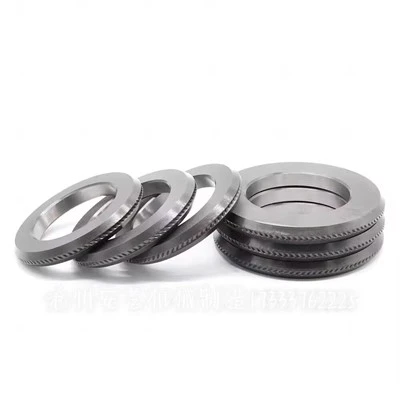
First, let’s cut the jargon: a carbide die is basically a hard, shaped tool with a hole (or a series of holes) in it that you pull, push, or force raw material through to cut it into a specific shape or size. Now, why “carbide”? That’s tungsten carbide — a combination of tungsten and carbon that’s way harder than high-speed steel, way more wear-resistant, and doesn’t break down even after thousands of uses. I see a lot of new guys in the industry mix carbide dies up with regular steel dies, and let me tell you, that’s a mistake. Steel dies might be cheap upfront, but they dull in a couple hundred runs — carbide dies? They last tens of thousands, even hundreds of thousands of runs. That’s a big deal when you’re running a shop 10 hours a day, 5 days a week.
So what are these bad boys actually used for? Let’s start with the most common stuff: wire drawing. That’s right, the wire that goes in your phone charger, the wire holding up power lines, even the wire used to make fence for your backyard — all of it gets drawn through carbide dies. Here’s how it works: you take a thick metal rod (usually copper, aluminum, or steel), heat it a little if needed, then pull it through a series of carbide dies with smaller and smaller holes. Each pass thins the wire just a tiny bit, but after 10 or 15 passes, you’ve got a thin, uniform wire that’s strong enough for whatever you’re using it for. I’ve had a lot of wire manufacturing clients tell me they switched to carbide dies and cut their tooling costs by 70% in the first year — no more stopping every few days to replace dull steel dies, no more uneven wire that gets rejected at quality control. It’s a no-brainer for high-volume wire production.
Next up, tube and pipe extrusion. Wait, it’s not just wire — carbide dies are also used to shape metal into tubes. Think about the copper pipes under your sink, the steel pipes for a bike frame, even the tiny stainless steel tubes used in medical devices like catheters. When you extrude a tube, you push a hollow metal billet through a die that’s shaped like the outer diameter you want, and a mandrel (a solid rod inside) shapes the inner diameter. Carbide dies hold their shape way better than steel here, especially for hard metals like stainless steel or titanium. I had a medical device client last year who was using steel dies for their tiny catheter tubes — the steel would wear down after a couple hundred batches, making the tubes too wobbly and unusable. We swapped them for custom carbide dies, and now they can run 10x more batches before needing a die change. That’s huge for them because medical devices require super tight tolerances — like within a thousandth of an inch — and carbide dies don’t warp or wear enough to mess that up.
Then there’s stamping and forming parts for the automotive and aerospace industries. Let’s be real: cars have thousands of tiny parts — bolts, nuts, gears, even the clips that hold your door panels on. Aerospace? Parts that go in planes have to be light, strong, and totally reliable. A lot of these parts are made by stamping metal sheets, but if the die is soft, it’ll chip or deform after a few thousand stamps. Carbide dies? They’re hard enough to stamp high-strength alloys like titanium or Inconel without breaking. I work with a couple of automotive guys who make transmission parts — they used to use steel dies that would crack every time they tried to stamp titanium, which is way stronger than regular steel. Now they use carbide dies, and they don’t have to stop production for die changes as often. Their uptime went up 30% last quarter, and their part defect rate dropped by half. That’s the kind of numbers that make shop owners sit up and listen.
Wait, don’t sleep on the smaller, less obvious uses. A lot of people don’t realize carbide dies are used in the electronics industry, too. Think about the pins in your phone’s charging port, the tiny connectors in a computer, even the tiny coils in a smartwatch. These parts are super small — sometimes just a few millimeters big — and they need to be perfectly shaped to fit into tight spaces. Carbide dies can hold tolerances as tight as 0.0001 inches, which is way more precise than any steel die can manage. I have an electronics startup client who was making tiny connector pins with steel dies, and 10% of their parts were getting rejected because the pins were off by just a hair. We made them custom carbide dies, and now their rejection rate is less than 1% — that saved them thousands in wasted materials every month.
Another big one: cold heading. That’s the process of making bolts, screws, and nails by hammering a piece of metal into shape while it’s cold. Cold heading is way faster than heating metal and shaping it, and it’s super popular for high-volume production. But the dies here take a beating — you’re basically hitting metal with thousands of pounds of force every single second. Steel dies would chip or wear down in no time, but carbide dies can handle that impact like it’s nothing. I have a fastener manufacturer that runs 24/7 making nails for construction. They told me their carbide dies last 5 times longer than the old steel ones, so they don’t have to hire extra guys just to change dies overnight. That’s a huge labor save for them, and it’s one of the reasons fastener companies all over the world switch to carbide dies.
Now, let’s talk about why this matters to you. If you’re a small shop just starting out, maybe you don’t think carbide dies are worth the investment — but here’s the thing: even for small runs, carbide dies save you money in the long run. Sure, a custom carbide die might cost $200 instead of $50 for a steel one, but if you run 10,000 parts and the steel die dies after 2,000 parts, you’re spending $200 in steel dies just for that run, plus labor time changing them. The carbide die? It’ll last 100,000 parts, so that same run of 10,000 is just a tiny fraction of the cost, and you’re not wasting time switching dies. For high-volume production, it’s even more lopsided — carbide dies are non-negotiable if you want to keep up with demand and keep your costs low.
I also want to call out a common mistake people make: using the wrong grade of carbide. Not all carbide is the same. Some grades are harder, some are more impact-resistant, some are better for high-temperature work. For example, if you’re doing cold heading, you want a grade that’s tough enough to handle impact without chipping. If you’re doing wire drawing, you want a grade that’s super wear-resistant because the wire is rubbing against the die thousands of times. A lot of suppliers will just sell you a “one-size-fits-all” carbide die, but that’s not going to work. At [my supplier name], we work with you to figure out exactly what you’re making, what material you’re working with, and how many parts you’re running, then pick the right carbide grade and shape for your needs. No guesswork, no wasted money on a die that doesn’t fit your process.
Let me give you a real example: last year, a guy came to me with a problem. He was making small aluminum screws for outdoor furniture, and his steel dies were rusting after just a few runs because aluminum has a bit of moisture, and steel doesn’t handle that well. We suggested a carbide grade that’s corrosion-resistant, and also shaped the die’s entry angle to reduce friction, so the aluminum didn’t stick as much. Now his dies don’t rust, they last twice as long, and his screw quality is way better — no more rough edges on the screws that make customers complain. That’s the kind of custom work we do, not just cutting a die out of a block and sending it your way.
Now, I know a lot of people are out there looking for cheaper alternatives, and we get it — cost is tight for every shop. But here’s the reality: if you use a cheap, low-quality carbide die, it’ll still cost you more in the long run. It’ll wear out fast, break often, and mess up your parts. We use virgin tungsten carbide, not recycled, so our dies are consistent, strong, and reliable. We also offer custom dies for any shape you need — round, square, hexagonal, even weird custom shapes for specialized parts. No job is too small or too big for us.
So who should be using carbide dies? If you’re in wire drawing, tube extrusion, stamping, cold heading, or making small precision parts for electronics, medical devices, automotive, or aerospace — you should be. Even if you’re a small shop that runs a few thousand parts a month, carbide dies will save you time, money, and headaches. I’ve seen shops go from losing money on tooling to making a profit just by switching to carbide dies. It’s not a “nice-to-have” — it’s a game-changer for anyone who’s serious about quality and efficiency.

Now, if you’re reading this and you’ve got a problem with dull dies, high defect rates, or just spending too much time changing tooling, we’re here to help. Whether you need a standard die for a common wire size, or a totally custom die for a weird part you’re developing, we can make it. We’ll work with you to figure out exactly what you need, no jargon, no hidden fees, just a die that works for your shop. Hit us up to chat — tell me what you’re making, what materials you’re using, and we’ll give you a free quote and even a recommendation on the best carbide grade for your job. Don’t waste another money on steel dies that wear out after a few runs. Let’s get your production running smoother, faster, and cheaper.
Carbide Dies References:
- Tungsten Carbide Dies: Properties and Applications, International Journal of Machine Tools and Manufacture, 2018.
- Wire Drawing Die Performance: Wear Mechanisms and Optimization, Journal of Manufacturing Processes, 2020.
- Carbide Dies for Cold Heading: Impact Resistance and Longevity, Journal of Materials Processing Technology, 2019.
- Precision Die Manufacturing for Medical Device Components, Medical Device & Diagnostic Industry, 2021.
Hejian Strains Of Hard Alloy Mould Co., Ltd.
As one of the most professional carbide dies manufacturers and suppliers in China, we’re featured by quality products and good service. Please rest assured to wholesale durable carbide dies made in China here from our factory. Also, custom service is available.
Address: Tangzhuang Industrial Park, Hejian City, Hebei Province
E-mail: limei@mouldzy.com
WebSite: https://www.mouldzy.com/
