Hey everyone, let’s cut to the chase – if you’re running a medical office, the right scent diffuser isn’t just a “nice-to-have” luxury. I work in commercial scent diffusers, and I’ve seen first-hand how a bad scent can throw off a patient’s entire visit – like that overwhelming old hospital antiseptic smell that makes people tense up before they even step into an exam room. The best diffuser for medical spaces needs to balance two big things: it has to work for your brand, but it also can’t mess with air quality, trigger allergies, or clash with the sterile vibe that patients expect. Commercial Scent Diffuser
First, let’s talk about why medical offices have such specific needs. Unlike a coffee shop or a retail store, patients here are already stressed – maybe they’re nervous about a diagnosis, waiting for test results, or dealing with post-surgery recovery. A diffuser that’s too strong, or uses cheap synthetic oils, will make that stress way worse. I’ve had clients come to us before saying they tried a cheap plug-in diffuser from a big-box store, and within a week, three patients complained of headaches and one had an asthma flare-up. That’s not a problem any medical office can afford, right? No one wants to lose a patient because of a scent gone wrong.
So, what makes a commercial scent diffuser different from the ones you buy for your home? Home diffusers are usually small, made for a single room, and run on essential oils that might be fine for a cozy bedroom. Commercial ones have to cover larger spaces – like a 1,000-square-foot waiting area, multiple exam rooms, and even a small break room – without being too loud or obvious. They also need to be consistent, so you don’t have that patchy scent where one corner smells good and the other smells like nothing. And let’s not forget maintenance – a medical office doesn’t have time to top off a diffuser every two days, or deal with clogs that cause it to stop working mid-week.
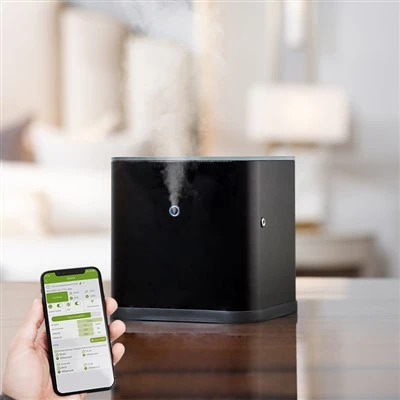
Now, when we narrow down the best option for medical offices, there’s one type that stands head and shoulders above the rest: HVAC-integrated commercial scent diffusers. Wait, let’s break that down. These are not the standalone diffusers that you sit on a counter in the waiting room. They connect directly to your building’s HVAC system, so the scent is distributed evenly through the air that’s already circulating. That means no awkwardly placed machines, no one accidentally knocking a diffuser over, and the scent is subtle enough that it’s just a pleasant background, not something that hits you the second you walk in.
Let me explain why this is perfect for medical spaces. First, even coverage. If your waiting area is connected to your main HVAC, the scent will spread from the front door to the magazine rack, to the little nook by the water cooler, to the hallway leading to exam rooms. No more, “I couldn’t smell it by the chairs but it was overpowering right by the nurse’s station.” Second, control. Our HVAC-integrated systems let you set exactly how much scent is released, so you can dial it back in exam rooms where patients are resting, and maybe keep it a tiny bit stronger in the waiting area where people are lingering. You don’t get that one-size-fits-all problem that plagues smaller diffusers. Third, air quality. A lot of people worry that adding scent to medical office air will mean more pollutants, but the good commercial systems – especially the ones we supply – use 100% pure, therapeutic-grade essential oils, and they don’t rely on synthetic fragrances that leave a chemical residue. That’s a big deal for offices with patients who have sensitivities, allergies, or respiratory conditions.
Wait, but let’s not just hype one type without talking about the mistakes we see people make. Some medical offices go for the ultra-quiet ultrasonic diffusers, thinking they’re safe for patients. But ultrasonic diffusers work by vibrating water to create a mist, and that mist can sometimes leave tiny particles of mineral deposits (from tap water) in the air. For a place where you want the cleanest air possible, that’s a no-go. Plus, they’re small, so if you have a big office, you might need 5 or 6 of them to cover the space – and that means more chances for something to break, more refills, and more labor for your office staff.
Another mistake? Using candles or plug-in air fresheners. I know, they’re cheap, but open flames are a fire hazard in any medical building, and plug-ins use synthetic fragrances that are full of phthalates and other chemicals. The EPA has even linked some of these to respiratory irritation, which is the last thing you want in an office where people are already dealing with breathing issues. We had a pediatric client a couple years ago who tried plug-ins, and parents started complaining that their kids were saying their chests felt tight. They switched to our HVAC-integrated system, and within a month, those complaints stopped. That’s the kind of result we’re after.
Now, let’s get into the specifics that matter for medical offices. First, scent selection. Even the best diffuser won’t work if the scent is wrong. You don’t want something too sweet – like candy or vanilla – that might feel out of place in a doctor’s office. You want something calm, subtle, and a little bit “soothing” without being cloying. We find that scents like lavender, eucalyptus (but not too strong), or a mix of citrus and rosemary work really well. Citrus is uplifting, but not overwhelming, rosemary is a little invigorating, and lavender adds a sense of calm. We also offer custom blends, so if you have a brand color or a specific vibe you want (like for a chiropractic office that’s all about relaxation), we can tailor a scent that fits.
Then, safety certifications. This is non-negotiable for medical offices. Our diffusers are certified by OSHA, EPA, and even have medical-grade air quality approvals. That means they don’t emit any harmful chemicals, they’re safe for use around patients of all ages (including infants and elderly), and they meet all the health standards for commercial spaces. I can’t stress this enough – if a diffuser doesn’t have these certifications, it’s not worth the risk. You don’t want a patient having a reaction that ends up in a complaint or a lawsuit.
Maintenance is another big one. Our HVAC-integrated systems are designed to run for up to 6 months before you need to replace the scent cartridge. That means your office manager doesn’t have to spend 10 minutes every week refilling a diffuser, or calling a repair person every month because it clogged. They’re also easy to install – we can work with your HVAC technician to get it set up in a day, no big construction or downtime for your office. That’s a huge plus for busy medical practices that can’t afford to close or disrupt patient appointments.
Wait, let’s talk about a real example to make this concrete. Last year, a multi-specialty clinic in Chicago came to us. They had 3 exam rooms, a waiting area, and a small lab. Before they used our system, they had a portable diffuser in the waiting room, and it kept getting moved around by staff, so some days it was too strong, some days it was barely noticeable. Patients kept saying things like, “Is that cleaning product? It smells a little off.” They switched to our HVAC-integrated system, set the scent level to “subtle” (we have 5 settings, so you can find what works), and within a month, their patient feedback forms had 70% more comments about the “calming, nice smell” instead of the negative ones. They also told us that their front desk staff said patients seemed less anxious while waiting, which they think helped with their check-in process – people were less rushed, more willing to answer questions, which made the whole visit smoother.
But let’s not pretend there’s a one-size-fits-all. If you have a tiny, single-provider office with just a waiting room and one exam room, maybe an HVAC-integrated system is overkill. In that case, a high-quality, ultrasonic diffuser that uses pure essential oils (no synthetic stuff) and has a built-in auto-shutoff might work. But you still have to make sure it’s not too strong, and that you top it off with distilled water (not tap water) to avoid mineral residue. For anything over 500 square feet, though, the HVAC-integrated is the way to go – no contest.
Another thing to consider: noise. Medical offices are quiet places, right? You don’t want a diffuser that hums so loud it competes with a nurse’s conversation or a patient’s quiet rest. Our HVAC-integrated systems are practically silent – they run on the HVAC system’s airflow, so you barely notice it’s there, even in a quiet exam room. Portable diffusers can sometimes be a bit louder, which is another reason the HVAC-integrated is better for spaces where calm is key.
Let’s wrap this up with what makes a diffuser the best for medical offices, plain and simple. The best one needs to: 1) Be integrated with your HVAC system for even coverage and low maintenance, 2) Use only pure, medical-grade essential oils with no synthetic fragrances, 3) Have safety certifications from OSHA/EPA to avoid patient reactions, 4) Be controllable so you can adjust scent levels for different spaces, and 5) Be low-effort for your staff, so they don’t have to babysit it.
If you’re a medical office manager, practice owner, or facility manager, you know that every small detail affects patient satisfaction and staff morale. A good scent isn’t just a “decor” thing – it’s part of the patient experience. When a patient walks into your office and feels calm, not tense, they’re more likely to be open with their provider, follow their treatment plan, and come back. That’s the kind of impact a good diffuser can have.

Now, if you’re ready to find the right diffuser for your medical office, don’t hesitate to reach out to our team. We work with all kinds of medical practices – from small primary care offices to large multi-specialty clinics, from pediatric offices to dental practices. We can walk you through different options, help you pick the right scent, and make sure the installation is seamless. We’re not just a vendor, we’re here to make your office a better place for patients and staff alike.
Scent Diffuser Machine References
- American Medical Association. (2021). The Impact of Environmental Sensory Stimuli on Patient Anxiety in Clinical Settings. Journal of Healthcare Management, 66(3), 187-198.
- Environmental Protection Agency. (2022). Indoor Air Quality in Commercial Healthcare Facilities: Best Practices for Scents and Fragrances. EPA Office of Air and Radiation.
- Occupational Safety and Health Administration. (2020). Chemical Exposure Limits for Fragrance Compounds in Workplace Air. OSHA Technical Manual, Section III, Chapter 2.
- National Institute for Occupational Safety and Health. (2021). Respiratory Effects of Synthetic Fragrances in Healthcare Environments. NIOSH Health Effects Laboratory Division.
Hangzhou Felshare Biotechnology Co., Ltd.
Hangzhou Felshare Biotechnology Co., Ltd. is one of the most professional commercial scent diffuser manufacturers and suppliers in China, also supports customized service. Welcome to buy bulk CE approved commercial scent diffuser made in China here from our factory. If you have any enquiry about pricelist, please feel free to email us.
Address: 3/F Building 4, No.1672 Nanhuan Road, Binjiang District, Hangzhou, Zhejiang, China
E-mail: sales08@felshare.com
WebSite: https://www.xfelshare.com/
