If you’ve ever worked in plastic extrusion, rubber compounding, or injection molding, you know how critical rigid melt pressure transmitters are to keeping operations running smoothly. These devices measure the pressure of molten polymers as they move through processing equipment, and their physical design—especially their rigidity—plays a huge role in their performance and suitability for different jobs. One question I get asked constantly, both by new engineers just starting out in manufacturing and veteran plant managers looking to upgrade their sensor fleets, is: “What’s the weight of a typical rigid melt pressure transmitter?” As a supplier who’s been building and shipping these transmitters for over 12 years, I’m happy to break this down clearly, grounded in real product specs, industry standards, and why weight matters more than just a number on a spec sheet. Rigid Melt Pressure Transmitter
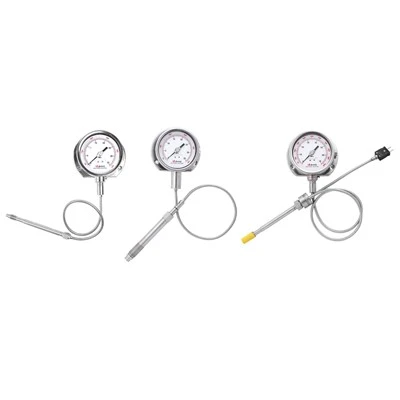
First, let’s define what “rigid melt pressure transmitter” means in our line of work, because not all melt sensors are created equal. Unlike flexible models that can bend slightly to fit into tight spaces or handle minor misalignments in processing equipment, rigid transmitters have a solid, unyielding main body, usually made of high-grade stainless steel, with a permanently attached diaphragm that goes into the melt stream. That rigidity isn’t just a design choice—it’s a requirement for melt pressures that range from 0 to 100,000 psi, common in processes like blow molding and film extrusion, where even a tiny bend or shift could throw pressure readings off by 5% or more, leading to scrap material or damaged equipment. Because of that rigid structure, weight is a direct byproduct of the materials we use and the components required for accurate, long-term performance.
Now, let’s talk about “typical” weight. I’ve seen hundreds of models over the years, and the weight almost always clusters in two main groups, depending on the pressure range and mounting style a customer needs. For the most common low-to-medium pressure transmitters, which are used for general extrusion, compounding, and small-batch injection molding, the standard unit weighs between 1.2 and 1.8 pounds (about 0.54 to 0.82 kilograms). These are the workhorses we ship most often: they have a pressure range of 0 to 10,000 psi, a ⅝-inch threaded stem for mounting, and a simple, robust housing that fits into 90% of standard process ports. A lot of first-time buyers are surprised by how light these are, but that’s intentional—we don’t add excess metal or components just to make them heavier; every part is chosen to balance durability and ease of installation.
The second group, which we call heavy-duty rigid melt pressure transmitters, is for high-pressure applications: large-scale blown film lines, pipe extrusion, and high-volume injection molding where pressures hit 20,000 to 100,000 psi. These are built with thicker stainless steel bodies, reinforced stems, and additional internal components to withstand extreme force, so their weight is higher. A typical heavy-duty model here ranges from 2.7 to 4.1 pounds (1.22 to 1.86 kilograms). I’ll be honest: some customers think a heavier transmitter must be more “high-quality,” but that’s not always the case. We actually have a couple of high-pressure models that hit just 2.4 pounds because we use precision-grade 17-4 PH stainless steel, which is stronger than standard 316 stainless used in lower-pressure units, so we don’t need extra metal to get the rigidity we need. Weight here is a function of pressure rating, not just build quality, which is a key point I wish more people understood.
There are a few factors that can shift a transmitter’s weight outside these ranges, so it’s important to note that “typical” doesn’t mean universal. First, mounting style. Some transmitters have a direct mount, where the housing connects straight to the process port, while others use a flush diaphragm to reduce material buildup, adding a small ring that can bump weight up by 0.3 to 0.5 pounds. For customers who need to mount transmitters in hard-to-reach locations, we also offer lightweight variants made with thin-walled 316L stainless (still rigid enough for most medium-pressure jobs) that weigh as little as 0.9 pounds—perfect for retrofitting older equipment where mounting brackets can only support so much weight.
Another factor is the electrical output and communication options. Basic analog transmitters (4-20 mA, the industry standard for most processes) have a simple circuit board and wiring, so they sit at the lower end of the weight ranges I mentioned. Smart transmitters, which include digital outputs like HART, Modbus, or Ethernet/IP, have extra components: a digital processor, a display for on-site calibration, and maybe a wireless module for remote monitoring. That adds about 0.4 to 0.7 pounds to the total weight, depending on the model. A lot of plant managers skip smart features because they think the extra weight is unnecessary, but for large facilities with dozens of sensors, the remote calibration and data tracking make the small weight difference worth it for reduced downtime.
Now, why does transmitter weight even matter? I’ve seen customers brush this off, but it can cause real problems if you get it wrong. First, installation. If you’re mounting a transmitter on a long extrusion barrel, too much weight can cause the barrel to warp over time, leading to misalignment in the screw or uneven melt flow. We once had a customer who installed a heavy 4.5-pound high-pressure transmitter on a 10-foot extrusion barrel; after six months, the barrel bowed just enough that pressure readings were 12% off, leading to 20 tons of scrap plastic before they realized the issue. That’s a perfect example of why weight is more than a spec number—it’s a performance factor.
Second, vibration. Processing equipment like extruders and injection molding machines vibrate constantly, especially at high speeds. A heavier transmitter might feel sturdier, but if it’s not properly mounted, that extra weight can put more stress on the threads and wiring connections, leading to more frequent failure. Lightweight, rigid transmitters with vibration-dampening mounting hardware actually perform better in these environments, because the weight is distributed evenly and there’s less strain on the connections. That’s a key advantage of our medium-weight models: they’re rigid enough for high pressure, but light enough to reduce vibration-related wear.
Third, calibration accuracy. Wait, how does weight tie into calibration? A lot of people don’t realize that when you calibrate a melt pressure transmitter, you have to account for the weight of the unit itself, especially if it’s mounted at an angle. If your transmitter is mounted horizontally, a heavier unit will add a small amount of gravitational pressure to the diaphragm, which can skew readings by 1-2% if not factored into calibration. Our technicians always remind customers to note the transmitter’s weight during calibration, but we design our units to minimize this effect—our rigid bodies are machined so uniformly that the gravitational shift is negligible for most typical mounting positions.
I also want to address a common misconception: some buyers think a lighter transmitter is less durable, or that a heavier one is inherently better. That’s not true at all. We test every rigid melt pressure transmitter we build to withstand 10 million pressure cycles, and weight is just one variable in that test. A 1.5-pound medium-pressure transmitter is often more durable than a 3-pound high-pressure model that uses thick but low-grade stainless steel. We’ve had customers who switched from our heavy 4-pound transmitters to our lighter, precision-built high-pressure models, and they’ve reported less equipment wear and more accurate readings, even at pressures over 80,000 psi. That’s why we don’t design for weight as a selling point—we design for rigidity, accuracy, and durability, and weight just follows as a side effect.
If you’re shopping for a rigid melt pressure transmitter, my advice is to work with a supplier who can match the weight and model to your specific application, not just pick a random heavy-duty unit. For example, a small injection molder making medical devices only needs a transmitter rated for 0 to 5,000 psi, so our 1.3-pound medium-pressure model is perfect—light enough to mount on their small machine, rigid enough for their process, and way more cost-effective than a heavy-duty unit they don’t need. On the other hand, a large pipe extrusion plant needs a transmitter that can handle 50,000 psi, so our 3.2-pound high-pressure model is the right choice: it’s rigid enough for that pressure, and the weight is balanced so it doesn’t put strain on their large barrels.
I’ve been in this industry long enough to know that melt pressure transmitters are one of those parts that you don’t think about until they break, and when they do, they stop production, cost thousands in downtime, and create a mess of scrap material. That’s why we focus on building transmitters that fit your exact needs, including the right weight. If you’re not sure which weight and model is right for your process, don’t guess—reach out to our team, and we can walk you through the options. We’ve helped hundreds of customers over the years, from small startups to Fortune 500 manufacturing plants, find the perfect transmitters for their lines, and we’re happy to do the same for you.
At the end of the day, the weight of a typical rigid melt pressure transmitter isn’t a random number—it’s a result of the materials we use, the pressure it’s designed to handle, and the environment it’s going into. Whether you need a light 1.2-pound unit for retrofitting an older machine or a heavy-duty 4-pound model for high-pressure extrusion, there’s a transmitter that’s right for your job. Don’t let weight be the only factor in your decision, but don’t ignore it either—it could save you from costly downtime down the line. If you’re ready to find the right rigid melt pressure transmitter for your operations, connect with our team to discuss your requirements and get a tailored solution.
Mercury Free Melt Pressure Gauge References:
- Melt Pressure Transmitters: Design, Application, and Performance Standards. International Society of Automation, 2021.
- Stainless Steel Material Properties for Industrial Sensors. ASM International, 2020.
- Rigidity and Pressure Accuracy in Polymer Processing Sensors. Journal of Plastic Engineering, vol. 37, no. 2, 2019, pp. 45-52.
- Vibration and Mounting Effects on Industrial Sensor Performance. Manufacturing Engineering Society International Conference, 2022.
Shanghai Zhaohui Pressure Apparatus Co., Ltd.
Shanghai Zhaohui Pressure Apparatus Co., Ltd. is one of the most professional rigid melt pressure transmitter manufacturers and suppliers in China, featured by quality products and good service. Please rest assured to wholesale advanced rigid melt pressure transmitter in stock here from our factory. Also, customized service and 1 year warranty are available.
Address: 2-6/F, Building 8, No.115, Lane 1276, Nanle Road, Shanghai, China
E-mail: sensorsales@zhyqsensor.com
WebSite: https://www.sinosensor.net/
