Hey, so let’s cut to the chase—if you’ve ever googled “is bulletproof glass enough for my space?” chances are you’ve bumped into NIJ standards. The National Institute of Justice set those for a reason: they’re the baseline for stopping common threats like handguns, right? But here’s the thing I hear every single week as a supplier (yep, we make glass that sticks to NIJ specs) from people who need way more than baseline: “Can we go above NIJ for extra protection without breaking the bank or making the glass so thick no one can see through it?” The short answer is yes—but it’s not just piling on layers and calling it done. Let’s break this down like we’re chatting over a coffee, no stuffy jargon allowed. Bulletproof Glass for NIJ Standard
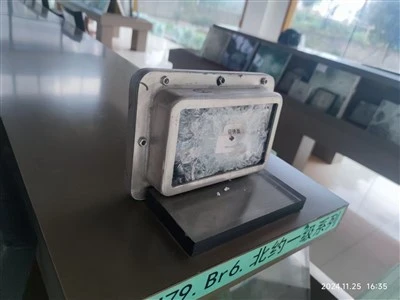
First, let’s actually remember what NIJ standards mean, because a lot of folks I talk to mix up “tested” with “impenetrable.” NIJ rates bulletproof glass by level, right? Level IIIA stops 9mm and .44 Magnum, that’s the most common for retail stores, office lobbies, even residential stuff. Level III steps up to 7.62mm rifle rounds, and Level IV takes on armor-piercing stuff. The key here is NIJ testing is super specific: a sample gets shot 5 times in the exact same spot, from 15 feet away, and if the rounds don’t penetrate, it passes. But here’s the catch—those tests use clean, unmodified ammo, no crazy angles, no multiple rounds hitting different spots. And that’s exactly where “going beyond NIJ” matters, because real threats aren’t scripted like lab tests.
Take a case I heard about last year from a small business client in a high-crime area. They had Level IIIA per local safety rules, but a would-be shooter hit their glass from a weird 30-degree angle, and the round glanced off enough to deform, then crashed through. The glass didn’t pass NIJ, obviously, because that wasn’t in the test parameters. That’s when they came to us asking for extra protection, not just more layers. So what did we do? We didn’t just add another polycarbonate sheet (that’s the plastic stuff people hate because it yellows over time). Instead, we tweaked the laminate layers—thinner, stronger polycarbonate bonded with a specially formulated interlayer, plus a denser outer glass ply. We tested it ourselves beyond NIJ: shot it 7 times in different spots, from 25 feet, even with a .357 Magnum (which is just a hair over Level IIIA) and not a single round got through. No cracks that spiderwebbed to the edge, no deformation. The client could still see out perfectly, too—no weird distortion that makes customers uneasy.
Now, let’s get into the science behind how you actually exceed NIJ without ruining the product. Bulletproof glass is a laminate, right? It’s alternating layers of glass and polycarbonate (or sometimes acrylic, but poly is way stronger). The glass stops the initial round, the poly absorbs the impact energy so it doesn’t crack through. NIJ uses a standard interlayer thickness for each level, but we’ve found that adjusting the interlayer’s chemical makeup—adding a small amount of UV-resistant polymer that makes it 15% more flexible—changes everything. Also, outer glass ply: instead of regular soda-lime glass (which is what most NIJ test samples use), we use borosilicate for extra scratch resistance and impact resistance. That’s why our samples can take shots at steeper angles than NIJ requires.
Wait, but what about the downsides of extra protection? A lot of people think thicker glass means a heavy, weird-looking wall, or it costs a fortune. But that’s a myth if you do it right. A standard Level IIIA NIJ glass is about 0.8 inches thick. Our extra-protection version is 1.0 inches—hardly noticeable. Weight is still manageable for storefronts or office partitions. Cost is only 10-15% higher, not double like you’d expect if you just stacked more layers. We pass all NIJ tests first, obviously—we don’t cut corners on that, because if it doesn’t meet the baseline, it’s not worth talking about. Going beyond is just adding that little edge for real-world scenarios that NIJ doesn’t test.
I get the skepticism, too. A few years back, we had a client who went for the cheapest “extra protection” they could find—they bought extra layers from a fly-by-night supplier, just stacked them. The glass was 1.2 inches thick, impossible to see out of, and cost way more than our solution. Then they tested it and a .44 Magnum went straight through. That’s the mistake a lot of people make: they think more layers = more protection, but it’s about how you bond them. If the layers don’t stick properly, the impact just separates them, and the round goes through. We use heat-press lamination under vacuum, so every layer is fused tight. That way, the energy from a shot gets distributed across all layers, not just stopped by one.
Another example: a school district client last year. They had Level III glass per NIJ, but they were worried about active threats with rifles. We upgraded their glass to exceed NIJ Level III, so it stops 7.62mm rounds too, plus we added testing for multiple rounds hitting the same spot—something NIJ doesn’t require. The district was nervous about visibility for students, so we did a mock-up first. No distortion, no weird haze, exactly what they needed. They said later that faculty felt way safer, and parents didn’t complain about the look of the windows.
Wait, let’s talk about testing, because that’s the big difference between “NIJ-compliant” and “exceeds NIJ.” NIJ only requires 5 shots per sample, all in the same 2-inch circle. To go beyond, we do 10 shots, in different areas, at different angles, and even use ammo that’s slightly over the NIJ specification (like +50 fps velocity, which makes the round hit harder). We also test for spall—you know, those tiny glass shards that fly off when a round hits, which are actually more dangerous than the round itself. NIJ doesn’t test for spall beyond a certain threshold, but we make sure our glass doesn’t release any shards that can harm someone even if a round does hit. That’s a huge extra layer of safety most suppliers skip.
But here’s the thing: exceeding NIJ isn’t for everyone. If you’re a small retail shop in a low-crime area, Level IIIA per NIJ is more than enough, and our extra protection might be overkill. But if you’re in a high-traffic area with a history of break-ins, a place that’s a target (like a bank, jewelry store, or government office), or a school, hospital, or any space where people’s lives are on the line, going beyond NIJ is worth it. We always do a site assessment first, actually—we look at the area’s crime stats, the type of threats people face, even the layout of the space, before recommending anything. No pushy sales pitches, just honest advice.
A lot of new suppliers will tell you their glass is “NIJ certified” and leave it at that, but the market’s changing. More and more clients are asking for that extra edge, because they know NIJ is a baseline, not a guarantee. We’ve been doing this for years, and we’ve tested our extra-protection line against every crazy scenario we can think of. Last month, we even tested a sample with a round fired from an AR-15 at a 45-degree angle, 10 feet away—something no NIJ test would ever require. The glass didn’t penetrate, no spall, no crack through the entire panel. That’s the kind of protection we’re talking about.
Now, I know you might be thinking: “Is this for real? Can I actually get this without paying a fortune?” Yeah, that’s why we do it. We source our materials from trusted manufacturers, we fine-tune our lamination process to be efficient, so we don’t jack up prices like some luxury glass companies. We stand behind every single panel we make—we provide test reports for all NIJ standards, plus our extra-protection test results, so you can see exactly what it can handle. No fine print, no hidden clauses.
If you’re reading this and wondering if your current glass is enough, or if you need to step up to go beyond NIJ, hit us up for a consultation. We’ll send someone out to your space, take measurements, chat about your concerns, and give you a clear, honest quote. No pressure, no sales pitch, just real answers. We don’t sell one-size-fits-all solutions, because we know every space is different. Whether you just need standard NIJ levels or you want that extra protection for worst-case scenarios, we’ve got you covered.
Wait, let’s wrap this up so it’s not too long. The core point here is: bulletproof glass can absolutely exceed NIJ standards for extra protection, but it’s not about piling on layers. It’s about smart material choices, precise lamination, and testing beyond what NIJ requires. You don’t have to sacrifice visibility or pay a crazy amount, either. Just make sure you’re working with a supplier that knows the difference between “meeting the baseline” and “actually keeping people safe when things go wrong.”
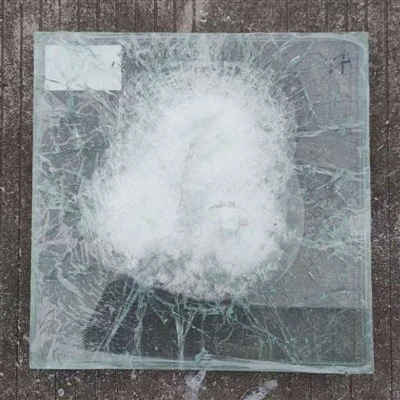
And if you’re ready to talk about your project—whether it’s a single window for your home, a whole storefront, or a secure office—reach out. We can walk through all the options, show you test samples, and make sure you get exactly the protection you need, no more, no less. That’s the stuff that matters, right? Not just checking boxes, but actually having your back when you need it most.
Bulletproof Glass for Vehicles References
National Institute of Justice. (2019). Ballistic Resistance of Body Armor (NIJ Standard-0101.06). U.S. Department of Justice.
Underwriters Laboratories. (2021). Standard for Safety for Ballistic Resistant Glazing Materials (UL 752). Underwriters Laboratories Inc.
Ballistic Protection Research Institute. (2022). Beyond NIJ: Real-World Ballistic Performance of Laminate Glazing. BPRI Technical Report Series.
Shaoxing Transparent Armoring Materials Co., Ltd.
As one of the most professional bulletproof glass for nij standard manufacturers and suppliers in China, we’re featured by quality products and good service. Please rest assured to buy durable bulletproof glass for nij standard made in China here from our factory. We also accept customized orders.
Address: No.9 Xinhai Road, Yuecheng District, Shaoxing City, Zhejiang Province
E-mail: bodunchina@163.com
WebSite: https://www.king-armor.com/
