Yo! As a Camera Link cable supplier, I’ve been chatting with a bunch of folks in the industry lately, and one question keeps popping up: Are there any limitations to the data transfer rate of a Camera Link cable? Well, let’s dig into this topic and break it down. Camera Link Cable
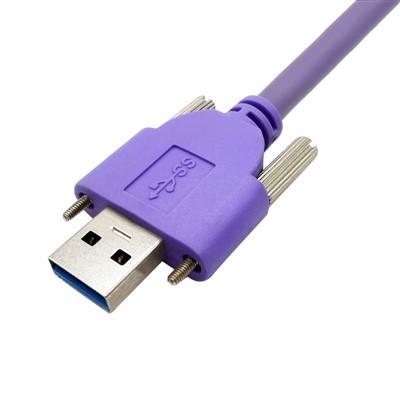
First things first, what’s Camera Link anyway? Camera Link is a standard that’s all about high-speed data transfer between cameras and frame grabbers. It’s like a super – fast highway for getting all the images and video data from your camera to your computer or other processing unit. And man, it’s been a game – changer in areas like machine vision, surveillance, and industrial inspection.
Now, to the heart of the matter – limitations of data transfer rate. There are actually several factors that can put a cap on how fast data can zip through a Camera Link cable.
Physical Constraints
The first thing we need to talk about is the cable itself. Just like a real – world highway, the physical characteristics of the cable play a huge role. Think about it like this: if you’re driving on a dirt road, you can’t go as fast as you would on a smooth, four – lane freeway.
The material of the cable is a big deal. High – quality copper cables are commonly used for Camera Link, but different grades of copper have different conductivity levels. Better conductivity means less signal loss, which in turn allows for higher data transfer rates. If you’re using a cheap cable with low – grade copper, you’re going to hit a wall pretty quickly in terms of how fast you can move data.
The cable’s length also matters. The longer the cable, the more the signal degrades. It’s like whispering a message down a long line of people – by the time it gets to the end, the message might be all messed up. In the case of Camera Link cables, as the length increases, the data transfer rate has to be reduced to maintain signal integrity. For example, a very short cable might be able to handle the maximum data transfer rate of the Camera Link standard, but if you stretch it out to several meters, you’ll likely need to slow things down.
Electrical Interference
Another major limitation comes from electrical interference. Our modern world is full of electromagnetic fields. Whether it’s from fluorescent lights, motors, or other electronic devices, these fields can mess with the signals traveling through the Camera Link cable.
Imagine you’re trying to have a conversation in a noisy room. You have to speak louder and more slowly for the other person to understand you. Similarly, when there’s a lot of electrical interference around the cable, the data transfer rate has to be reduced. To combat this, some Camera Link cables are designed with shielding. The shielding acts like a protective armor, blocking out unwanted electromagnetic signals. But even with shielding, extremely high – interference environments can still pose problems.
Camera Link Standard Limitations
The Camera Link standard itself has its own limitations. There are different versions of the Camera Link standard, like Base, Medium, and Full. Each version has a predefined maximum data transfer rate.
The Base configuration, for example, is the most basic one. It’s designed for lower – resolution cameras and has a relatively lower maximum data transfer rate compared to the Medium and Full configurations. If you’re using a Base – spec Camera Link cable and trying to push data from a high – resolution, high – frame – rate camera, you’re going to run into issues. You’ll either have to upgrade to a higher – spec cable or accept a lower data transfer rate.
Device Compatibility
It’s not just about the cable and the standard; the devices at either end of the cable – the camera and the frame grabber – also matter. If your camera can’t generate data fast enough, then it doesn’t matter how fancy your cable is. You’re only going to get as much data as the camera can produce.
On the other side, the frame grabber has to be able to handle the incoming data. If it’s an older or lower – spec frame grabber, it might not be able to process the data at the maximum rate supported by the cable. It’s like having a super – fast delivery truck, but the warehouse at the end can only unload the goods at a slow pace.
Overcoming the Limitations
So, is there any way to get around these limitations? Well, there are a few things you can do.
If it’s a physical limitation, you can choose the right cable for the job. Opt for high – quality, well – shielded cables made from good – grade copper. And if you need a long cable, consider using signal amplifiers or repeaters. These little devices can boost the signal strength and help maintain the data transfer rate over longer distances.
Regarding electrical interference, try to install the cable away from sources of interference. You can also use cables with extra – thick shielding. And in some cases, using ferrite cores on the cable can help reduce electromagnetic interference.
When it comes to device compatibility, make sure you’re using a camera and a frame grabber that are up to the task. Do some research and get devices that support the data transfer rate you need.
Wrapping Up

In conclusion, there are definitely limitations to the data transfer rate of a Camera Link cable. Physical constraints, electrical interference, the Camera Link standard itself, and device compatibility all play a part in determining how fast data can move. But with the right choices and some smart solutions, you can minimize these limitations and get the most out of your Camera Link setup.
Fiber Optic Cable If you’re in the market for Camera Link cables and want to have a chat about your specific needs, don’t hesitate to reach out. We can help you figure out the best cable for your application, taking into account all these factors that affect data transfer rate. Whether you’re working on a small – scale project or a large industrial installation, we’ve got the expertise to guide you. So, let’s talk and get you set up with the perfect Camera Link cable solution.
References
- Poynton, Charles. "Digital Video and HD: Algorithms and Interfaces." Morgan Kaufmann, 2003.
- "Camera Link – Specified by Automated Imaging Association." Automated Imaging Association (AIA).
Karobert Technology LLC Karobert Trading PTE. LTD.
We’re known as one of the most professional camera link cable manufacturers and suppliers in China, also support customized service. Please feel free to buy high quality camera link cable made in China here from our factory. For price consultation, contact us.
Address: 6250 S 196th St, Kent, WA, 98055, USA.
E-mail: karl@karobert-us.com
WebSite: https://www.karobert-us.com/
