Yo, what’s up! I’m a guy running a connecting rod machining business, and let me tell you, working with high – strength materials for connecting rods is no walk in the park. In this blog, I’m gonna spill the beans on the challenges we face in this field. Connecting Rod Machining
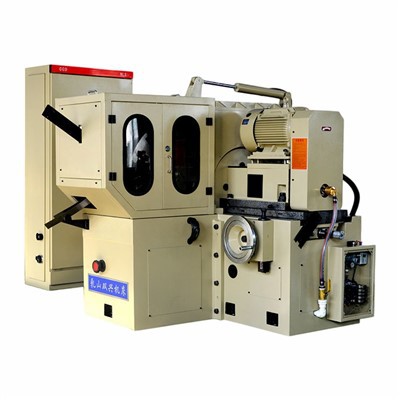
First off, let’s talk about the material properties. High – strength materials, like some advanced alloys, are designed to be tough as nails. They’ve got high tensile strength, which is great for the performance of the connecting rod in an engine, but it’s a real pain in the neck when it comes to machining. These materials are super hard, and that means our cutting tools take a beating.
We’re constantly dealing with tool wear. You know, when you’re cutting through these high – strength materials, it’s like trying to cut through a block of steel with a butter knife. Well, not that extreme, but you get the idea. The tools heat up quickly, and that heat causes the cutting edges to wear out fast. It’s not just a matter of replacing the tools every once in a while; it’s a continuous cycle. And if we don’t keep an eye on it, the tool wear can affect the quality of the finished connecting rod.
For example, if the tool gets too worn, it might not cut the rod to the right dimensions. The diameter could be off, or the surface finish might be rough. And in the engine world, precision is key. A connecting rod that’s even a tiny bit off can cause all sorts of problems, like reduced engine efficiency, increased vibration, and in the worst – case scenario, engine failure.
Another challenge is the chip formation. When we’re machining these high – strength materials, the chips can be a real headache. They don’t break easily like chips from softer materials. Instead, they tend to form long, stringy chips that can get all tangled up in the machine. This can cause blockages in the coolant lines and even damage the cutting tools.
We have to be really careful with our cutting parameters to control the chip formation. For instance, we need to adjust the cutting speed, feed rate, and depth of cut just right. If the cutting speed is too high, the chips might not break properly. If the feed rate is too low, it can increase the machining time and put more stress on the tool. It’s a delicate balancing act, and it takes a lot of trial and error to find the optimal settings.
Moreover, high – strength materials often have high heat – resistance. While this is a useful property for the connecting rod in the engine, it again poses problems during machining. The heat generated during the cutting process doesn’t dissipate easily. This can lead to thermal damage to the material and the tool.
The high heat can cause the material to harden in an uneven way, which is known as work – hardening. Once the material work – hardens, it becomes even more difficult to machine. It’s like trying to cut through a double – hardened block of metal. And for the tools, the high heat can cause thermal cracking. The cutting edges can develop tiny cracks, which eventually lead to tool failure.
We’ve tried all sorts of things to deal with the heat issue. One of the solutions we use is coolant. We flood the cutting area with coolant to keep the temperature down. But even with coolant, it’s still a challenge. Sometimes, the coolant can’t reach all the parts of the cutting zone effectively, especially in complex machining operations.
And then there’s the cost factor. High – strength materials are usually more expensive than regular ones. And when you add the cost of dealing with the challenges like tool wear and complex machining processes, it all adds up. We have to charge our customers more to cover these costs, which can be a turn – off for some. But at the same time, we can’t compromise on quality. We need to use the best materials to ensure the reliability and performance of the connecting rods.
Another aspect is the machining complexity. Connecting rods have a rather intricate shape. They have small holes, curved surfaces, and precise dimensions. When you’re working with high – strength materials, machining these complex shapes becomes even more difficult.
For those small holes, we need to make sure they’re drilled straight and to the correct diameter. Any deviation can affect the fit of the bearings or other components that go into the connecting rod. And the curved surfaces need to be smooth and have the right contour. If they’re not, it can cause problems with the piston movement and overall engine performance.
We use advanced CNC machines to try and achieve the required precision. But even with these machines, the high – strength materials can make the machining process more time – consuming. The machines have to operate at lower speeds to ensure accuracy, which means we can produce fewer connecting rods in a given time frame.
Quality control is also a huge challenge. We have to make sure that every single connecting rod meets the strict quality standards. With high – strength materials, it’s even more critical because any defect can have serious consequences for the engine.
We use a variety of inspection methods, like measuring the dimensions with precision gauges and using non – destructive testing techniques to check for internal defects. But these methods are time – consuming and expensive. And with the high volume of production we aim for, it’s a constant struggle to keep up with the quality control process.
Despite all these challenges, we’re not giving up. We’re constantly looking for new ways to improve our machining processes. We’re experimenting with new cutting tools that are more resistant to wear and heat. We’re also researching new coolant formulations that can better dissipate the heat during machining.

If you’re in the market for high – quality connecting rods made from high – strength materials, don’t hesitate to reach out. We’ve got the experience and the expertise to overcome these challenges and deliver top – notch products. Whether you’re a small engine manufacturer or a big – time automotive company, we can work with you to meet your specific needs. So, if you’re interested in starting a discussion about your connecting rod requirements, let’s talk! Just hit us up and we can get the ball rolling on a great partnership.
Double Disc Grinding Machines References
- "Machining of Advanced Engineering Materials" by John Aranda
- "High – Strength Materials in Automotive Applications" by Emily Smith
Rushan Shuangxing Machine Tool Manufacturing Co., Ltd.
Rushan Shuangxing Machine Tool Manufacturing Co., Ltd. is one of the most reliable connecting rod machining manufacturers and suppliers in China, featured by quality products and low price. Please rest assured to wholesale durable connecting rod machining for sale here from our factory. Customized orders are welcome.
Address: No. 28, Chuangye 1st Road, Rushan, Weihai, Shandong Province, China.
E-mail: wxm@rssxjc.net
WebSite: https://www.ddgmachine.com/
