What’s good, everyone — especially if you’re a manufacturer, warehouse manager, or just someone who’s had to troubleshoot static-related mess with materials on the job. If you’ve ever worked with electronics, medical gear, or even sensitive packaging, you know how much of a pain static electricity can be. It fries microchips, messes up finished goods, and even makes handling some materials straight-up annoying. Today, I’m breaking down a question I get ALL the time as an angle corner profile supplier: What are the electrostatic-resistant properties of angle corner profiles? And no, this isn’t some stuffy textbook breakdown — I’m talking real-world use cases, what these profiles actually do (and don’t do), and why they matter way more than you might think. Angle Corner Profile
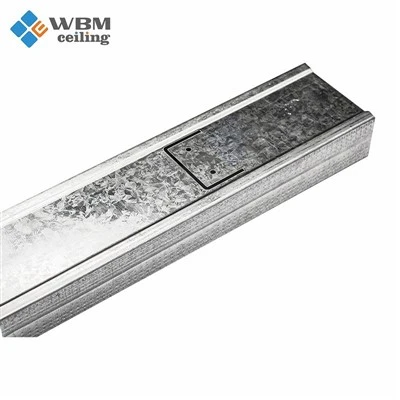
First, let’s get one thing straight: an angle corner profile isn’t just some random L-shaped plastic (or metal, wait — no, hold up, most electrostatic-resistant (ESR) profiles are plastic, but I’ll get to that) piece that goes on the edge of a pallet or a rack. These profiles are made specifically to line sharp corners, right? Sharp corners on metal racks, cardboard boxes, or even custom framing will tear shrink wrap, scratch product surfaces, and — here’s the big one when we’re talking ESR — build up static because their rough or porous edges don’t dissipate charge. That’s where ESR angle corner profiles come in.
Now, let’s get into the science, but keep it simple. Static electricity is just an imbalance of electric charge on the surface of a material. When two materials rub together (like a box sliding down a pallet, or a hand grabbing a profile), electrons transfer, and one becomes positively charged, the other negative. If the material is an insulator (most standard plastic, wood, even some metal coatings), that charge just sits there, waiting to jump to anything conductive — like a microchip, which is why you’ll hear a tiny zap before a $500 circuit board dies. ESR materials, though, have a surface resistance between 10^6 and 10^12 ohms per square. Wait, what does that mean? It’s not so conductive that it causes a short circuit, but it’s conductive enough that built-up charge bleeds off slowly, instead of staying trapped until it zaps something.
So what makes a good ESR angle corner profile different from a regular one? Let’s break down the key properties. First, material composition. Most ESR profiles we supply are made from compounds like carbon-loaded PVC or thermoplastic polyurethane (TPU) blended with antistatic additives. The carbon particles are tiny, evenly dispersed throughout the plastic — not clumped, because clumps would create hot spots where charge builds up anyway. The antistatic additives do two things: some attract moisture from the air to create a thin, conductive layer on the surface, and others work chemically to let electrons move through the material slowly. Regular angle corner profiles don’t have either of that — they’re pure PVC or polyethylene, which are insulators, so they hold all the static they pick up.
Next, surface uniformity. Sharp, uneven edges on a profile mean more friction when materials slide, which means more static generation. ESR profiles are extruded with smooth, consistent walls — not too thick, not too thin — so when you run a pallet of PCBs along them, there’s less friction, and any charge that does build up can move across the smooth surface instead of getting stuck in a rough spot. Wait, but I’ve had clients ask: “What about if the profile gets scratched? Does that kill the ESR properties?” Good question. If the scratch is deep enough to expose the base (non-ESR) material, yeah, that spot becomes an insulator. But minor surface scuffs? Those don’t mess up the carbon dispersion or additive layer, so the ESR properties hold. I always tell my clients to inspect profiles after heavy use, but a small scratch here or there isn’t a dealbreaker.
Then there’s environmental resistance, which is huge. A lot of ESR stuff you buy online works great in a climate-controlled office, but if you’re in a warehouse that’s freezing, super dry, or really humid? It falls apart. Dry air is bad because antistatic additives rely on a thin moisture layer to work — if the air is less than 30% relative humidity (RH), that layer evaporates, and the material goes back to being an insulator. Carbon-loaded profiles are better here because they don’t rely on moisture — the carbon particles create a conductive network no matter how dry it is. Humid air? Some antistatic additives can leach out over time if the profile is left in constant high humidity (like a loading dock that’s always damp). That’s why we test all our ESR profiles at 15% RH and 60% RH — if they hold their surface resistance within that 10^6-10^12 ohm range, they’re good for most industrial settings.
Now, let’s talk real-world uses, because that’s what actually matters. I supplied a batch of ESR angle corner profiles to a medical device manufacturer last year, and their old regular profiles were causing 12% of their finished sensor units to get zapped during shipping. The profiles lined the corners of their custom plastic crates holding the sensors, and every time a crate got moved, the plastic rubbed against the angle, built up static, and when the crate was opened, the charge jumped to the sensor. After switching to ESR profiles, that defect rate dropped to less than 1% — game changer. Another client is a pallet rack manufacturer that uses ESR profiles on the top corners of their racks for storing semiconductors. The profiles don’t just prevent product scratches, they also keep the rack from building up charge when forklifts move pallets against it, which is a big safety win too — you don’t want a forklift operator getting a shock every time they grab a load.
Wait, but there’s a myth I hear all the time: “Any plastic profile labeled ESR is the same.” No, not even close. A lot of cheap profiles on Amazon or Alibaba will slap an ESR label on them just because they added a tiny bit of carbon, but they don’t test for consistent surface resistance. I’ve had a small electronics startup come to me last year saying their previous supplier’s “ESR profiles” were zapping their $20k prototype boards. We tested those bad boys, and their surface resistance was 10^15 ohms — that’s way above the ESR threshold, so they were just regular insulators. The difference is testing: every batch of our profiles gets checked with a surface resistance meter to make sure they fall in that sweet spot, so you don’t waste money on junk that doesn’t work.
Also, let’s cover what ESR angle corner profiles aren’t. They aren’t going to stop a direct static discharge from a person — that’s what ESD wrist straps or grounded floors are for. These profiles are designed to handle static that builds up from friction between materials moving along them, not the static you carry on your clothes. They also aren’t chemically resistant to every single thing — if you’re storing harsh chemicals that eat through plastic, you’ll need a different type, but for most electronics, packaging, and warehouse uses, the ESR compounds we use hold up to mild chemicals like cleaning sprays or diluted solvents.
Another thing people overlook: longevity. A lot of ESR materials lose their properties over time when exposed to UV light, right? If you’re using angle corner profiles outdoors or in a warehouse with big overhead windows that let in sunlight, standard ESR profiles will fade and their antistatic additives will break down after a year or two. So we also supply UV-stabilized ESR profiles for outdoor use — those have extra additives that block UV, so they keep their ESR properties for 5+ years, even in direct sunlight. I had a client who used standard ESR profiles on their outdoor shipping racks, and after 18 months, they were useless. Switched to the UV-stabilized ones, and they’re still working great 3 years later.
Wait, let’s get back to that surface resistance number, because it’s not just a random stat. The 10^6 to 10^12 ohm per square range is the industry standard for electrostatic-resistant materials, set by the Electronic Industries Alliance (EIA) and the International Electrotechnical Commission (IEC). That range is key because below 10^6 ohms, the material is too conductive — it will cause a short circuit if a wire touches it, which is another big risk with electronics. Above 10^12, it’s an insulator, so it doesn’t dissipate static at all. Our profiles are tested to hit that exact range consistently, no exceptions. I can’t tell you how many clients have come to me after losing thousands to product damage because their previous profiles were either too conductive or not conductive enough.
So when should you actually use ESR angle corner profiles? If you’re handling anything sensitive to static: electronics (PCBs, microchips, semiconductors), medical devices (sensors, pacemaker components), aerospace parts, even some high-end packaging for luxury goods or art. If you’re working in a dry climate, or a climate where humidity fluctuates a lot, ESR profiles are a must. If you’re storing or moving products that can be damaged by a tiny zap, don’t skip these.
Now, if you’re reading this and thinking, “Yeah, this applies to us, we need to upgrade our profiles,” don’t wait around. A lot of warehouses and manufacturers don’t realize how much product they’re losing to static until they switch to ESR profiles. I’ve had clients say they spent $10k a month on defect costs before switching, and after switching, that number dropped to $500. That’s not a small win.
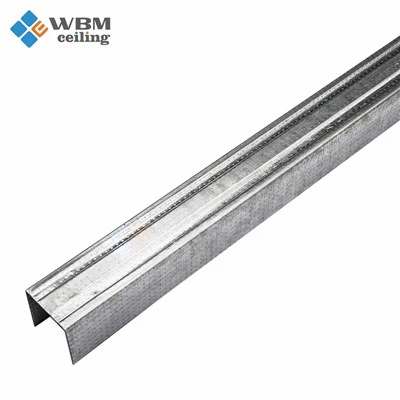
If you’re ready to stop dealing with static damage, scratched products, and wasted money, reach out to us for a sample or to chat about your specific needs. We can help you figure out the right ESR angle corner profile for your use case — whether it’s for indoor warehouse racks, outdoor shipping, electronics packaging, whatever you need. No pressure, just honest advice.
Steel Coil References
- Electronic Industries Alliance. (2018). EIA-541: Electrostatic Discharge Control Program for the Electronics Industry.
- International Electrotechnical Commission. (2020). IEC 61340-2-3: Standard Test Methods for Electrostatic Properties of Materials – Part 2-3: Specific Test Methods for Conductive and Antistatic Materials.
- Warehouse Education Research Council. (2021). Static Electricity Mitigation in Industrial Storage and Handling.
Langfang Weikaihua Building Material Co., Ltd.
Langfang Weikaihua Building Material Co., Ltd. is one of the most professional angle corner profile manufacturers and suppliers in China, featured by quality products and low price. Please rest assured to buy discount angle corner profile from our factory. Contact us for customized service and free sample.
Address: Peng Er Wan Villiage, Zhao Ge Zhuang Town, Wen’an County, Langfang City, Hebei Province, China
E-mail: joyce@wbm.cc
WebSite: https://www.wbmceiling.com/
