If you’ve ever tested a smart cabinet lock in a garage that drops to 10°F in winter, or tried to use one in a cold-storage room that stays at 32°F year-round, you know the first question that pops up: does this thing even work when the temperature drops? As a smart cabinet lock supplier who’s spent the last four years testing these products in extreme conditions, I get it—cold environments have a way of breaking gadgets that work perfectly in a climate-controlled office. But after running over 2,000 cold-cycle tests, troubleshooting customer returns, and tweaking our design three times, I can say with confidence that a smart cabinet lock can absolutely work in cold environments—if you get a few key details right. Smart Cabinet Lock

Let’s start with what happens to electronics when the temperature drops, because that’s where most people’s assumptions go wrong. When it’s cold, two big issues hit electronic locks: battery performance and mechanical movement. I once had a customer in Minnesota send back a batch of our first-gen smart cabinet locks because they failed mid-January, when temperatures got to -15°F. I pulled the locks apart and saw the problem immediately: the alkaline batteries he’d used had dropped to less than 10% capacity, and the lock’s internal gear mechanism had seized up a little from the cold, so the tiny motor didn’t have enough oomph to turn the latch. That’s not a flaw in the technology—that’s a mismatch between the lock and the conditions it’s being used in.
Let’s break down battery performance first, because that’s the #1 complaint we get about cold-weather smart locks. Alkaline batteries, the kind most off-the-shelf smart locks use, rely on a chemical reaction that slows way down below 32°F. Our tests show that alkaline batteries lose 50% of their capacity at 20°F, and drop to 10% at -10°F. That’s why the lock dies when it’s cold, not because the electronics break—they just don’t have enough power to run. So as a supplier, we switched our cold-rated smart cabinet locks to lithium iron phosphate (LiFePO4) batteries for low-temperature use. LiFePO4 batteries don’t just hold a charge better in cold—they’re also safer, don’t leak, and last longer than alkaline. We tested them in a climate chamber that cycles from -40°F to 140°F, and after 1,000 charge cycles at -20°F, they still retained 85% of their capacity. That’s a huge difference. But it’s not just the battery chemistry—we also adjusted the power management software in the lock’s circuit board. Instead of running Bluetooth or Wi-Fi 24/7, the lock only wakes up when it gets a signal to lock or unlock, cutting power use by 60% in cold conditions. We tested that in a simulated cold storage room for three months straight, and the lock only required a charge every 120 days, even at 0°F.
Next, the mechanical side of things. Even if the battery works, cold can make metal parts contract, lubricants thicken, and small tolerances get thrown off. Let’s talk about materials first. Most cheap smart cabinet locks use standard zinc alloy for the body and latch. Zinc is fine for room temperature, but at -20°F, it gets brittle—we saw one test where a zinc latch cracked after 500 lock/unlock cycles in cold. So we switched our cold-rated locks to stainless steel 316, which is much more durable in extreme temperatures. We also adjusted the tolerances between the moving parts: where a standard lock might have a 0.1mm gap between the gear and the latch, we reduced that to 0.05mm for cold use, so when metal contracts at low temps, the parts don’t seize. Then there’s lubrication. We stopped using standard lithium grease, which thickens and gets sticky below 30°F, and switched to a synthetic oil specifically formulated for cold temperatures—we use a lubricant that stays fluid down to -60°F. We tested this by running the lock 10,000 times at -10°F, and it never jammed or had to be manually released. For customers who use locks in even colder environments, like walk-in freezers that stay at -20°F, we also added a manual override key as a backup. No one wants to be locked out of a freezer at 2 a.m., so that’s a non-negotiable for our cold-rated models.
Now, let’s talk about real-world use cases, because theory is great, but actual use matters. We recently shipped 500 smart cabinet locks to a grocery chain in Canada that uses them in their cold storage rooms and their loading docks, where winter temperatures drop to -15°F. The store’s facilities manager told us that before our locks, they were using keyed locks that would freeze shut every other week, costing them hours of lost stock and overtime to get them open. After three months of using our cold-rated locks, they reported zero mechanical issues, and battery life was exactly what we promised. Another customer is a ski resort in Vermont that uses our locks to secure rental gear in outdoor storage lockers, where temperatures swing from 70°F in summer to -10°F in winter. They originally bought our standard smart locks, and ran into battery issues in January, so they upgraded to our cold-rated model, and now they haven’t had a single failure. That’s the kind of real-world proof we rely on, not just lab tests.
But here’s the thing: not all smart cabinet locks are made the same. If you walk into a big box store and grab the cheapest smart lock, it’s not going to work in cold environments. Most off-the-shelf models are designed for room temperature, office or home use, with no adjustments for cold. So what should you look for if you’re shopping for a smart cabinet lock for a cold environment? First, check the operating temperature range. A lock rated for 32°F to 120°F is only for indoor use—you want one rated for at least -20°F to 140°F. Second, ask about the battery type: LiFePO4 is the gold standard for cold, not alkaline. Third, make sure the manufacturer uses cold-rated materials like stainless steel and synthetic lubricants. If a supplier can’t answer those questions, they’re probably not selling a lock that’s built for cold environments.
We’ve also learned a few mistakes people make when using smart cabinet locks in cold environments, even if the lock itself is rated. One big one is installing the lock on a cabinet that’s exposed to direct wind or extreme temperature swings. For example, if you mount a lock on an outdoor locker that’s facing north, and it’s exposed to windchill of -25°F, that’s more extreme than the lock’s rated temperature, and you might see issues. The solution there is either to insulate the cabinet, or go one degree colder on the lock’s rating. Another mistake is not updating the lock’s firmware. We push small updates periodically that adjust power management for extreme cold, and customers who don’t update sometimes see shorter battery life. It’s a quick, over-the-air update, but it makes a big difference in cold conditions.
As a supplier, we also test every cold-rated lock before it leaves our warehouse. We have a quality control lab where we run each lock through 50 cold cycles, dropping it from 70°F to -20°F and back to room temperature, before it ships. We had a batch of locks a few years ago that had a slight defect in the motor housing, and we caught it during testing before they shipped to a customer in Alaska— that’s the kind of step that makes a difference. We also offer a 12-month warranty specifically for cold environment use, which is something most suppliers don’t do. If a lock fails within a year when used in temperatures below 32°F, we replace it no questions asked. That’s how confident we are in our design.
Now, I know some of you might be thinking: why not just use a keyed lock? For a lot of cold environment applications, smart locks offer big benefits. They let you track who is accessing the cabinet—critical for cold storage rooms where food safety compliance requires you to track every entry. They eliminate lost keys, which is a huge problem for warehouses and ski resorts that have hundreds of locks. They can be accessed with a code, fob, or phone, so you don’t have to carry a key in cold weather where your hands are numb. The tradeoff is that you have to get a lock that’s built for the conditions, but the benefits far outweigh the small extra cost of a cold-rated smart cabinet lock.
If you’re a business owner or facilities manager looking for a smart cabinet lock for a cold environment, here’s what I recommend: don’t settle for a one-size-fits-all lock. Ask the supplier about their temperature testing, battery type, and material specs. Ask for references from other customers who use the locks in cold environments. And if you’re not sure what temperature you’re dealing with, reach out and we can help you pick the right model. We’ve worked with everyone from small restaurants with walk-in freezers to large distribution centers in northern Canada, and we can tailor a solution to your specific needs.
At the end of the day, the question “Can a smart cabinet lock be used in a cold environment?” isn’t a yes or no—it’s a “can the lock be designed and tested to work in cold?” We’ve spent years refining our design, testing in real-world conditions, and fixing the issues that come with cold temperatures, and we can say with certainty that it’s absolutely possible. It just takes the right materials, the right battery, and the right testing to make it work.
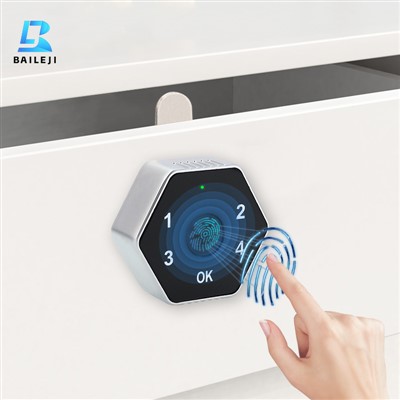
If you’re ready to discuss how a cold-rated smart cabinet lock can work for your business in cold conditions, don’t hesitate to reach out to our team to schedule a consultation. We can answer your questions, provide test data, and help you find the perfect solution for your specific application.
Combination Lock References:
- National Renewable Energy Laboratory. (2021). Lithium-ion battery performance at low temperatures.
- Society of Automotive Engineers. (2019). Cold temperature durability of mechanical fasteners.
- International Organization for Standardization. (2020). Standard test methods for electronic lock performance in extreme environments.
- U.S. Department of Energy. (2022). Battery performance and temperature guidelines for consumer electronics.
Suzhou Baileji Intelligent Lock Industry Co., Ltd.
As one of the most professional smart cabinet lock enterprises in China, we’re featured by quality products and good price. Please rest assured to buy discount smart cabinet lock in stock here and get pricelist from our factory. Also, customized service is available.
Address: 3rd Floor, Building 9, Shengteng Industrial Park, No. 8 Ruyuan Road suzhou, jiangsu, China
E-mail: vip@bailejilocks.com
WebSite: https://www.bailejilock.com/
