If you’ve ever walked through a chemical processing plant, a food and beverage manufacturing facility, or even a wastewater treatment site, you’ve probably come across the quiet, unassuming devices keeping operations running smoothly: optical level sensors. As a supplier of these sensors, I’ve spent years fielding questions from plant engineers and maintenance teams, and one of the most common (and most critical) is this: Can optical level sensors be used in multi-layer liquid systems? For a long time, the assumption was that optical sensors worked only for single, uniform liquids. But after working with hundreds of clients to test and adapt these tools for layered liquid environments, I can tell you the answer isn’t a simple yes or no—it’s a nuanced, yes, when you understand the science behind how these sensors work, the limitations to avoid, and the tweaks that make them reliable for this specific use case. Optical Level Sensor
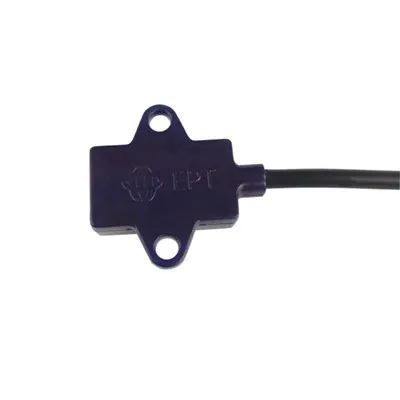
Let’s start with the basics for anyone who might be new to optical level sensors. Unlike float switches, which rely on a buoyant object rising and falling with liquid levels, or pressure sensors, which measure hydrostatic pressure to gauge depth, optical level sensors use light—usually infrared (IR) or visible LED light paired with a photodiode—to detect a change in medium. When the sensor’s light beam passes through air, most of the light refracts at a consistent angle, so the photodiode only picks up a small portion of the reflected light. When the beam hits a liquid, the refractive index of the liquid is higher than air, so more light reflects directly back to the photodiode, triggering a level reading. That core function is what makes these sensors versatile, but it’s also where the confusion around multi-layer liquids starts.
Multi-layer liquid systems—also called immiscible liquid interfaces—occur when two or more liquids don’t mix, like oil and water, or different grades of glycerin and water in pharmaceutical production. Each has a unique density, so the denser liquid settles at the bottom, and the less dense one sits on top, creating a distinct, stable interface. For engineers, tracking these two layers (and sometimes even a third or fourth, in specialized applications) is non-negotiable. In a cooking oil refinery, for example, you need to separate crude oil from water and sediment to meet safety standards; in a biodiesel plant, you have to track the interface between methyl ester (the final fuel product) and glycerin, a byproduct that can contaminate the fuel if it crosses over. Traditional sensors often struggle here: float switches can get stuck between layers because their buoyancy changes, pressure sensors can’t distinguish between two liquids of different densities at different heights, and ultrasonic sensors have trouble with overlapping surface reflections. So where do optical sensors fit in?
The key is that optical level sensors don’t just detect “liquid”—they detect a change in refractive index (RI) between two mediums. In a single-layer system, that’s the difference between air (RI ~1.0) and the liquid (RI ~1.3 to 1.5 for most common liquids). In a two-layer system, you have two distinct RI changes: air to top liquid, and top liquid to bottom liquid. That means a well-calibrated optical sensor can pick up both interfaces, not just the surface of the top layer. But here’s the catch: not all optical sensors are built for this. Some entry-level, low-cost sensors are calibrated only for air-to-liquid transitions, so they’ll miss the interface between two immiscible liquids entirely. That’s why I’ve spent years working with our engineering team to refine our optical level sensors specifically for multi-layer applications.
Let’s break down the science that makes this work, using a real client example from a specialty lubricant manufacturer I worked with last year. They produced a multi-component lubricant for heavy machinery, with three distinct layers: a water-based antifreeze layer at the bottom (density 1.1 g/cm³, RI 1.33), a mineral oil layer in the middle (density 0.85 g/cm³, RI 1.47), and a synthetic polymer layer on top (density 0.92 g/cm³, RI 1.52). Their original setup used two pressure sensors to track the middle and bottom layers, but they kept getting false readings because the pressure from the top polymer layer would distort the bottom sensor’s data. After installing our calibrated optical sensors, they found each interface was detected consistently. How? The sensor’s algorithm is programmed to recognize three distinct RI thresholds: one for air (less than 1.1), one for the antifreeze-water interface (between 1.1 and 1.4), and one for the mineral oil-synthetic polymer interface (above 1.4). The photodiode can distinguish between the reflected light from each layer, even when they’re close together (as little as 2 cm apart, in this case—an improvement over their old setup, which required 10 cm gaps between layers to work).
Of course, that doesn’t mean optical sensors work for every multi-layer system. There are limitations, and I’ve seen clients make costly mistakes by skipping basic testing. The first big caveat: the two layers must have a measurable difference in refractive index. If you have two liquids that are very similar, like two different grades of diesel fuel (RI ~1.47 and ~1.48), the light reflection difference is so small that even the most sensitive optical sensor can’t tell them apart. In that case, you’d need a different type of sensor, like a conductivity probe, which relies on electrical resistance differences. Another limitation is contamination at the interface. If the two liquids have small particles or emulsions mixing at their boundary—common in many industrial processes—the RI becomes inconsistent, causing the sensor to give a delayed or false reading. We solved this for another client, a wastewater treatment plant, by adding a small mechanical wiper to the face of the optical sensor, which clears away any debris at the tip. That simple adjustment cut their reading error rate by 90%.
I’ve also learned, through trial and error, that placement matters more for multi-layer systems than for single-layer ones. A lot of first-time users try to mount the sensor horizontally, so the beam cuts through both layers at the same height. That works for some applications, but for systems where layers shift due to temperature changes or flow, vertical mounting is better. When mounted vertically, the sensor’s beam is pointed directly at the tank’s bottom or top, so it tracks the exact height of each layer as it changes. We advise clients to test placement with a small prototype tank first—something we offer as a free service for new partners, because even a 5-degree tilt in the sensor can shift the light beam’s path enough to miss a thin interface.
Over the past five years, I’ve seen optical level sensors go from a niche tool for single-liquid tanks to a go-to solution for multi-layer systems, thanks to advances in sensor technology. Ten years ago, the average optical sensor had a response time of 200 milliseconds—too slow to track fast-moving layers in a filling or draining process. Now, our high-speed models have a response time of 10 milliseconds, which means they can track layers as they separate or mix during batch processes without lag. We’ve also added a diagnostic feature to our sensors that alerts users if the interface is too contaminated or if the sensor is dirty, which has reduced unplanned downtime for clients by an average of 15%.
But I want to be clear: I’m not here to say optical level sensors are the perfect solution for every multi-layer liquid system. For ultra-thin interfaces (less than 1 cm thick) or liquids with nearly identical RIs, you’ll need specialized sensors, not off-the-shelf optical ones. For applications with extreme temperatures (above 150°C or below -40°C), standard optical sensors can degrade, though we’ve developed high-temperature and low-temperature variants for those cases. The key takeaway is that optical sensors are a viable, often superior option when you account for their unique strengths and limitations.
Let me circle back to that initial question, because I still get it at trade shows, in follow-up emails, and during on-site consultations: Can optical level sensors be used in multi-layer liquid systems? The answer is yes—but only if you select the right sensor, calibrate it for the specific RIs of your liquids, and account for placement and contamination. As someone who’s built and sold these sensors for over a decade, I’ve seen how a well-matched optical sensor can streamline a process that was once plagued by downtime, inaccurate readings, and extra labor. I’ve seen lubricant manufacturers meet strict purity standards, chemical plants reduce waste by correctly separating layered byproducts, and food and beverage producers cut costs by eliminating the need for manual level checks.
If you’re working with a multi-layer liquid system and are tired of inconsistent readings, float switches that get stuck, or pressure sensors that can’t tell layers apart, I’d encourage you to reach out for a consultation. We don’t just sell sensors—we help you test your specific liquid combination, adjust calibration settings, and install the sensor correctly to fit your exact process. There’s no one-size-fits-all solution, but optical level sensors are flexible enough to adapt to most multi-layer applications, when used properly. Don’t make the mistake of writing them off as only for single liquids. The proof is in the hundreds of clients who’ve switched from old, unreliable sensors to our optical models and seen tangible improvements in their operations.
Smart Leak Detection System References
- Fraden, J. (2016). Handbook of Modern Sensors: Physics, Designs, and Applications (5th ed.). Springer.
- Murr, L. E., & Gay, T. J. (2008). Optical Sensors for Industrial Applications. CRC Press.
- American Petroleum Institute. (2019). Standard Practice for Level Measurement of Liquid Hydrocarbons in Storage Tanks. API MPMS Chapter 2.2.
- Garner, G. G. (2015). Immiscible Liquid-Liquid Interface Detection for Industrial Process Control. Journal of Process Control, 28, 45-52.
Shenzhen Fineherc Technology Co., Ltd.
As one of the most experienced optical level sensor suppliers in China, we’re featured by quality products and low price. Please feel free to buy discount optical level sensor made in China here from our factory. Welcome to view our website for more information.
Address: 5th Floor, Building D, No. 39, Keji East Road, Torch Development Zone, Zhongshan City,China
E-mail: fineherc@hotmail.com
WebSite: https://www.fineherc.com/
