If you’ve ever stood in the middle of a 100,000-square-foot warehouse watching a forklift driver zigzag through aisles, wasting time waiting for loads to be retrieved, you’ve probably asked the same question I hear every week: “How long does it actually take to install an Automated Storage and Retrieval System (ASRS)?” As a supplier who’s worked on 70+ ASRS projects across e-commerce, pharmaceuticals, and manufacturing over the past 12 years, I’ll tell you there’s no one-size-fits-all answer—but I’ll break down every factor that shapes installation timelines, what delays you can avoid, and what to expect from start to finish. Automated Storage and Retrieval System
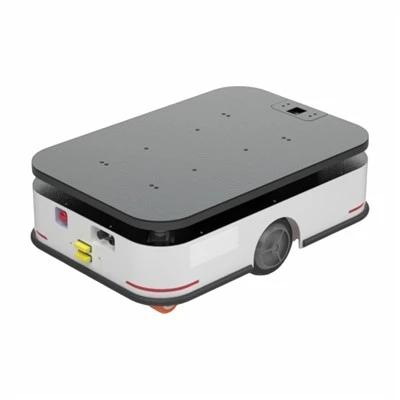
First, let’s get one thing straight: ASRS installation isn’t like bolting together a prefab shelving unit in an afternoon. It’s a precision-engineered system that integrates hardware, software, and on-site adjustments, so timelines hinge on three core elements: the type of ASRS you choose, the size and condition of your facility, and how prepared you are to collaborate during the process. Let’s start with the most common ASRS configurations and their baseline timelines, because that’s where most customers start their research.
When I talk to a new client, the first question they ask after “how much does this cost?” is about speed. For smaller, simpler ASRS setups—think a miniload ASRS for storing small parts like electronics, pharmaceuticals, or e-commerce polybags—we typically complete installation in 4 to 8 weeks. Wait, that’s faster than a lot of people expect, but only if the customer’s space is ready. Miniload systems use robotic shuttles or cranes that move within narrow, fixed aisles, so there’s far less site work than with larger unit-load systems. For example, last year we installed a miniload ASRS for a medical device company in Cleveland; their existing warehouse had a reinforced slab (non-negotiable for heavy ASRS gear) and the electrical panel was already located near the planned system footprint, so we wrapped installation in 6 weeks. If their slab had needed extra reinforcement or the electrical service was undersized, that timeline would have jumped by 2 to 3 weeks.
Larger unit-load ASRS, the kind that moves full pallets of goods—common in grocery distribution, automotive parts, or big-box retail warehouses—has a longer baseline: 12 to 20 weeks. These systems use heavy-duty cranes that lift entire pallets weighing up to 5,000 pounds, so the hardware is bulkier and the integration is more complex. A recent project in Detroit for an automotive parts supplier is a perfect example: their facility had a 200-foot clear height, which was ideal for stacking pallets higher than standard shelving, but their building’s columns were spaced 10 feet wider than our system’s required aisle width. We had to add temporary bracing to the existing structure during installation and adjust the crane’s base mounts, adding 4 weeks to our initial 12-week timeline. That’s why I always tell customers to get a site assessment from your ASRS supplier before locking in a timeline—we catch gaps like that early, not mid-install.
Then there’s the most complex ASRS type: the goods-to-person (G2P) system, which is what Amazon uses in its fulfillment centers. G2P systems bring the shelf directly to a picker, eliminating the picker’s time walking through aisles, and they often integrate with carousel modules, shuttle systems, and mobile robots. Installation timelines for G2P systems range from 18 to 30 weeks, and I’ve had projects take even longer if the customer has unforeseen site constraints. Last year, a DTC apparel brand in Chicago hired us to install a G2P system in a historic warehouse built in the 1920s, with load-bearing walls that couldn’t be modified. We had to adjust the shuttle system’s path multiple times to avoid those walls, and we also had to re-route the building’s HVAC lines that ran right through the planned system footprint. That project took 27 weeks total, 9 weeks over our baseline, but the brand saved $2 million in new construction by working with the existing building rather than relocating.
Now, those are baseline timelines— but a lot of variables can stretch (or shorten) that schedule, and some are within your control, while others are down to the equipment we’re installing. Let’s break down the controllable factors first, because these are the ones that most of our customers can plan for in advance. The biggest controllable factor is site preparation. ASRS systems require a flat, level reinforced concrete slab (no cracks wider than 1/8 inch, per industry standards), adequate electrical service (most systems need 480V three-phase power, not 120V or 240V), and clear access for delivery trucks bringing in large crates of ASRS hardware. I had a client in Atlanta a few years ago who tried to cut costs by delaying slab reinforcement; when we showed up to install, the slab had settled 1.5 inches in the middle of the system footprint. We had to jackhammer and repair 2,000 square feet of slab, pushing installation back 3 weeks, and the client ended up paying more in emergency repairs than it would have cost to do the work right the first time. That’s the kind of delay I beg customers to avoid.
Another controllable factor is integration with your existing warehouse management system (WMS) and enterprise resource planning (ERP) software. A ASRS doesn’t work in a vacuum—it has to talk to your WMS to know what to store, where to put it, and when to retrieve it. If you wait until installation week to share your WMS API documentation with our engineering team, we’ll spend extra time troubleshooting connectivity during installation, rather than focusing on hardware setup. Last quarter, we installed an ASRS for a e-commerce brand in Austin that uses a popular Shopify-based WMS; the client shared the API details 6 weeks before installation, so our team pre-built the integration in our test lab, and we only needed 2 hours of on-site work to connect it. For a similar client who waited until day one of installation to share their WMS info, we added 5 days to the timeline just to get the software talking to each other. I always tell customers: share all your software specs and access credentials at least 4 weeks before the scheduled installation start date.
Now, the less controllable factors: lead times for custom hardware. A lot of people don’t realize that key ASRS components—especially high-capacity cranes or specialized shuttles—have long lead times, sometimes 12 to 16 weeks, independent of installation time. We don’t build these parts on a shelf; each is custom-engineered to fit your facility’s dimensions, weight loads, and throughput needs. For example, a client in Los Angeles wanted a unit-load ASRS with a 10,000-pound capacity crane, which isn’t our standard off-the-shelf model. We ordered the crane 16 weeks before installation, and once it arrived, installation took 18 weeks as planned. If we’d waited until 4 weeks before installation to order the crane, we would have had to push the entire project back 12 weeks, delaying their operational launch. That’s why we always include hardware lead times in our initial project proposal, so customers aren’t caught off guard.
Another external factor that can impact timeline is permitting and local construction regulations. We work across 12 states, and I’ve seen timelines shift by 2 to 4 weeks because of things like fire code reviews, zoning permits for industrial construction, or local labor requirements. For example, a project in Boston required a fire marshal inspection of the entire system’s safety barriers and emergency shutoff switches, which added 3 weeks to our timeline. In Texas, we completed a project in 14 weeks, with no extra delays, because the local building department had a fast-track process for industrial automation projects. That’s why we assign a dedicated project manager to every client—they handle all the permitting and inspections, so the customer doesn’t have to, and they flag any potential delays early.
Once installation is physically done, there’s still two more critical phases before your ASRS is operational: testing and commissioning, and training. Most customers don’t realize these are part of the total timeline. Testing usually takes 1 to 2 weeks, during which we run hundreds of cycles: moving pallets up and down, side to side, testing emergency stops, simulating peak throughput to make sure the system doesn’t jam. For a miniload system, that might be 500 test cycles; for a G2P system, it’s 5,000+ cycles to ensure every shelf and pick station works seamlessly. Then there’s commissioning, where we connect the system to your WMS and run live test loads with your actual inventory, not empty crates. That takes another 1 to 3 weeks, depending on inventory volume. For example, a food distributor client would only use their actual pallets of non-perishable goods, so we had to coordinate with their receiving team to move inventory over to the ASRS, which added 2 weeks to testing and commissioning.
Finally, training your team. I know this seems like an afterthought, but it’s not—your pickers, warehouse managers, and maintenance staff need to know how to operate the system, troubleshoot common issues, and perform routine maintenance. We offer on-site training that takes 2 to 5 days, depending on the size of the team and their tech comfort level. For a smaller operation with a 3-person warehouse team, training takes 2 days; for a large fulfillment center with 20+ staff, it takes 5 days. If you skip training, you’ll have downtime when the system goes live, which can eat into the productivity gains you expected from the ASRS. That’s why we build training into the total project timeline, not tack it on as an extra step.
So putting it all together, the total timeline from project kickoff to full operation is: baseline installation time + site preparation time (if needed) + hardware lead time (if custom) + testing/commissioning + training. For a small miniload ASRS with no site issues, that’s 10 to 14 weeks total. For a large G2P unit in an older facility with custom hardware, that’s 22 to 38 weeks total.
Now, let’s talk about what you can do to keep your ASRS installation on track, because the biggest delays we see are avoidable. First, don’t rush the site assessment. Take the time to walk your facility with your ASRS supplier’s engineering team, check the slab, electrical service, and clearances, and fix any issues before installation starts. Second, share all your software documentation early, so your team can pre-integrate the WMS without delay. Third, be flexible with delivery timelines for hardware—don’t pressure your supplier to cut corners on lead times, because rush orders often have defects or higher failure rates. Fourth, assign a single point of contact at your company to coordinate with our project manager, so there’s no miscommunication about deadlines or requirements.
At the end of the day, the installation time of an ASRS is an investment in your long-term efficiency. We’ve seen clients go from 20 order picks per hour per worker to 300 picks per hour with an ASRS, and that productivity gain far outweighs the weeks of installation time. The key is working with a supplier who is transparent about timelines, flags potential delays early, and has a track record of delivering projects on schedule.

If you’re ready to learn more about how long an ASRS would take to install in your specific facility, or you have questions about site preparation, hardware lead times, or training, don’t hesitate to connect with our team. We’ll conduct a free site assessment and share a detailed, customized timeline for your project, no strings attached.
Autonomous Mobile Robot References
- Material Handling Industry of America. (2022). ASRS Installation Best Practices and Timeline Benchmarks. Charlotte, NC: MHI.
- Robotic Industries Association. (2023). Goods-to-Person System Deployment: Key Factors for On-Time Delivery. Ann Arbor, MI: RIA.
- Warehouse Education and Research Council. (2021). Facility Readiness for Automated Storage Systems: A Guide for Operators. Washington, DC: WERC.
- International Building Code. (2022). Standards for Industrial Warehouse Structural Requirements for Automated Equipment. Country Club Hills, IL: International Code Council.
Shenzhen Ginnee Intelligent Warehousing Robotics Co., Ltd.
As one of the most professional automated storage and retrieval system suppliers in China, we’re featured by quality products and low price. Please rest assured to wholesale durable automated storage and retrieval system in stock here and get quotation from our factory. We also accept customized orders.
Address: Room101, No.162 JunXin Road, Niuhu Community, Guanlan Strect, Longhua District, Shenzhen, Guangdong Province, China.
E-mail: huangyongmei@szginnee.com
WebSite: https://www.ginneerobotics.com/
