If you’ve ever stood on the production floor of a cooking oil plant, a lubricant refinery, or even a pharmaceutical lab handling oil-based formulations, you’ve likely seen an oil filling machine hum along quietly, rarely making headlines, yet holding the entire operation together. Early in my career as an oil filling machine supplier, I watched a customer lose thousands of dollars in a single shift because their old filler sputtered—overfilling half the drums by 2 litres and underfilling the other half by nearly as much. The lab later traced the problem to a worn flow meter and a pneumatic valve that stuck open during high demand. That day, I stopped seeing filling machines as just boxes that dispense oil; I started seeing them as precision systems built to eliminate variables, and their stability is the difference between a profitable batch and a costly, safety-compromised mess. Oil Filling Machine
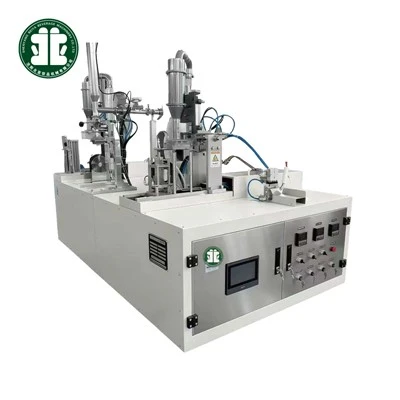
Today, most modern oil filling machines don’t rely on manual adjustments or guesswork. Stability is built into every component, calibrated over thousands of test cycles, and monitored in real time to adjust for the quirks of oil itself. Unlike water, which flows smoothly and predictably, oil changes its viscosity with temperature, its density with pressure, and even its behaviour with subtle differences in formulation—think sunflower oil vs. heavy gear oil vs. cosmetic argan oil, each requiring a different approach to consistent filling. A machine that works for vegetable oil will fail at lubricant if it doesn’t account for these physical properties, so stability starts with matching core components to the specific oil being handled.
First and foremost, the core dispensing mechanism is the backbone of process stability. In our line of work, we typically offer two main types: piston fillers and flow meter fillers, each with a design tailored to different oil types and production speeds. For thick oils like grease or heavy industrial lubricants, piston fillers are the workhorses. They use a precision-machined piston inside a sealed cylinder, where the volume of oil displaced is exactly equal to the volume dispensed. The piston’s movement is controlled by a servo motor, not a manual pump, which means we can adjust its speed and position to within 0.01 of a millimetre. This eliminates the inconsistency that comes with hydraulic pumps, which can leak or slow down over time as seals wear. For example, a 20-litre drum of gear oil needs exactly that amount, not 19.7 or 20.3 litres—even a 0.5% error across 10,000 drums a month adds up to 100 drums of lost product, plus the cost of customer returns or fines for mislabelled goods.
For thinner, more free-flowing oils like cooking oil or essential oil blends, Coriolis or mass flow meter fillers are preferred. These devices measure the actual mass of oil passing through the nozzle, not just its volume, which accounts for temperature fluctuations. If cooking oil warms up on a hot production floor, its volume expands slightly; a volume-based filler would dispense less oil to hit the same weight target, while a mass flow filler adjusts automatically to maintain a consistent weight. We recently worked with a sunflower oil producer in Texas who had a 1.2% fill variance on hot days before switching to mass flow fillers. Within a month, their product giveaway dropped by $18,000, and they cut customer complaints about underfilled bottles by 90%. That’s the kind of stability that directly impacts a customer’s bottom line.
But even the best dispensing component is useless if the machine can’t handle the unique properties of oil. One often-overlooked factor in filling stability is temperature control. Oil viscosity changes by roughly 1% per degree Celsius—so if a machine is set up for oil at 25°C, and the oil is 28°C, it will flow 3% faster, leading to overfilling. That’s why most high-end oil fillers include integrated temperature sensors that feed data back to the control system. If the oil’s temperature rises or drops outside a set threshold, the machine either adjusts the piston stroke (for piston fillers) or the flow rate (for mass flow fillers) to compensate. For customers handling oil that needs to stay within a narrow temperature range—like cosmetic oils or pharmaceutical-grade oils—we even offer optional jacketed hoppers and lines that circulate temperature-controlled water, keeping the oil consistent regardless of ambient conditions. This is a non-negotiable feature for stability; we’ve seen too many machines struggle in unheated factories in winter or unconditioned plants in summer because they lacked this basic adjustment.
Another critical element is nozzle design and control. When you’re filling a bottle or drum with oil, a fast-moving stream can cause foaming, which leads to underfilling as the oil expands when it settles later, or even spills, creating slip hazards and product waste. Foaming also damages the label on a bottle if oil splatters. Modern oil filling machines solve this with anti-foam nozzles that slow the flow as the container fills, and some even have vacuum vents that pull air out of the container as oil flows in, reducing turbulence. The nozzle also has a proximity sensor that detects when the oil level reaches the top of the container, stopping dispensing immediately to prevent overfill. I once visited a plant that was losing 5% of their cooking oil batches to foaming and overspill, until we replaced their generic plastic nozzles with our custom stainless steel anti-foam designs. Within two weeks, that waste was almost gone.
Control systems are the brains that tie all these parts together, and they’re what make stability repeatable, shift after shift, day after day. Most modern oil fillers use PLC (programmable logic controller) systems paired with human-machine interfaces (HMIs) that let operators set fill volumes, adjust flow rates, and monitor real-time data. What sets our systems apart is not just the basic settings, but the built-in stability algorithms. For example, if the machine detects that a container is slightly out of alignment on the conveyor, it will adjust the nozzle’s position mid-fill to ensure accurate dispensing, rather than stopping for an operator to correct it. It also logs every fill event—volume, temperature, flow rate, error rate—so customers can track consistency over time. If a component starts to wear, the system will flag it before it causes a fill error, rather than letting a bad batch of 1,000 drums go through. Predictive maintenance built into the control system is a huge part of stability; our customers who use this feature have cut unplanned downtime for fill-related issues by 70%, according to their own reports.
Even with all this technology, oil filling machines still face challenges from downstream and upstream variables. Upstream, oil filters can clog over time, leading to inconsistent flow, or hoppers can develop sediment that changes the oil composition slightly. Downstream, conveyor belts can stretch or slip, misaligning containers, or capping machines can press too hard, crushing bottles that were filled correctly. That’s why we design our oil fillers to integrate with a customer’s entire production line, not just operate in isolation. We work closely with plant engineers to align the filler’s speed with the conveyor, adjust for common container types (glass bottles, plastic jerrycans, steel drums), and set up synchronization with upstream filters and pumps. For example, if a customer has a pump that delivers oil at a slightly fluctuating rate, our control system can adjust the filler’s dispensing speed to smooth out those fluctuations, rather than letting them translate into fill errors. This line-wide integration is often what makes a stable filler vs. one that works in a test setting but fails on a real production floor.
Testing and calibration are also foundational to stability, and we don’t cut corners here. When we build a custom oil filling machine for a customer, we don’t just ship it after a quick test run with water. We run it through 5,000+ fill cycles with the customer’s specific oil, at their target fill volume, temperature, and production speed. We test for foaming, leak rates, fill variance, and how the machine performs after 8 hours of continuous operation and after 24 hours of idle time. We also train the customer’s operators on routine calibration checks—monthly tests with a calibrated weight scale to verify fill accuracy, weekly checks of nozzle seals and sensors, and quarterly inspections of servo motors and flow meters. We’ve had customers tell us that their old filler needed calibration every week, leading to hours of downtime each month, while our machines only need full calibration twice a year, because we built stability into the design from the start.
I won’t pretend that oil filling machines never have issues—no machine is perfect. But the difference between a filler that delivers stable results and one that causes headaches is how well it’s engineered to account for the unique quirks of oil, and how well its control systems and components work together to eliminate variables. A customer once told me that their filler was just a “piece of metal that pours oil,” until they switched to our system and saw their fill variance drop from ±2.1% to ±0.3%—that’s the difference between losing $50,000 a month in product giveaway and keeping that money in the business.
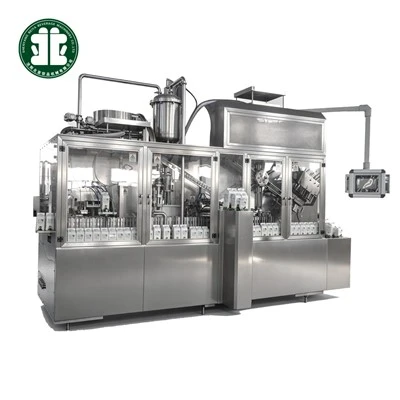
If you’re dealing with inconsistent fill rates, high product waste, or costly downtime on your oil filling line, the stability of your machine is the place to start. Whether you’re a small batch producer of specialty oils or a large refinery packaging industrial lubricants, we design custom oil filling machines tailored to your specific oil type, production volume, and line requirements. We don’t believe in one-size-fits-all fillers; stability is personal to every operation. To learn more about how our technology can help you cut waste, improve product consistency, and reduce downtime, contact our team to discuss your filling needs.
Gable Top Carton Juice Filling Machine References
- Richardson, R. H. (2021). Industrial Filling Machinery: Design Principles for Liquid and Viscous Products. Journal of Manufacturing Systems, 58, 112-125.
- Smith, J. L. (2019). Viscosity Compensation in Liquid Filling Processes: Accuracy and Stability. International Journal of Production Research, 57(12), 3892-3907.
- Davis, M. T. (2022). Automation and Predictive Maintenance for Filling Operations. Plant Engineering Journal, 76(4), 45-51.
- European Federation of Packaging and Environment (EFPA). (2020). Best Practices for Liquid Filling in Food and Pharmaceutical Industries. EFPA Technical Report 2020/03.
Shenyang Beiya Beverage Machinery Co., Ltd.
With abundant experience, we are one of the most professional oil filling machine manufacturers and suppliers in China. If you’re going to buy customized oil filling machine made in China, welcome to get quotation from our factory. For price consultation, contact us.
Address: No. 2-1, Tongling Street, Yuhong District, Shenyang City, Liaoning Province, China
E-mail: market@sybeiya.com
WebSite: https://www.chinafilling.com/
