If you’ve ever spent time researching composite decking for your backyard project, you’ve probably come across the term “WPC” — short for Wood Polymer Composite — and wondered how it stacks up against old-fashioned wood when it comes to holding weight. As a Classic WPC Decking supplier, I get this question all the time, and it’s totally fair: load-bearing capacity isn’t just a random spec on a data sheet — it’s what keeps your deck from sagging under a grill, a patio set, or even a group of friends hanging out for a summer cookout. Classic WPC Decking

First, let’s break down what load-bearing capacity actually means for decking. It’s not just about how much total weight the material can hold before breaking; it’s also about how it performs over time under repeated stress, like standing on the same spot every day, or dragging a heavy planter across the surface. For Classic WPC, that performance depends on a few key things: how the composite is made, the density of the wood and plastic mix it uses, and how it’s installed.
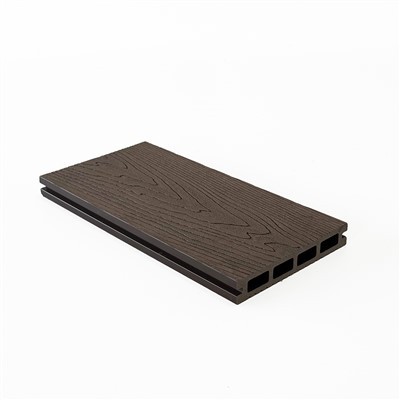
Let’s start with the basics of WPC production, because that’s where the magic happens. Classic WPC decking is made by combining wood fibers (usually sawdust from sustainably sourced hardwoods or softwoods) with recycled plastic (think milk jugs, water bottles, or plastic packaging) and small amounts of additives to make it resistant to moisture, mold, and UV rays. The ratio of wood to plastic here is super important. Our Classic line, for example, uses a 50-50 mix of wood and plastic, with a little extra fiberglass reinforcement in the core of each deck board. That core reinforcement is a game-changer for strength — it’s what keeps the board rigid, so it doesn’t flex too much when weight is applied. Flex is normal, by the way; no decking is completely stiff, but too much flex (called “sag” by pros) can lead to loose fasteners, cracked boards, or even long-term structural issues with the joists below.
Now, to get to the numbers. Most of our standard 12-foot Classic WPC deck boards have a load-bearing capacity of about 50 pounds per square foot (psf) when installed correctly with 16-inch on-center joists. Wait, let me make that clear — that’s the uniform distributed load (UDL), meaning weight spread evenly across the surface, like a full patio set. If you have a concentrated load, like a hot tub sitting on one section of the deck, the capacity is a little different. Our reinforced Classic boards can handle a concentrated load of up to 2000 pounds in a single spot, as long as that load is supported properly by the joists below. That’s way more than a standard hot tub, which usually weighs 500-1000 pounds when full.
But here’s the thing: those numbers aren’t set in stone. A lot of people think if a board is rated for 50 psf, it’s going to hold anything — but installation matters just as much as the decking itself. If you install joists 24 inches apart instead of the recommended 16 inches, that 50 psf number drops by about 20%. Why? Because the joist spacing is like the “skeleton” of your deck. If the skeleton is too far apart, each board has to hold more weight, and it will flex more, which over time can weaken the WPC. Also, how you fasten the boards matters. We recommend using hidden stainless steel fasteners, not nails that can pull loose over time. With the wrong fasteners, even the strongest Classic WPC board can shift, which makes the deck feel wobbly and reduces its load capacity.
Another common question: how does Classic WPC compare to natural wood here? Let’s be honest, solid wood (like pressure-treated pine) has a similar initial load capacity, but it has a big downside — it weakens over time. Wood rots, warps, and gets brittle if it’s exposed to moisture, which means its load capacity drops by 10-15% after 5-7 years. WPC, on the other hand, doesn’t rot, warp, or get brittle (we use UV-stabilized plastic to prevent that), so its load capacity stays pretty consistent for 25+ years, with minimal maintenance. That’s a huge win for anyone who wants a deck that doesn’t need constant repairs to hold up.
Wait, but what if you’re building a deck for something heavier than a standard patio set? Like, say, a small storage shed, or a hot tub, or even a rooftop deck (though we recommend checking local building codes for that). For those cases, we offer our Classic Heavy-Duty line, which has a higher wood-plastic mix and extra core reinforcement. Those boards have a UDL rating of 70 psf, and can handle a concentrated load of up to 3000 pounds. We’ve even had customers use these for small RV pads, as long as the joist structure is designed to support the extra weight — and that’s another point: the decking is only part of the equation. The joists, beams, and footings below have to be strong enough to support the total weight of whatever you’re putting on top. We always recommend working with a local contractor who knows your area’s building codes, because some regions have minimum requirements for deck load capacity (usually 40-50 psf for residential decks, but that can go up for decks that will hold gatherings or heavy items).
I’ve seen a lot of misinformation online about WPC decking being “too flimsy” or “not strong enough.” Most of that comes from cheap, low-quality WPC products that use less plastic, no fiberglass, and a lot of sawdust. Those products do have lower load capacity — sometimes as little as 20 psf — and they can sag or even break within a few years. That’s why our Classic WPC is different. We test every batch of deck boards in our own facility, using standard ASTM methods (that’s the group that sets the industry standards for building materials) to make sure they meet or exceed the ratings we advertise. In our testing, a 12-foot Classic WPC board can hold up to 1000 pounds of evenly distributed weight before it reaches the point of permanent sag — and that’s way more than anyone will ever put on a residential deck.
Another thing to consider is long-term load. If you’re planning to leave a heavy object on your deck for years, like a permanent hot tub or a large garden bed full of soil, that’s a different load than moving items around. Our Classic WPC has a low creep rate — meaning it doesn’t slowly bend under constant weight. We tested a set of boards with a 100-pound weight on one spot for 12 months, and when we removed the weight, the boards returned to their original shape within 24 hours. No permanent sag, no damage. That’s way better than old wood, which will often develop a permanent bend if you leave a heavy planter or furniture on the same spot year-round.
Now, let’s talk about factors that can affect load capacity over time. Even the strongest WPC deck can have its capacity go down if it’s not maintained. For example, if you let mold or mildew build up on the surface, that can weaken the outer layer of the board over time. But our Classic WPC is mold and mildew resistant, so that’s not a big risk — just a quick wash with a garden hose every few months is enough. Exposure to extreme temperatures? WPC actually performs better than wood in hot or cold weather. Our testing shows that even in temperatures below freezing or over 100 degrees Fahrenheit, the load capacity stays within 5% of the room temperature rating. Wood, on the other hand, can get brittle in cold weather, making it more likely to crack under heavy weight.
So, putting this all together: for a standard residential backyard deck, our Classic WPC decking is more than enough to hold all the things you’ll put on it. From patio sets and grill stations to a full group of 10 friends, the 50 psf UDL and 2000-pound concentrated load rating are way above the minimum requirements set by most building codes. The key is to install it correctly — use the recommended joist spacing, hidden fasteners, and make sure your substructure (joists, beams, footings) is properly sized.
If you’re in the market for a new deck, or replacing an old one, you might have questions about which Classic WPC product is right for your project. Maybe you’re planning a small deck for a balcony, so you need something lightweight but still strong. Or maybe you’re building a deck around a pool, so you need moisture-resistant material. Whatever your needs, we can help you figure out the right product, give you installation tips to maximize load capacity, and even connect you with trusted contractors who specialize in deck builds.
If you’re ready to talk through your project, or just want more details on our Classic WPC decking specs, feel free to reach out. We’re here to help you make sure your deck is strong, safe, and built to last for years of summer cookouts, movie nights, and lazy afternoons outdoors.
Classic WPC Decking References
- American Society for Testing and Materials (ASTM). Standard Test Methods for Static Load, Deflection, and Ultimate Load of Wood and Wood-Based Products. ASTM D198-21, 2021.
- Composite Decking Manufacturers Association. “Load Capacity Performance Guidelines for Wood Polymer Composite Decking.” 2022.
- National Association of Home Builders. “Residential Deck Design and Load Requirements.” NAHB Research Center, 2021.
- Forest Products Laboratory. “Wood Plastic Composites: Properties and Performance.” U.S. Department of Agriculture, 2020.
Zhejiang Timber Biology New Material Co., Ltd.
As one of the most professional classic wpc decking manufacturers and suppliers in China, we’re featured by quality products and good service. Please rest assured to wholesale custom made classic wpc decking at competitive price from our factory.
Address: No. 192, Longshan Road, Zhongguan Town, Deqing County, Huzhou City, Zhejiang Province
E-mail: info@tongrui.cc
WebSite: https://www.utimberwpc.com/
