Hey everyone! If you’ve been scrolling through parenting forums or scrolling TikTok, you’ve probably seen home fetal dopplers popping up left and right lately. As someone who works in the home fetal doppler space (yep, I’m part of the team that makes these little tools for expectant parents), I get asked this question all the time: “Do home fetal dopplers actually work at 15 weeks?” Home Fetal Doppler
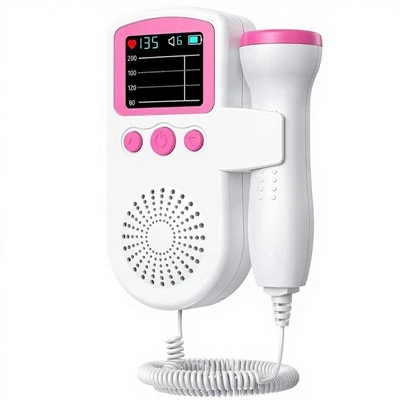
Let’s cut through the noise here. First off, 15 weeks is about the mid-way point of your second trimester—still early enough that a lot of people wonder if a doppler can pick up anything that early. I totally get it; I’ve had friends panic at 14 weeks because they couldn’t find their baby’s heartbeat with a store-bought doppler they grabbed, so they reached out to our team asking if they’re using it right.
Here’s the science part, broken down without the jargon. A fetal doppler works by sending out ultrasound waves that bounce off moving objects—like your baby’s beating heart—and turn those waves into a sound you can hear. The key here is how big your baby is, and how thick your abdominal wall is, because that’s what the waves have to go through. At 15 weeks, your baby is only about the size of an orange—super tiny, with a tiny heart beating around 110 to 160 times a minute (that’s way faster than an adult’s, fyi).
Now, not all dopplers are made equal. Some of the cheap ones you pick up at random online stores might not have the right transducer frequency to pick up that tiny heartbeat at 15 weeks. The ones our team makes use a 2.5MHz transducer—this is the sweet spot for early second trimester because it balances penetration through your belly tissue and focusing on that small fetal heart. A lot of people don’t know that if you get a doppler with a higher MHz (like 3MHz or more), it might be too focused, so it can’t reach that deep yet, and lower MHz might be too vague to pick up the tiny heartbeat.
I want to be real here: even with a good doppler, it’s not a guarantee. At 15 weeks, your uterus is still pretty low in your pelvis, right? So the heartbeat is down near your pubic bone, not up high where it’ll be later. If you have a thicker abdominal wall (that’s totally normal—every body is different), the ultrasound waves have to work harder to get through, which can make it trickier. I’ve had customers reach out saying they couldn’t find it at 15 weeks, but when they shifted the doppler lower and used more of the ultrasonic gel we sell, they had it within a minute. Pro tip: don’t skimp on the gel! The gel eliminates air between the doppler and your skin, which is super important for the waves to travel properly.
Another thing a lot of first-time parents don’t realize: your own pulse might get confused with the baby’s at this stage. At 15 weeks, your blood flow is increasing, so your heartbeat is a lot stronger in your abdomen. You might think you found the baby’s heart, but it’s actually your own. How do you tell the difference? The baby’s heart rate is way faster—around 140 on average at 15 weeks, whereas your resting rate is probably 60-100. If you’re listening and it’s jumping around between 110 and 160, that’s baby. If it’s steady around 80-90, that’s you. That’s a quick check I always tell new users.
I’ve seen so many posts online where people say “dopplers don’t work at 15 weeks” and others say “I found mine in 2 seconds.” The difference is usually two things: the quality of the doppler, and how you’re using it. Back when I started in this space, there weren’t as many options, and a lot of parents would get generic dopplers that just didn’t have the tech for early detection. Now, the ones we design are tested by obstetricians to pick up heartbeats as early as 10 weeks, but 15 weeks is definitely a time when most people can hear it, if they’re using it right.
Wait, let’s talk about why this matters. I know a lot of people use home dopplers for peace of mind, especially if they’ve had a scary moment earlier in pregnancy—like cramping or spotting. I get that; I have a cousin who struggled with anxiety during her second pregnancy, and she used a doppler every few days just to confirm everything was okay. But I also want to be clear: a home doppler isn’t a replacement for prenatal care. If you can’t find the heartbeat at 15 weeks, that’s normal, but if you’re stressing about it, call your OB. They have a hospital-grade doppler that’s way more powerful, so they’ll be able to find it easily. But for most people, a good doppler works at 15 weeks.
Let me share a quick customer story to make this real. Last month, a first-time mom named Mia reached out to our team. She was 14 weeks and 3 days, and she couldn’t find the heartbeat with a cheap doppler she’d ordered from a big online marketplace. She was convinced something was wrong, so she emailed us panicking. We walked her through the steps: use lots of gel, move the doppler low on her abdomen, near her pubic bone, press it gently (not hard—you don’t want to squish anything). She got back to us an hour later saying she’d found it! The baby’s heart was beating at 148 bpm, and she cried because she’d been so worried. That’s the stuff that makes our jobs worth it.
So, let’s break down the facts you need to remember if you’re 15 weeks and trying a home doppler:
- It can work, but only if your doppler is designed for early detection (cheap no-name ones often aren’t).
- Position is everything—aim low, near your pelvis, not high up by your belly button yet.
- Use enough gel—no shortcuts here.
- Don’t mix up your pulse with baby’s—rate is the easy way to tell.
I also want to address a common myth: some people say home dopplers cause harm because of ultrasound waves. The truth is, the amount of ultrasound used in a home doppler is way lower than what’s used in a standard prenatal ultrasound at the doctor’s office. The FDA has said that when used correctly, home fetal dopplers are safe for expectant parents. But again—don’t use it for hours on end, or use it to stress yourself out. It’s a tool, not a test.
Now, if you’re someone who’s thinking about getting a doppler for 15 weeks (or later), make sure you’re buying from a reputable supplier. We’ve had customers who tried knockoff dopplers and ended up with inconsistent readings, which only caused more stress. Our team tests every unit before it ships, and we provide a step-by-step guide and customer support to walk you through finding the heartbeat.
If you’ve tried a home doppler at 15 weeks and had a hard time, or if you’re looking to get one for yourself or a partner, feel free to reach out to our team to chat through your questions. We’re here to help, whether you’re a first-time parent or adding to your crew.
At the end of the day, 15 weeks is such an exciting time—you’re starting to feel little flutters (called quickening, usually around now), and hearing that heartbeat is such a special moment. It makes total sense that you want a tool to capture that. And yes, for most people, a good home fetal doppler will work at 15 weeks—you just need the right tool, and the right know-how to use it.
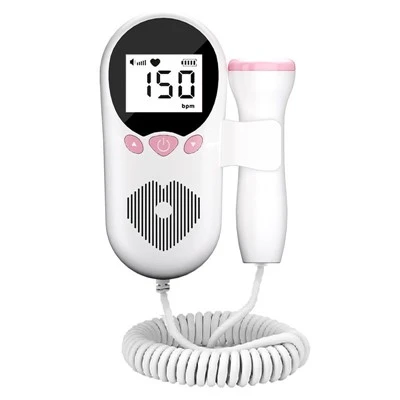
If you’re interested in learning more about our home fetal dopplers, or would like to discuss bulk purchasing options for your practice, clinic, or retail space, don’t hesitate to connect with our sales team.
Blood Pressure Monitor References:
- American College of Obstetricians and Gynecologists (ACOG). (2022). Use of Ultrasonography in Pregnancy.
- International Society of Ultrasound in Obstetrics and Gynecology (ISUOG). (2021). Safety of Diagnostic Ultrasound in Obstetrics and Gynecology.
- Journal of Clinical Ultrasound. (2019). Detection Fetal Heart Rate Using Home Ultrasonic Devices: A Prospective Observational Study.
Yiwu Trump Medical Products Co., Ltd.
As one of the most professional home fetal doppler manufacturers and suppliers in China, we’re featured by quality products and good service. Please rest assured to wholesale advanced home fetal doppler made in China here from our factory. We also accept customized orders.
Address: Room 428-429, 4th Floor of Comprehensive Building of Hetianxia E-commerce Park, No.16 Pinghu Road, Jiangdong Street, Yiwu City, 322000 Zhejiang Province, China
E-mail: sales01@trumpmedi.com
WebSite: https://www.trumpmedisupply.com/
