Hey there! If you’re here reading this, chances are you’re in the market for a solid-liquid separator—maybe you’re in agriculture, food processing, municipal wastewater, or even a small manufacturing plant. Full disclosure: I’m a solid-liquid separator supplier, so I get it when people ask, “Wait, do these things actually have downsides? I thought they solved all my dewatering problems.” Let me cut to the chase and talk about the disadvantages I see firsthand every single day, not just what’s written in technical brochures. No jargon, no fluff—just real stuff I’ve heard from clients who’ve either used our gear or competitors’ over the past few years. Solid-liquid Separator
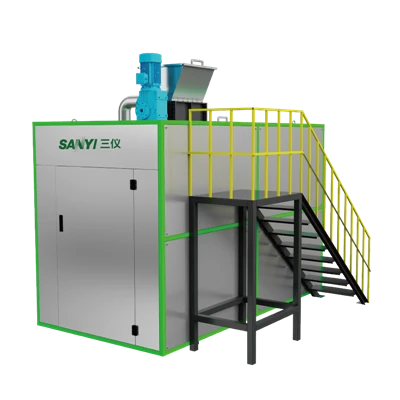
First off, let’s get one thing straight: solid-liquid separators aren’t a “set-it-and-forget-it” magic bullet. I had a dairy farm client last year who bought a basic screw-press separator because his neighbor swore by it. Within three months, he was blowing up my phone saying it was clogging every other day. Here’s why: if you’re running material that’s got weird, stringy fibers (like, say, corn stalks mixed with dairy manure, or fruit pulp from a juice press), the gaps between the screen or screw flights are just asking to get plugged. A lot of budget separators use flimsy, narrow screens that can’t handle consistent, fibrous feedstock—so you’re down 2-3 hours a day pulling gunk out with a pair of pliers, and that’s if you don’t burn out a motor from overworking it. I see this all the time with municipal sludge applications too: mixed sludge with biological foam gets caught in screen openings, and suddenly your separation rate drops 40% before you even notice. The worst part? Most new operators don’t check for clogs until their separation efficiency tanks, so they’re wasting energy (and money on utilities) running a machine that’s half-working.
Next up, there’s the upfront cost that people often sleep on—wait, not just the machine itself, but the hidden extras. I talk to small-scale food processors all the time who budget $5k-$10k for a separator, only to realize they need custom adapters to hook it up to their existing pumps, plus replacement screens (some are $800 a pop) every 6 months if they’re running heavy-duty, and a dedicated power outlet that can handle the machine’s draw. A craft brewery client hit me with this last month: he bought a compact separator for spent grain, but his workshop had a 110v outlet, and the machine needed 220v. He had to pay an electrician $1,200 to rewire, plus another $500 for a voltage converter because he didn’t want to tear up his workshop to run new lines. That’s a 20% increase on his original budget, and a lot of suppliers don’t spell that out upfront—they just post a base price and disappear once you sign the check. Even with our mid-range models, I always make a point to mention these add-ons, but I still see folks get stung by it because they’re in a rush to fix a bottleneck.
Then there’s the maintenance grind, especially for larger industrial units. I’m not talking about a quick clean once a week—for a screw press handling 20+ tons of manure a day, you’ve got to lubricate the screw bearings every 100 hours of use, replace the wear liners every 12 months, and do a full screen inspection every month. I had a municipal wastewater client a while back who tried to skip a bearing check, and three weeks later, the screw seized up—costing him $4,500 in emergency repairs plus 2 days of downtime. The thing is, a lot of cheap separators use subpar parts that wear out way faster. A competitor’s separator we serviced last year had a screen that corroded in 8 months because they used cheap steel instead of stainless; our units use food-grade stainless, so that screen lasts 2-3 years, but the upfront cost reflects that. I get it—everyone wants the cheapest option, but when maintenance turns into a full-time job for your part-time mechanic, it’s not worth it. Oh, and let’s not forget about noise. Industrial separators can hit 85+ decibels— that’s as loud as heavy traffic—so you might need ear protection for your crew, plus sound-dampening enclosures if you’re running them near offices or residential areas. Another hidden cost.
Wait, what about flexibility? If your feedstock changes, most separators can’t keep up. Let’s say you use a separator for poultry manure, then decide you want to process some vegetable waste too— a lot of basic separators are calibrated for a specific solids concentration, so switching feed types means adjusting the feed rate, screen tension, maybe even the screw speed. I had a composting client who bought a separator from another supplier a year ago to handle yard waste, then tried to use it for food waste scraps. The separation rate dropped so low he was just as bad off as before, because the machine couldn’t handle the higher moisture content of food waste. Some higher-end models are adjustable, but that’s another upgrade that adds to the cost. Even with our modular separators, I warn clients that if their feedstock changes drastically, they might need to swap out a part or two—no machine is 100% universal.
And let’s talk about effluent quality—wait, that’s the liquid part that comes out the other end. A lot of people think “separate solid and liquid” means the liquid is clean enough to discharge or reuse, but that’s not always the case. If your separator is under-sized for your load, or has worn screens, the liquid will still have tiny solid particles in it—particles that can clog your irrigation system if you’re reusing the liquid, or violate discharge limits if you’re sending it to a treatment plant. I had a fruit processor client last quarter who got a cheap separator for apple pomace; the effluent had so much fine pulp in it that his spray irrigation nozzles were getting clogged every day, costing him $300 a week in replacement parts. He ended up buying our secondary filtration add-on, but that’s another thing most people don’t plan for. And here’s the kicker: if you’re dealing with hazardous or corrosive materials, standard separators (even stainless ones) might not hold up. I had a chemical plant client who tried using a standard separator for sludge with mild acid, and the screen pitted in 2 months—so we had to fabricate a custom Hastelloy screen for him, which added $2,000 to the cost. That’s a big oversight for anyone in industrial processing with corrosive feedstock.
Oh, and don’t sleep on the installation and setup headaches. I’ve had clients try to install separators themselves to save money, only to mess up the feed rate or the angle of the machine, leading to terrible separation performance. Last year, a small pig farm did that—they hooked up the separator with a hose that was too narrow, so the feed backed up, and they had to shut it down entirely for a weekend to fix it. Our team can do on-site setup for most models, but that’s another cost, especially if you’re in a remote area. And even if you get it set up right, operating it takes a little know-how. The cheap budget models often have basic controls, so if your operator isn’t paying attention, they’ll run it too fast or too slow, and again, separation tanks. I always recommend that clients do a training session with our team when we install, but some skip that too, and then they blame the machine instead of their crew.
Wait, let’s be real for a second— I’m a supplier, so I’m not here to bash my own products. The biggest disadvantage I see across the board is that a lot of buyers don’t do their homework before pulling the trigger. They see a flashy ad for a “high-efficiency separator” and don’t ask about the details: what feedstock is it rated for? What’s the screen material? What’s the expected lifespan of wear parts? How much maintenance does it actually need? I had a client last month who brought in a competitor’s used separator that was only 2 years old, but the screens were shot, the bearings were gone, and the motor was on its way out. The owner had bought it used without checking the history, and he ended up paying more to repair it than he would have to buy a new, properly rated unit from us.
Don’t get me wrong—solid-liquid separators are amazing when they’re the right fit. They cut down on waste, reduce disposal costs, and let you reuse solids or liquid for things like compost or irrigation. But they’re not one-size-fits-all, and there are real tradeoffs that people don’t talk about until they’re knee-deep in clogged screens and repair bills.
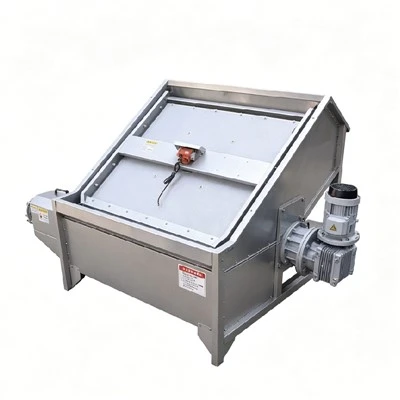
If you’re wondering if a separator makes sense for your operation, or you’ve already got one that’s giving you headaches—reach out. We don’t push a one-size-fits-all model; we’ll ask about your feedstock, daily volume, budget, and what you want to do with the separated solids and liquid, and we’ll walk you through the pros and cons specific to your needs. No sales pitch, no hidden fine print, just honest advice from someone who’s been in this game long enough to know the pitfalls.
Vertical Fermenter References
- Environmental Protection Agency. (2021). Solid-Liquid Separation Technologies for Agricultural and Municipal Waste Management. EPA Office of Water Report.
- Food and Agriculture Organization of the United Nations. (2022). Guide to Dewatering Technologies for Small-Scale Food Processors. FAO Agricultural Engineering Division.
- International Water Association. (2020). Operation and Maintenance of Solid-Liquid Separation Systems for Wastewater Treatment Plants. IWA Publishing.
- American Society of Agricultural and Biological Engineers. (2021). Standard Practices for Sizing and Selecting Solid-Liquid Separators for Livestock Manure. ASABE EP387.
Shandong Heze Sanyi Biological Engineering Co., Ltd.
Shandong Heze Sanyi Biological Engineering Co., Ltd. is one of the most reliable solid-liquid separator manufacturers and suppliers in China, also supports customized service. We warmly welcome you to buy CE approved solid-liquid separator made in China here from our factory.
Address: No.1118 Lanzhou Road, High-tech Zone, Heze City.
E-mail: business@hzsysam.com
WebSite: https://www.hzsysam.com/
