If you’ve ever stared at a dead lithium battery (you know, the one in your RV that wouldn’t start on a cold camping trip, or the power tool that died mid-project) and wondered how to keep it humming for years, you’ve probably heard the term “lithium battery charger maintainer” thrown around. But let’s be real—most people confuse these with regular chargers, or even trickle chargers, and that mix-up can cost you hundreds in batteries you thought would last 5+ years. As someone who’s been in the lithium battery charger game for almost a decade, I see this confusion every day, so I’m breaking it down plain and simple—no jargon, no fancy marketing fluff. Lithium Battery Charger
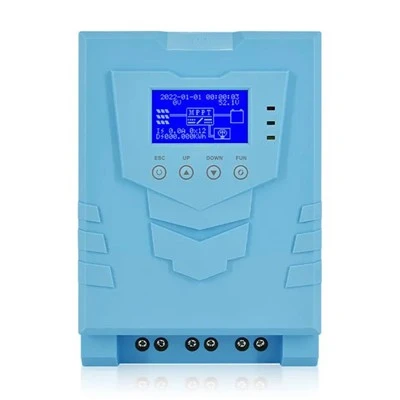
First, let’s cut to the chase: a lithium battery charger maintainer isn’t just a regular charger you plug in to top off a dead battery. It’s a two-in-one tool built specifically for the quirks of lithium batteries, the most common being lithium iron phosphate (LiFePO4) which is what most folks use now for cars, RVs, solar setups, and power gear. Let’s start with the basics of how lithium batteries work, because that’s where most bad charger choices go wrong. Lithium batteries hate two things: overcharging and sitting at a low charge level for too long. Unlike old lead-acid batteries, which can handle a little overcharging (hence why old trickle chargers worked okay for them), over a single lithium cell is like boiling a water bottle until it bursts—you’ll ruin the chemistry, kill capacity, and even create safety risks.
A regular lithium charger is designed to charge a flat battery as fast as possible, usually shutting off once it hits 100% charge. That’s great if you’re in a rush, but if you leave that charger plugged in after it cuts out, it will often “float” at a full voltage to keep the battery topped. That floating voltage is too high for lithium cells—over months, that slow trickle of power wears out the internal structure of the battery, reducing its life by 50% or more. A maintainer fixes that. It doesn’t just stop at 100%; it then switches to a super-low, steady “maintenance mode” that’s only enough to offset tiny self-discharge (lithium batteries lose about 2-3% of their charge a month when sitting, vs. 5-10% for lead-acid) without ever pushing the voltage past the safe limit.
Wait, but what about trickle chargers? I hear this all the time: “Can’t I just use a lead-acid trickle charger for my lithium battery?” Let’s test that logic. A standard trickle charger for lead-acid delivers a constant low voltage, around 14.4V for a 12V lead-acid system. For a 12V lithium LiFePO4 battery, the nominal voltage is 12.8V, and the full charge voltage is only 14.2V. That lead-acid trickle’s 14.4V is already 0.2V too high—slowly baking your lithium cells. On top of that, lead-acid trickle chargers don’t have the built-in safety cutoff specific to lithium’s chemistry. If your lithium battery drops to a super low voltage (say, 50% of its capacity, or even lower from sitting unused), a trickle charger might not detect that and could either overcharge or not deliver enough power to wake the battery up. A maintainer has those custom profiles built for lithium’s discharge/charge curve, so it can handle both dead and full batteries without mistakes.
Now, let’s get into who actually needs a maintainer. If you’re using your lithium battery regularly—like you take your RV out every weekend, or you use your power tools for work every day—you might not even need a dedicated maintainer. A regular smart charger will work fine, since you’re not leaving the battery sitting unused for weeks on end. But if your battery is in a setup that sits idle for long periods? That’s where the maintainer shines. Think: seasonal vehicles (a boat you only use in summer, a snowmobile in winter), off-grid solar systems that go unused for months, backup power batteries, or even power tool batteries you keep in a drawer for next season. We’ve had customers tell us they left their lithium RV battery on a regular charger over the winter, and when spring rolled around, the battery only had 40% capacity left—dead in all but name. Switch to a maintainer, and that same battery will hold 90%+ of its capacity after a year of sitting.
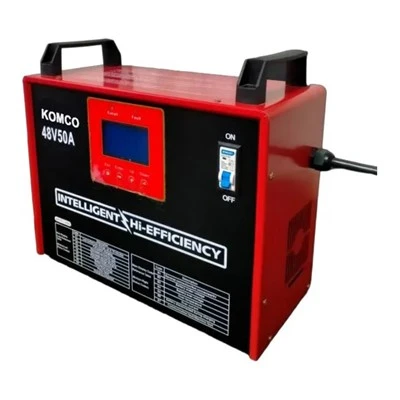
Another big use case: lithium battery packs for electric vehicles (EVs), golf carts, or heavy equipment. Those big packs are expensive—we’re talking thousands of dollars for a 48V setup. A maintainer for these larger packs doesn’t just keep them charged; it also helps balance the cells. Wait, cell balancing is a thing, right? When a lithium pack has multiple cells, even tiny differences in capacity between cells can add up over time, leading to one cell dying before the rest. Good maintainers (especially for multi-cell packs) will monitor each individual cell’s voltage and adjust the charge to make sure all cells stay equal. That’s a huge perk you won’t get from a regular charger—we’ve seen golf cart owners extend their battery’s life from 2 years to 5 just by using a maintainer and balancing cells regularly.
Now, let’s clear up a common myth: you don’t need a fancy, $200 industrial maintainer to get these benefits. We make maintainers that start at under $50, and they work just as well for most consumer setups. The key features to look for are: lithium-specific voltage profiles (12.8V nominal, 14.2V full charge, low-voltage cutoff), reverse polarity protection (so you don’t fry the charger or battery if you hook the wires up wrong), and automatic mode switching (fast charge when flat, maintain mode when full). Avoid any maintainer that says it works for “all batteries”—if it lists lead-acid, lithium, and NiMH in the same line, it’s not calibrated right for lithium, and you’re better off sticking to a regular charger.
I’ve got a personal story here, because this stuff hits close to home. A few years back, a customer brought in a 12V LiFePO4 battery for an RV that was less than a year old. He thought it was defective because it wouldn’t hold a charge. When we tested it, we found the cells were all over the place—one was at 13.8V, another at 13.2V, the third at 12.5V. He’d been using a cheap “universal” charger he bought at a hardware store, which was overcharging the top cell and undercharging the others. We swapped in one of our basic 12V lithium maintainers, told him to leave it plugged in over the off-season, and six months later, the cells balanced out, and the battery was back to 95% capacity. That’s the difference—generic tools don’t care about lithium’s specific needs, but a maintainer is built for it.
What about safety? A lot of people worry about charging lithium batteries—can a maintainer cause a fire? The short answer is no, if it’s built properly. Good maintainers have multiple safety layers: overcharge protection, overheat protection, short circuit protection, and reverse polarity. They won’t deliver power if something’s wrong, which is way different from old trickle chargers that could run indefinitely even if a wire was frayed. All our maintainers are certified to meet global safety standards, so you don’t have to stress about leaving it plugged in while you’re at work or sleeping.
Now, when should you NOT use a maintainer? Like I said earlier, if you’re using the battery regularly, you don’t need it. A maintainer will just kick into low mode once the battery is full, but it’s not a big deal if you forget to plug in a regular charger for a day or two. Also, if you’re charging a lithium battery that’s been completely dead (below 2V per cell), some basic maintainers won’t wake it up—you’ll need a charger with a low-voltage recovery mode. That’s a good feature to look for if you have backup batteries that might sit unused for years.
Let’s break it down even simpler with a quick comparison table (even though we’re talking casual):
- Regular Li Charger: Fast charge, cuts off at 100%, no maintenance mode. Good for daily use, but kills batteries if left plugged in long-term.
- Lithium Maintainer: Fast charge, cuts off at 100%, switches to low maintenance mode, cell balancing, safety protections. Good for idle batteries, extends life by 2-3x.
- Lead-Acid Trickle Charger: Constant low voltage, not calibrated for lithium, no lithium-specific safety. Bad for lithium batteries, will damage them over time.
At the end of the day, a lithium battery charger maintainer is an investment, not a cost. Let’s do the math: a good LiFePO4 battery costs $150 for a 12V 50Ah. If you use a regular charger and it dies after 2 years, that’s $75 a year. A maintainer costs $50, and it makes your battery last 5 years— that’s $10 a year, plus you don’t have to replace the battery every two years. It’s a no-brainer, especially for anyone who relies on their lithium battery for recreation, work, or backup power.
We’ve helped thousands of customers avoid battery failures just by switching to the right charger—from weekend campers who didn’t want to deal with dead batteries on their trips, to small business owners who run fleets of electric golf carts and didn’t want to spend $10k a year replacing batteries. If you’re not sure which maintainer is right for your setup—whether it’s a 12V RV battery, a 48V golf cart pack, or a power tool battery—we’re here to help. We don’t do one-size-fits-all, so we’ll ask a few simple questions about what you’re powering, how often you use it, and whether it sits idle, and point you to the exact model that fits your needs.
If you’re tired of replacing lithium batteries every couple years, or you’re gearing up for the off-season and don’t want to get stuck with a dead battery when you need it most, reach out to our team today to chat about your charger and maintainer needs. We can walk you through options, answer any random questions you have (no tech jargon, promise), and make sure you get the right tool to keep your batteries working as long as they should.
Votage Stabilizer References:
- Lithium Iron Phosphate Battery Technology and Applications, Battery University, 2022
- "Battery Charging Basics: Lithium vs. Lead Acid", International Electrotechnical Commission (IEC), 2021
- Field Study on Lithium Battery Cycle Life Maintenance, Journal of Power Sources, 2020
Huizhou Qiangfeng Power Technology Co., Ltd.
As one of the most professional lithium battery charger manufacturers and suppliers in China, our products have good reputation in the market. We warmly welcome you to buy customized lithium battery charger made in China here from our factory. If you have any enquiry about quotation, please feel free to email us.
Address: No.28, Hu’ao Avenue, Shiwan Town, Boluo County, Huizhou City, Guangdong Province
E-mail: Komco@Jinlidianqi.cn
WebSite: https://www.qfautobatterychargers.com/
