If you’re deep in the RF connector game (or even just starting to navigate the maze of terms that come with it), you’ve probably stumbled on “gold plated N-type connector” more than once. Let’s cut through the jargon, break this down like I would over a coffee with a fellow tech guy, and explain why this is not just another fancy part—it’s a workhorse for everything from cell towers and 5G base stations to satellite gear and industrial test equipment. N RF Connector
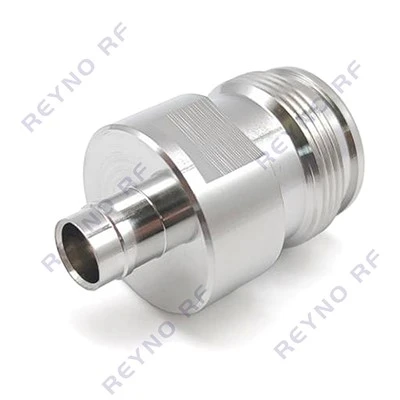
First, let’s start with the basics: what even is an N-type connector? For the uninitiated, N-type is a coaxial RF connector, invented back in the 1940s by Paul Neill at Bell Labs (hence the “N” for Neill, not “National” like some people guess). It’s threaded, so it’s way sturdier than the push-on BNC connectors you see in old CCTV gear, and it’s rated for high-frequency signals—usually up to 11 GHz, and even higher for specialized versions. That durability and frequency range is why it’s been the go-to for mission-critical RF applications for decades.
Now, the “gold plated” part. Most N-type connectors are made from a base metal, usually copper or brass, because those metals are great conductors—copper, in particular, has near-perfect conductivity for RF signals. But base metals corrode, and corrosion is the enemy here. Even a tiny bit of rust or oxidation on the connector’s mating surfaces can cause signal loss, reflection, or even total connection failure—something you definitely don’t want when you’re running a 5G network or testing satellite communications. Gold plating solves that problem.
Wait, not just any gold plating. We’re talking thin layers of gold, usually 0.5 to 2.0 microns thick, deposited on the connector’s contact points (the inner pin and outer shell, where two connectors touch when mated). Why gold, not another metal? Gold is chemically inert—it doesn’t rust, tarnish, or corrode, even when exposed to humidity, dust, or temperature swings from -55°C to 125°C, which is standard for industrial and telecom environments. It’s also soft, so when you twist the threaded N-type connector tight, the gold layers deform slightly to fill in micro-scratches or gaps on the mating surfaces, creating a uniform, tight connection. That’s a big deal for signal integrity.
But here’s where I see a lot of mix-ups: not all gold plated N-type connectors are the same. Some suppliers skimp on the gold layer, using a sub-micron coat that wears out after just a few mating cycles. Others use a thin layer of nickel under the gold—wait, why the nickel? Brass is porous, so if you plate gold directly on brass, tiny gaps in the brass will allow air and moisture to get through, causing brass corrosion that eats away at the gold from underneath. Nickel acts as a barrier, keeping the base metal protected so the gold does its job properly. Cheap connectors skip the nickel layer, so they might look fine at first, but they’ll fail fast.
Let’s talk about why gold plating matters specifically for RF, not just random metal parts. RF signals travel along the outer surface (skin effect) of a conductor, not the inside. That means the quality of the surface contact between two connectors directly determines how much signal gets from Point A to Point B. If the contact points are corroded or uneven, the signal reflects back instead of passing through—called return loss, and it’s a nightmare for engineers. A gold plated contact creates a consistent, low-resistance surface, so signal loss is minimal, return loss is low, and the connection stays reliable even after hundreds of matings.
Now, as someone who supplies these connectors every day, I can tell you what sets a good gold plated N-type apart from a bad one. First, the plating specs: look for gold over nickel, with a minimum 0.5 micron gold thickness. Any thinner, and it’s not worth it—scratch the surface of a cheap connector’s gold, and you’ll see the brass underneath, which will tarnish in no time. Second, the threading: N-type connectors are threaded, so the threads need to be smooth and precise, not rough or misaligned. A bad thread makes it hard to hand-tighten, and over-tightening can crack the connector or strip the threads. Third, the inner pin: the inner conductor of an N-type is usually a solid pin, and gold plating on that pin is critical because that’s where most of the high-frequency current flows. Some suppliers plate only the outer shell, leaving the inner pin with a cheaper metal that will corrode.
Where do these connectors get used? Let’s list the big ones: 5G base stations are the biggest right now—every cell site uses dozens of N-type connectors to link antennas to radios, and you can’t afford a failed connection there; it would drop signal for hundreds of users. Satellite communications, both for residential dishes and military satellites, rely on N-type because they need to handle high frequencies and extreme environmental conditions. Industrial test equipment, like spectrum analyzers or signal generators, uses N-type for consistent, repeatable measurements. Even some radar systems and broadcast gear uses them.
Wait, is there a downside to gold plating? Yeah, cost. Gold is a precious metal, so connectors with thicker gold layers are more expensive than those with tin plating (tin is another common plating for lower-frequency, less demanding apps). But for mission-critical RF work, the extra cost is nothing compared to the cost of downtime if a connector fails. I’ve had customers come to me after using cheap tin-plated N-types in a 4G network—they had to replace thousands of connectors every 6 months because of corrosion, and switching to gold plated ones cut that maintenance to once every 5 years. That math adds up fast.
Another thing people ask me: can I get a gold plated N-type with a different interface? Absolutely. N-type connectors come with different termination styles—crimp, solder, clamp, even reverse polarity (which is common in some 5G setups) or straight/right-angle. No matter the termination, if it’s gold plated on the contact points, it’s going to perform way better than unplated or cheap plated versions. I also see a lot of confusion between N-type and other connectors like SMA or BNC. SMA is smaller, for even higher frequencies, but N-type is more durable for outdoor use, so it’s still the go-to for most macro cell sites.
Let’s clear up a common myth, too: gold plating isn’t just for show. I’ve had customers test both gold plated and non-plated N-types in a humidity chamber, cycling from 25°C to 85°C and 90% humidity. The non-plated ones started showing 3 dB of signal loss after just 100 hours; the gold plated ones had less than 0.1 dB loss after 500 hours. That’s a huge difference when you’re dealing with weak signals in dense urban areas.
As an RF connector supplier, I know that when a customer comes to me asking for a gold plated N-type, they’re not just looking for a part that fits their equipment—they’re looking for reliability. They need a connector that won’t fail when the temperature drops in a cell tower, or when a satellite is deployed to a remote area with no way to fix it for years. That’s why I only stock connectors with proper gold over nickel plating, precise threading, and solid inner pins. I’ve seen too many customers go for the cheapest option, only to end up paying more in the long run for replacements and downtime.
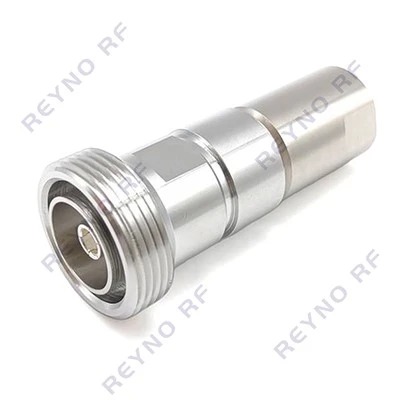
So, if you’re in the market for a gold plated N-type connector, here’s what to keep in mind: don’t just look at the price. Ask about the plating thickness, whether there’s a nickel barrier, the material of the inner pin, and the termination style that works for your application. For most telecom, industrial, and satellite uses, a gold plated N-type is non-negotiable for consistent, long-term performance.
If you’re working on a project right now—whether it’s building a 5G network, setting up test equipment, or deploying a new satellite system—and you need reliable, high-performance gold plated N-type connectors, I can help. We stock a full range of styles, from crimp to solder, straight to right-angle, and all meet industry specs for frequency and environmental performance. Whether you need a few samples to test or a bulk order for a big deployment, get in touch to chat through your requirements and find the right connector for your project.
RF Connectors References
- Microwave Engineering, Pozar, D.M.
- RF Connector Technology, Young, A.
- Telecommunications Industry Association (TIA) Standards for RF Connectors
Zhenjiang Leiluo Electronic Co., Ltd.
Zhenjiang Leiluo Electronic Co., Ltd. is one of the most professional n rf connector manufacturers and suppliers in China. We have world-leading production equipment and strong manufacturing capabilities. Please feel free to buy advanced n rf connector for sale here and get quotation from our factory. Customized orders are welcome.
Address: No.21 Houxiang Industrial Road, Danbei Town, Danyang City, Jiangsu Province
E-mail: wenvy@rfleiluo.com
WebSite: https://www.rfreyno.com/
