Hey there, if you’ve ever been stuck in a dark stairwell during a power outage—whether at an apartment building, office, or even a small retail spot—you know how scary it can get. That’s a question I get all the time as a supplier of emergency ceiling lights: “Are emergency ceiling lights actually required in stairwells?” Let’s break this down, mix in real-world stuff I see every day, and clear up all the confusion, no stuffy legal jargon here. Emergency Ceiling Lights

First off, let’s get one thing straight: this isn’t just a “nice-to-have” upgrade. Most countries and even local building codes make it mandatory, but I’ve heard so many builders, property managers, and even some electricians skirt around this because they think “our stairwell is small” or “we never have outages here.” Let’s start with the core problem: stairwells are the only escape route most people rely on when the lights go out. If the power cuts, you can’t just take an elevator—you have to use the stairs. No light there, and you’ve got tripping hazards, confusion, and even panic, especially for kids, seniors, or folks with mobility issues. I once visited a 4-story apartment building last year where a storm took out power, and the stairwell was pitch black. A tenant with a bad knee tripped over a loose step, busted their elbow, and had to miss work for two weeks. That’s the kind of avoidable mess emergency lights prevent.
Now, let’s talk about what the actual rules say, because that’s where a lot of the misinformation comes in. In the US, for example, the National Fire Protection Association (NFPA) 101, the Life Safety Code, requires emergency lighting in any means of egress—and stairwells are a critical part of that. Wait, but what about “low-rise” buildings? A lot of people think a 2-story retail shop doesn’t need it, but even then, if there’s a power outage during a busy sale, a stairwell with 20 people trying to leave at once? No light equals chaos. I installed lights in a small coffee shop last quarter that opened at 6 a.m.—they had a partial power cut once when they were packed, and the manager told me the emergency lights were the only thing that let everyone get out without jostling. In the EU, it’s the EN 1838 standard, and it’s even stricter: stairwells of any public building, and most residential buildings over 3 stories, must have emergency ceiling lights that kick on within 5 seconds of a power loss. I’ve had a builder come to me after a code inspection failed because his 3-story apartment’s stairwell lights were non-compliant—he thought 3 stories was too small, but nope, the inspector flagged it immediately.
But here’s the thing about emergency lights in stairwells that a lot of folks get wrong: it’s not just “install any old light.” The right type matters. I see cheap, battery-powered push lights people stick to walls, but those aren’t emergency ceiling lights. Ceiling-mounted ones are better because they’re out of the way of foot traffic, they distribute light evenly across the whole stair (not just a corner), and most modern ones are self-testing. Self-testing is huge—no one wants to remember to check the battery every month. Our lights do that automatically: once a month, they run a quick 30-second test, and every year, a longer 90-minute test, and send an alert if something’s wrong. A school I work with had a push light that died because no one replaced the battery, and during a drill, half the stairwell stayed dark. That’s a liability waiting to happen. Ceiling emergency lights have sealed, long-lasting batteries—ours last 3 to 5 years, so property managers don’t have to deal with changing them every few months.
Another common myth: “Stairwells have windows, so natural light will be enough during a power outage.” Newsflash: power outages often happen at night, during storms, or in places with tall buildings blocking sunlight. If there’s a heavy rainstorm at 10 p.m., a stairwell with one small window? No way that’s enough. I had a customer in a downtown office building tell me they thought their stairwell’s big west-facing window would work—until a construction crane blocked the window for a week, and a power cut left their stairwell so dark someone had to crawl down the stairs. Emergency ceiling lights are designed to be reliable for that exact scenario: no sunlight, no backup from other lights, just steady light until power comes back (usually 90 minutes minimum, per code).
Wait, but what about existing buildings? Can you skip upgrading if your building is old? No, not really. Most local codes require “retrofit compliance” when a building undergoes renovations, or even when there’s a change of occupancy—like if an old warehouse becomes a mixed-use space with apartments on top, the stairwell has to get emergency lights. I work with a lot of historic property owners, and I’ll admit, some historic buildings have special exemptions, but I’ve never seen a stairwell get an exemption. They still need egress lighting. I did a job on a 100-year-old brownstone in Brooklyn a while back—they thought they could get out of it because it’s a landmark, but the inspector said “stairwell is escape route, so lights are non-negotiable.”
Now, let’s talk about why this isn’t just a code box to tick. Liability is a big one. If someone gets hurt in a dark stairwell during a power outage, and you didn’t have the required emergency lights? You’re looking at lawsuits, fines, maybe even having to close parts of the building. I once had a property manager come to me after a power outage at their office—someone slipped in the stairwell, and they didn’t have working emergency lights. The insurance company refused to cover the medical costs, and they had to pay out $12k. That’s way more than the cost of a set of emergency ceiling lights. Also, it’s about people’s safety. I have a teen daughter, and when I install lights for a school, I think about how a group of kids leaving after a dance or a basketball game would handle a dark stairwell. No one should have to worry about falling or getting lost in a space that’s supposed to be safe to escape from.
Let’s address the counterarguments I hear all the time. “Emergency lights are too expensive.” Wait, let’s do a quick math check. A commercial emergency ceiling light is usually between $30 and $60 each. A typical stairwell has 4 to 6 lights, so that’s $120 to $360. Compare that to a lawsuit, fines, or even having to re-do the stairwell because of code violations—way cheaper. Another one: “They’re a hassle to maintain.” Like I said earlier, modern emergency ceiling lights are self-testing, so maintenance is almost zero. You’ll get an email alert if a light is dead, but that’s it. No climbing ladders to check batteries every month, no replacing bulbs constantly. Our lights even have a low-battery indicator that flashes gently, so you know when to swap it before it fails.
Wait, what about residential buildings? A lot of people ask, do apartment stairwells need them? Let’s confirm: in most areas, yes. Any multi-unit building (like a 4-plex or higher) has public stairwells that are egress routes, so emergency ceiling lights are required. I just finished a job on a 5-unit apartment in Chicago where the owner tried to skip the lights because he thought it was a small building, but the city inspector made him install them before he could get his occupancy permit. Even for small apartments, if there’s a basement stairwell used for egress, same rule applies.
Now, let’s get into the “how” of making sure your stairwell emergency lights are compliant. First, check your local building code—they might have specific requirements for light output, how fast they turn on, and battery life. For example, some places require lights to put out at least 1 foot-candle of light at the stair tread (that’s basically enough to see your feet clearly). Our lights are tested to meet 2 foot-candles, so they’re above code, just to be safe. Also, make sure they’re installed correctly: ceiling-mounted, not too close to the edge, spaced so there are no dark spots. I see a lot of bad installations where someone hangs one light at the top and bottom, leaving the middle dark. That’s a mistake—space them every 10 to 15 feet along the stairwell, depending on the height.
And for the skeptics who say “we never have power outages in our area”—newsflash, you can’t predict that. Storms, car accidents taking out power lines, utility upgrades—all of these can cause outages, even in areas that rarely get them. I installed lights in a suburban strip mall last year, and three months later, a car crashed into a power pole nearby, cutting out all electricity for 3 hours. They texted me saying how glad they had the lights—one of their tenants is a pharmacy, and the lights let them keep their refrigerators running a little longer, which saved them $2k in medication. That’s a side benefit you don’t always think about: emergency lights aren’t just for people escaping, they can help protect equipment too.
Now, let’s wrap this up. The short answer to “Are emergency ceiling lights required in stairwells?” is almost definitely yes—depending on where you are, but even if you think it’s not required, it’s a no-brainer for safety. I’ve been in this game for 8 years now, and I’ve seen way too many near-misses and preventable accidents because someone skipped these lights. The good news is, it’s not complicated. You don’t need a massive budget or a team of contractors—just the right emergency ceiling lights, installed properly, and maintained so they work when you need them.
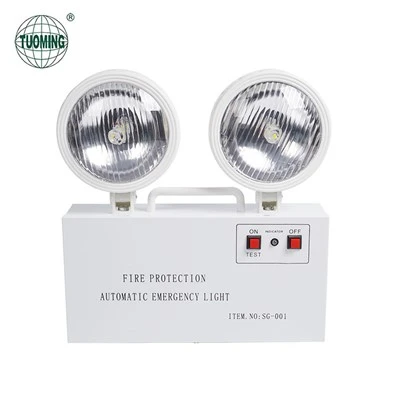
If you’re a property manager, builder, landlord, or even a small business owner who needs to check your stairwell emergency lights, or you’re renovating and need to make sure you’re up to code, don’t second-guess it. I work with all kinds of clients, from small retail shops to large apartment complexes, and I can help you pick the right lights, make sure they’re code-compliant, and even handle installation if you need it. No hidden fees, no confusing contracts, just reliable emergency lighting that keeps people safe. Hit me up to chat through your needs, get a quote, or ask any questions you have—no pressure, just straight talk about keeping stairwells dark-outage-proof.
Explosion-proof Emergency Lights References:
- National Fire Protection Association (NFPA) 101: Life Safety Code, 2021 Edition.
- European Committee for Standardization (CEN): EN 1838:2019, Emergency Lighting.
- International Building Code (IBC) 2021, Chapter 10: Means of Egress.
- Occupational Safety and Health Administration (OSHA): 29 CFR 1910.37, Exit Routes, Emergency Action Plans, and Fire Prevention Plans.
- National Electrical Manufacturers Association (NEMA): Standard for Emergency Lighting Systems, LP-1.
Zhongshan Tuoming Lighting Technology Co., Ltd.
As one of the leading emergency ceiling lights manufacturers and suppliers in China, we warmly welcome you to buy advanced emergency ceiling lights in stock here from our factory. All customized products are with high quality and low price.
Address: No.1, 10th Floor, No.17, Tongfu South Road, Guzhen Town, Zhongshan City, Guangdong Province
E-mail: 1989355847@qq.com
WebSite: https://www.tuominglight.com/
