Alright, let’s cut to the chase—if you’ve ever hung around a manufacturing floor, worked in electronics R&D, or even chatted with a procurement team that’s deep in supply chain hell, you’ve probably heard someone mutter “EOL test equipment” like it’s some kind of industry secret code. Let’s be real, at first glance, those three letters sound like jargon made just to confuse people who don’t live and breathe test gear. But here’s the thing: I’m a test equipment supplier, and I hear this question at least twice a week from engineers, buyers, even interns who just got thrown onto a line project. So let’s break this down like we’re grabbing a coffee after a long day, no stuffy textbooks, no corporate buzzwords. Test Equipment

First off, EOL doesn’t mean “End Of Life” (wait, it does, but not how you’re probably thinking). Most people throw that definition around like it’s a single thing, but let’s get specific: EOL stands for End-of-Line. And when we pair that with “test equipment”? That’s the gear that hangs on the very last step of a production line, right after a product is assembled, packed, and ready to ship. It’s not the same as the lab test gear you use to prototype a new part in a clean room—this is the workhorse that’s there to make sure every single thing that rolls off the line works exactly how it’s supposed to, every single time.
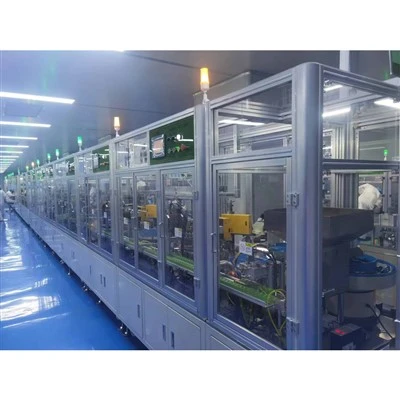
Let me set a scene for you. Imagine we’re on a small-scale assembly line for, say, wireless earbuds. You start with tiny circuit boards, soldering stations, pick-and-place machines stacking batteries and speakers, all that messy building stuff. By the time a pair of earbuds is nearly done, it’s a little plastic case with a couple of circuit boards inside, a charging cable, and that’s it. Now, what if one of the Bluetooth chips is faulty, or the battery’s got a short, or the touch sensor doesn’t work? That’s where EOL test equipment steps in. This isn’t some high-tech lab setup with a guy in a white coat—this is a rig bolted to the end of the line, with automated clamps that grab each earbud pair, run a quick series of checks, and spit out a “pass” or “fail” in like three seconds. If it fails, it kicks it into a reject bin so no bad products get sent to customers. That’s EOL test equipment in a nutshell.
Now, I know what you’re thinking: “Why not just do this earlier? Like, test each component as you put it together?” Trust me, we get that. And some companies do partial testing at various stages, but EOL testing is non-negotiable for two big reasons. First, even if every single part was tested before assembly, putting them together can break stuff. A solder joint might be cold, a cable might get crimped wrong during packaging, a tiny plastic tab could press on a circuit board and cause a short. You can catch those tiny assembly mistakes at the end, because that’s the last chance before the product hits a customer’s doorstep. Second, for high-volume production, speed is everything. A good EOL test rig can handle hundreds of units an hour, way faster than any human could, and it doesn’t get tired or skip a test when it’s 2 a.m. on a Saturday run. That’s why every reputable manufacturer—from consumer electronics to medical devices, even aerospace parts—depends on this gear.
Let’s get into the nitty-gritty of what EOL test equipment actually does, though, because it’s not just a single machine. I’ve seen people call every test gear under the sun “EOL,” and that’s a mistake. For earbuds, that rig I mentioned runs Bluetooth signal strength tests, battery life checks, touch sensor response, maybe even the audio quality of both buds together. For a medical device like a blood glucose meter, EOL equipment would check that the meter reads test strips correctly, that the display works, that the power button responds, and that there’s no leakage from the battery compartment. For automotive parts—wait, cars have so many electronic parts now, right? A modern car’s infotainment system, or even a brake sensor, has EOL testing too. It might run a full diagnostic on the electronic control unit (ECU) to make sure it’s communicating with other car systems correctly, no error codes popping up.
What’s cool (or frustrating, depending on how you look at it) is that EOL test equipment is custom, mostly. You can’t just buy a one-size-fits-all rig. Every product is different. A smartwatch needs way different tests than a industrial sensor for a factory. So as a test equipment supplier, half our job isn’t just selling gear—it’s sitting down with the manufacturer, listening to their product specs, their production line speed, their error rate goals, and building a rig that fits exactly what they need. Some clients want a fully automated line with robotic arms that load and unload units, others want a smaller, semi-automated rig that works with their existing line. It all comes down to what their specific EOL test requirements are.
Wait, let’s clear up that earlier confusion about EOL meaning End Of Life. Yeah, in supply chain, EOL also means when a product reaches the end of its lifecycle, when the manufacturer stops making it. But when paired with “test equipment,” that’s not the definition we’re using here. That’s a common mix-up, and I hear it all the time. I once had a procurement guy email me asking for “EOL test equipment for our old line” and he meant he wanted test gear for the end of his current line, not gear to test products that were already past their sell-by date. So that’s a quick heads-up if you’re ever Googling this stuff—read the context, not just the three letters.
Now, let’s talk about why this matters to you, whether you’re a production engineer, a quality control manager, or someone who just wants to make sure the product you buy works. Bad EOL test equipment is the reason you buy a wireless charger that dies after a week, or a smart watch that pairs with your phone for two days then won’t connect. If your line has a cheap, outdated EOL rig that skips tests because it’s slow or broken, those faulty products slip through. On the flip side, good EOL test equipment catches every single flaw, reduces waste (you don’t have to throw away whole batches of products because one failed a test), and saves you money long-term. I’ve had a client tell me that after we upgraded their EOL test rig, their return rate for electronic devices dropped by 18% in six months. That’s not a trivial number—less customer returns mean less money spent on shipping, less damage to brand reputation, happier clients.
Another thing people don’t talk about: EOL test equipment has to work with their existing software and line controls. Most factories use a production management system (MES) that tracks every unit, from raw materials to shipping. Your EOL rig has to talk to that MES, log every test result, flag units that fail, and send that data back to the line managers. That’s not just a nice feature—it’s required for compliance, especially in regulated industries like medical devices or aerospace. If you’re making a pacemaker, you have to prove every single unit was tested, exactly how, so the FDA or equivalent regulatory body can sign off on it. EOL test equipment stores all that data automatically, so you don’t have to have someone logging every single test by hand. That’s a game-changer for avoiding human error there.
I should also mention that EOL test equipment isn’t just for physical products. Wait, no—wait, let’s clarify: it’s for physical products that have electronics, right? Because you can’t test a bar of soap with EOL test gear. But for any product with a circuit board, microchip, battery, or electronic component, EOL testing is key. Even things like power tools—your drill that’s supposed to run 1,000 RPM? EOL test equipment makes sure it’s actually running that speed, that the trigger works, that there’s no short in the power cord.
Now, let’s get real about some of the pain points I hear from clients. A lot of small to mid-sized manufacturers think EOL test equipment is too expensive, that it’s only for big companies like Apple or Tesla. Sure, a fully custom automated rig can cost more than a basic car, but when you factor in the cost of scrap (wasting whole units that failed tests, but you didn’t catch it), the cost of returns, the cost of brand damage, it pays for itself in months. I worked with a startup that made Bluetooth speakers a couple years ago—they were hand-testing every unit, and their line only made 50 units a day. Once they got a small, semi-automated EOL rig, they upped their production to 500 units a day, and only needed two people to man the line instead of five. That ROI was huge for them.
Another common pain point: outdated EOL test equipment that breaks down all the time, or can’t handle new product versions. Say you release a new model of your product, and it has a new microchip. Your old EOL rig can’t test that new chip, so you have to either buy new gear or modify the old one. A good test equipment supplier like us will design EOL rigs that are flexible, easy to update when your product changes, so you don’t have to start from scratch every time you tweak your design.
Let’s wrap this up with a quick recap, because I know we covered a lot. EOL test equipment stands for End-of-Line test equipment. It’s the automated (or semi-automated) gear at the end of a production line that checks every electronic product for flaws, catches assembly mistakes, ensures compliance, reduces returns, and keeps production lines running fast. It’s not just jargon—it’s a critical part of making sure the products we use every day work as advertised.
If you’re reading this and you have questions about EOL test equipment, whether you’re looking to upgrade your current line, design a new production line, or just want to learn more about how it fits into your process, I’m here to help. We work with all kinds of manufacturers, from small startups to large global companies, and we build EOL test equipment that’s tailored to your specific needs—no one-size-fits-all, no confusing sales jargon, just honest advice and gear that works. Reach out for a conversation about your EOL testing requirements, and we’ll walk through what makes sense for you.
Enclosed Integrated Lead Screw Linear Module References
- International Electrotechnical Commission (IEC) 61010: Safety Requirements for Electrical Equipment for Measurement, Control, and Laboratory Use
- "End-of-Line Testing: The Backbone of High-Volume Electronics Manufacturing" – Industrial Automation Journal, 2022
- U.S. Food and Drug Administration (FDA): Quality System Regulation (QSR) for Medical Device Testing Requirements
- "ROI Analysis of Automated EOL Test Equipment for Consumer Electronics" – Manufacturing Engineering Association, 2023
Yangning (Xiamen) Intelligent Technology Co., Ltd.
With abundant experience, we are one of the most professional test equipment manufacturers in China. As we have world-leading production equipment and strong manufacturing capabilities, we warmly welcome you to buy bulk advanced test equipment from our factory. Customized orders are welcome.
Address: Room 307-2, No.15 Duiying Road, Software Park Phase III, Torch Hi-Tech Zone, Xiamen, Fujian, China
E-mail: mia@ynautos.com
WebSite: https://www.ynautos.com/
