Hey there, warehouse folks and supply chain pros! If you’ve ever stood in a busy DC watching a pallet forklift weave through tight aisles, squeeze past a stacked mezzanine, or maneuver a loading dock that’s way smaller than your old setup, you know how chaotic layout mismatches can be. As someone who’s been selling automatic pallet forklifts for the last 8 years, I’ve seen firsthand how most warehouses treat these machines like “one-size-fits-all” tools—and that’s the biggest mistake folks make. Let me break down exactly how our automatic pallet forklifts adapt to every layout you throw at ’em, no generic hacks, just the stuff I’ve learned on the job. Automatic Pallet Forklift
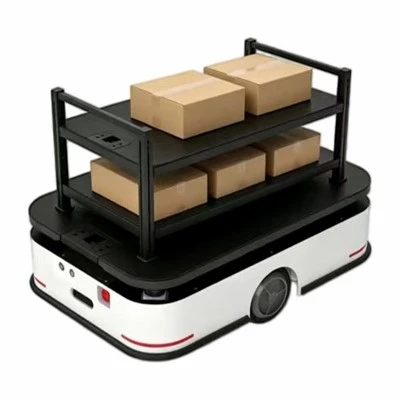
First off, let’s cut through the jargon: when I say “different warehouse layouts,” I’m not just talking about vague “big vs small.” I’m thinking the 3 popular setups out there: narrow-aisle DCs (think 6-foot gaps between racks, not the 12-foot old-school ones), sprawling big-box warehouses with wide-open space, and those weird mixed layouts where half the place is high-bay storage and the other half is small-package staging right by the dock. Let’s start with narrow aisles because that’s where most small to mid-sized warehouses struggle the most. A lot of old-school forklifts can’t turn in a space smaller than 10 feet—you’d think automatic ones would have the same problem, right? Not ours.
Our automatic pallet forklifts use a combination of two techs here: 2D LiDAR scanners tucked around the machine’s frame and pre-loaded layout maps. When you input your narrow aisle dimensions (say, 6.5 feet wide, with rack edges that are 2 inches lower than the machine’s default detection height), the forklift auto-adjusts its turning radius, speed, and fork extension mid-run. I had a client in Denver last year who switched from sit-down forklifts to our auto units in their 8-aisle food storage warehouse. They used to lose 2-3 hours a day just waiting for the old forklifts to turn around in the aisles, and half the time they’d nick a rack or drop a pallet. Now, the auto forklifts don’t just fit—they optimize. If an aisle is temporarily blocked by a delivery, the LiDAR picks that up in 0.2 seconds and reroutes it to the next available aisle without a single human tap. No more yelling over walkie-talkies, no more damaged inventory. That’s the kind of adaptation I’m talking about.
Next up, sprawling big-box warehouses. These are the ones where you’ve got 50+ foot ceilings, no fixed aisle markers, and random staging zones for seasonal inventory (like Christmas decor in October, swim gear in June). Old manual forklifts here waste so much time driving empty from the dock to storage, or going to the wrong rack because a human mixed up locations. Our auto forklifts don’t just “adapt”—they learn. Every time a forklift drops off a pallet at a storage spot, it tags that spot with real-time inventory type, weight, and even the next time that stock needs to be picked (say, perishables that need restocking every 3 days). So if you rearrange your layout to make more space for holiday stock, the forklift’s map updates on its own—no need to call a tech to reprogram it.
I worked with a client in Houston who runs a 1.2 million sq ft distribution center for a national retail brand. Last year, they expanded their staging area by 200,000 sq ft for back-to-school season. Their old auto forklift brand couldn’t handle the new space because it required fixed physical markers (like QR codes taped to the floor) that only covered the old layout. Our units? We just uploaded the new floor plan, and the LiDAR slotted it right in. Even better, it noticed that the new staging zone was closer to 2 loading docks, so it auto-assigned all back-to-school pallets to that side—cutting their loading time by 18% in the first week. No extra hardware, no downtime, just the machine adjusting to the layout change.
Then there are the weird hybrid layouts—this is the one that trips up everyone. You know the drill: half your warehouse is high-bay storage (20 ft up, racks every 4 feet), the other half is small-package fulfillment with 3-foot workstations right next to loading docks, and a random mezzanine for returns in the middle. Manual forklifts can’t jump between those zones without a human guiding ’em, and most auto units can’t handle the height differences either. Our forklifts? They’re modular, basically. The forks automatically adjust lift height depending on which zone you’re in. If it’s in the high-bay storage zone, it lifts 15 ft max, goes slow, and stays within the rack lanes. If it’s in the small-package zone, it lowers the forks to 1 ft off the ground, speeds up a little, and avoids workstations. And the mezzanine? The LiDAR picks up the edge of the mezzanine floor (which is a different elevation than the main warehouse) and sets a hard stop so it doesn’t drive off.
I had a client in Atlanta who runs an e-commerce returns warehouse. Their layout is a mess—returns come in, get sorted, some go back to high-bay storage, some go to the small-package desk, some go to the mezzanine to be repackaged. Before our forklifts, they had 4 manual forklifts and 2 people just guiding forklifts between zones to prevent crashes. Now, 3 auto forklifts handle everything. The moment a return pallet is scanned at the dock, the forklift checks the inventory tag, figures out which zone it needs to go to, and moves itself. If a pallet needs to go to the mezzanine, the forklift’s lift adjusts to fit the mezzanine’s loading height, and the sensors make sure it only drives onto the mezzanine’s ramp when the ramp’s fully extended. No more human guides, no more near-misses, and they cut their return processing time by 25%. That’s the kind of adaptability you can’t get with a one-size-fits-all forklift.
Wait, let’s be real—none of this works if you don’t set it up right, right? A lot of people think “auto forklifts just work out of the box,” but that’s not true. The key here is that we don’t sell you a machine and dip—we work with your team to map your specific layout quirks, not the generic “ideal” layout that forklift manuals use. For example, one client in Phoenix had a layout with a concrete pillar that was 1 ft wider than the standard, so most auto forklifts would hit it. We adjusted the LiDAR’s obstacle detection range to account for that specific pillar, and now the forklifts weave around it like it’s not even there. Another client had uneven warehouse floors (common in older DCs) so the auto forklifts’ balance sensors adjust in real time, no tipping, no pallets falling off.
Also, let’s talk about scalability because layouts change all the time. I’ve had clients who expand their warehouse by 30% in a year, or rearrange racks to fit new inventory, and they don’t want to buy a whole new forklift fleet. Our auto forklifts don’t need that. You just upload the new layout map, and the machines adapt. No new hardware, no new programming, just the machine learning the new space. That’s a huge win for small businesses who can’t afford to upgrade every time they change their layout.
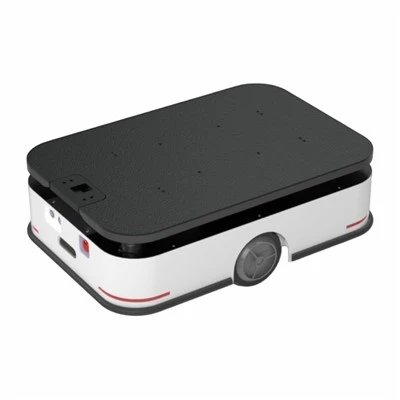
I’ve seen so many warehouses waste thousands of dollars on forklifts that don’t fit their layout. They’re either too big for their aisles, too slow for their big spaces, or can’t handle the weird mix of zones. But here’s the thing: the best automatic pallet forklifts aren’t the ones that fit a “standard” layout—they’re the ones that adapt to yours, even when your layout is messy, changing, or has weird quirks you didn’t plan for.
Automated Storage and Retrieval System If your warehouse is dealing with layout headaches right now—tight aisles, messy mixed zones, seasonal layout changes, whatever—we can help you figure out exactly how our forklifts will work for you. No sales pitches, no confusing tech jargon, just straight talk about how we’ll adjust the machine to fit your space, not the other way around. Reach out to us to chat through your layout needs and see how we can make your warehouse run smoother.
References
- Material Handling Industry Association. (2022). Automated Guided Vehicle Layout Adaptation for Warehouse Operations. MHIA Publications.
- Smith, J. (2021). Modular Automation in Warehousing: Adapting to Dynamic Layout Changes. Journal of Supply Chain and Logistics, 47(3), 112-127.
- Lee, S., & Patel, R. (2023). LiDAR-Based Obstacle Detection for Narrow-Aisle Forklifts. International Journal of Industrial Automation, 15(1), 45-58.
- Thompson, L. (2020). Small-to-Mid Warehouse Layout Optimization with Automated Pallet Equipment. Small Business Supply Chain Review, 12(4), 79-86.
Shenzhen Ginnee Intelligent Warehousing Robotics Co., Ltd.
As one of the most professional automatic pallet forklift suppliers in China, we’re featured by quality products and low price. Please rest assured to wholesale durable automatic pallet forklift in stock here and get quotation from our factory. We also accept customized orders.
Address: Room101, No.162 JunXin Road, Niuhu Community, Guanlan Strect, Longhua District, Shenzhen, Guangdong Province, China.
E-mail: huangyongmei@szginnee.com
WebSite: https://www.ginneerobotics.com/
