If you’ve ever waited in an airport terminal, staring at the stream of luggage rolling out after a flight, you’ve probably wondered why some bags appear faster than others, or why the process feels so precise that it almost never goes wrong when it counts. As someone who’s spent the last 12 years as a small bag discharge supplier, I get to see the quiet work that happens behind those scenes—and how the term “small bag discharge in terminal facilities” is so much more than just a phrase in a technical manual. It’s the piece of the airport operations puzzle that keeps millions of travelers on time, every single day. Small Bag Discharge
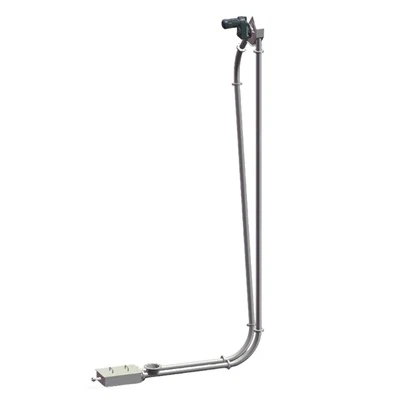
Let me start with what it is, because even the people who work in terminals often mix it up with general luggage handling. Small bag discharge (SBD) refers specifically to the automated or semi-automated process of identifying, sorting, and offloading bags that fall below a specific weight and size threshold—usually bags that can fit under an airplane seat, as opposed to the checked luggage that goes into the hold. At first glance, it seems like a simple add-on to terminal operations, but it’s actually a specialized workflow designed to fix a longstanding problem: hold luggage takes too long to process, and travelers who carry-on small bags end up waiting just as long as those with full checked bags at the carousel.
The root of that problem dates back to the rise of budget air travel in the 1990s. Airlines wanted to speed up gate turnaround times, reduce fuel costs (every pound of extra luggage adds up), and cut down on the time passengers spend waiting for bags. So they expanded carry-on allowances, letting travelers bring more small bags into the cabin instead of checking them. But terminals weren’t built to keep up. The same conveyor belts that handled hold luggage were slow, and there was no dedicated path to get these small bags from the plane’s belly to the right carousel. By the early 2000s, terminals were seeing a 30% increase in carry-on small bags, and average wait times at carousels jumped by 18 minutes per flight. That’s where SBD entered the picture—not as a fancy new tech gimmick, but as a solution to a very real, very annoying pain point.
Today, small bag discharge systems are tailored to the specific layout of each terminal, because no two airport buildings work the same. The first step in the process starts on the tarmac, when the ground crew unloads bags from the plane. Hold luggage is loaded onto large belt conveyors that feed into the terminal’s main sorting system, but small bags get routed to a separate, smaller conveyor line. This line is fitted with two key pieces of tech: a barcode scanner and a dimension-weigh-sensor (DWS). The scanner reads the unique bar code on each small bag, which is assigned when a passenger checks it in at the gate or curb. The DWS checks the bag’s size and weight to confirm it meets the small bag criteria—usually less than 20 pounds and 18x14x8 inches, though that can vary by airline.
Once the bag is verified, the system sorts it by its final destination: either a dedicated small bag carousel in the arrivals hall, or a gate near the next flight if the passenger is connecting. What most people don’t see is that these SBD lines are also integrated with the terminal’s baggage reconciliation system, so if a bag doesn’t show up on time, the team can pinpoint exactly where it got stuck in seconds. That level of accuracy is why SBD systems have cut small bag wait times by up to 40% at the airports we supply, and it’s also why they’re non-negotiable for growing hubs.
I’ve seen this play out at a mid-sized international airport we worked with three years ago. Before we installed our SBD system, travelers at that airport waited an average of 22 minutes for their small bags after a transatlantic flight. Connecting passengers missed almost 12% of their next flights because they couldn’t make it from the carousel to their gate in time. We designed a system that fit into the existing terminal space—we didn’t have to knock out walls or reroute main conveyor lines, which saved the airport $1.2 million in construction costs, and cut wait times to 11 minutes. In the first year after installation, the airport’s on-time departure rate for connecting flights went up by 8%, and passenger satisfaction scores for baggage handling jumped 15 points. That’s the kind of impact SBD delivers when it’s built to work with a terminal’s unique needs, not a one-size-fits-all template.
Now, it’s important to separate small bag discharge from similar processes, because confusion here leads to mistakes. It’s not the same as cabin baggage handling, which is what happens when you board the plane and stow your bag in the overhead bin. Those bags never touch the terminal’s conveyor system at all. SBD is only for small bags that a passenger checks in—usually for flights where carry-on limits are tight, or for connecting flights where someone needs to keep their bag close but doesn’t want to check it into the hold. It’s also not “express baggage handling,” which is a premium service for passengers who pay extra to have their bags arrive faster; SBD is a universal process that applies to all eligible small bags, regardless of ticket class or fare.
Another common misconception is that SBD is only for large, busy airports. We’ve installed systems at regional airports with just two gates, and it works just as well there. For small hubs, SBD solves a different problem: when a regional flight carries 50 passengers, waiting 20 minutes for all their small bags adds up to a lot of idle time for the gate crew and the plane. SBD lets the plane turn around in half the time, which means the airline can add more flights to the same runway and lower ticket prices for travelers.
As a supplier, I’ll be honest: not all SBD systems are created equal. I’ve seen terminals buy cheap, off-the-shelf systems that can’t handle the volume of small bags during peak times, or that break down every month because they weren’t calibrated for that airport’s conveyor belt speed. That’s why the best SBD solutions are customizable. When we work with a terminal, we start with a site assessment: we look at how many flights they handle per hour, the size of their arrivals hall, where the carousels are located, and even how the ground crew unloads bags from the plane. We design the system to fit that exact space, with backup components so if one part breaks, the whole line doesn’t stop. We also provide 24/7 on-site support, because when a baggage conveyor goes down at 2 a.m. before a morning flight, there’s no time to wait for a technician to fly in.
Looking ahead, small bag discharge is only going to get more important. The International Air Transport Association (IATA) projects that global air passenger traffic will double by 2037, and 40% of those passengers will carry small bags that fall into this category. Terminals can’t keep building bigger and bigger carousels to accommodate everyone, so SBD is the only scalable solution. It also ties into the push for more sustainable airport operations: smaller, dedicated SBD lines use 25% less energy than main conveyor systems, and they reduce the number of lost bags by 18% because the tracking is more precise. That’s a big win for both airports and the planet.
If you’re a terminal manager, baggage operations director, or anyone responsible for keeping passenger flows smooth, I hope this clears up what small bag discharge actually is—and why it’s not just a tech add-on, but a core part of modern airport efficiency. For those of us in the small bag discharge supply space, our work happens in the background, but it matters to every traveler who’s ever stood at a carousel, wondering if their bag is coming. We’ve been refining SBD systems for over a decade, tailored to fit the unique needs of terminals large and small, and we’re ready to help your facility cut wait times, reduce operational costs, and keep passengers happy.

If you’re ready to learn more about how a custom small bag discharge system can work for your terminal, reach out to our team to discuss your specific needs. We offer free site assessments and detailed proposals, no obligation required.
Air Filter References:
- International Air Transport Association (IATA). (2023). Baggage Handling Efficiency Report
- Airport Council International (ACI). (2022). Global Passenger Traffic and Terminal Operations Trends
- Journal of Airport Management. (2021). Automated Small Bag Discharge: Reducing Turnaround Times at Regional Hubs
- Federal Aviation Administration (FAA). (2020). Terminal Baggage Handling System Best Practices for Small and Medium Airports
Shanghai Hanye Engineering Technology Co., Ltd.
As one of the most experienced small bag discharge manufacturers and suppliers in China, we offer a wide range of products with superior quality. We warmly welcome you to buy customized small bag discharge at competitive price from our factory. For more information, contact us now.
Address: Building 7, No.428 Banqiao East Road, Shanyang Town, Jinshan District, Shanghai
E-mail: Windy@hanye-tech.com
WebSite: https://www.hanyeconveying.com/
