If you’ve ever wandered through a rubber factory, a ceramic lab, or even a plant making those squishy silicone phone cases, chances are you’ve walked past a Sigma-type kneader. I’ve been selling these mixers for years, and one question I get nonstop is: “Wait, can this machine actually handle what I make?” Spoiler: Yeah—way more than most people think. Today I’m breaking down every material we process with our Sigma kneaders, plus the little tricks that make them work so well (no stuffy engineering jargon, promise). Sigma-type Kneader
First, let’s keep it real: Sigma kneaders aren’t your average stand mixer. Those are for cookie dough. A Sigma kneader has two intermeshing, blade-shaped (that’s the “Sigma” part, duh) rotors that spin at slightly different speeds, like a gentle but powerful dance. They fold, push, and shear materials deep inside the mixing chamber, not just on the surface. That’s why it’s the go-to for stuff that’s thick, sticky, or won’t mix with anything else—no lumps, no inconsistent batches, just uniform results every time.
Now, let’s get into the materials. I’ll start with the big one that most folks know: rubbers. This is where Sigma kneaders dominate. But not just any rubber—we process natural rubber, synthetic rubber (think SBR, BR, NBR), even specialty stuff like silicone rubber or fluorosilicone for extreme temps. Here’s the thing about rubber: you can’t just toss raw rubber into a mixer and expect it to turn into tire tread or silicone seals. Raw rubber is a solid, elastic chunk. The Sigma blades tear it, stretch it, and break it down into a soft, workable mass. Then we add the other stuff—carbon black for color and strength, sulfur for curing, accelerators. The intermeshing rotors make sure every additive is evenly spread, no hard clusters of carbon black that would make a tire fail. We even use these kneaders for reclaimed rubber, turning old tires into new roofing materials. Most guys who do rubber manufacturing swear by Sigma kneaders— I can’t tell you how many times a plant switched from a cheaper twin-screw extruder and cut their batch time in half.
Next up: silicone materials. Silicone is weird—it’s super stretchy, sticky, and takes forever to mix if you use the wrong machine. Our Sigma kneaders handle room-temperature vulcanizing (RTV) silicone, high-temperature vulcanizing (HTV) silicone, even liquid silicone rubber (LSR) for those baby bottle nipples. The key here is temperature control. Silicone starts to cross-link (turn solid) if it gets too hot, so our kneaders have jacketed chambers that we can cool with water or glycol. The Sigma blades gently shear the silicone without generating too much heat, and we can add pigments, platinium catalysts, and release agents all while it’s moving. I once had a customer who was making silicone baking mats—they were using a hand mixer before, and every batch had bubbles. Now they use our Sigma kneaders, and bubbles are gone. Win.
Then there’s adhesives and sealants. This is a huge market for us—things like hot melt adhesives, construction sealants, industrial adhesives for wood or metal, even pressure-sensitive adhesives (PSAs) for labels. Adhesives need to be thick, consistent, and have just the right viscosity to stick well. The Sigma kneader’s shear force is perfect here. For hot melts, we melt the base polymer (like EVA) in the chamber, then add fillers like wax, tackifiers, and antioxidants. The rotors mix it so thoroughly that the adhesive doesn’t separate when it’s poured or applied. For construction sealants (the caulk you use around windows), we add silicone or acrylic polymers, plus calcium carbonate fillers to make it thick and non-sag. A lot of sealant makers use Sigma kneaders because they can handle the high viscosity without spilling or leaving unmixed chunks. I had a guy who made marine sealants—he was using a planetary mixer before, and the sealant would split into oil and solids after a month. Now with our Sigma kneader, the shelf life is three times longer.
What about ceramics? Wait, ceramics? Yeah, we do that too. Not just the pottery you make in a class—advanced ceramics for electronics, automotive parts, even dental implants. Ceramic materials start as a powder, and you need to mix them with a binder (like paraffin or acrylic resin) to make them moldable. The Sigma kneader can handle ceramic powders mixed with liquids, pastes, even high-viscosity slurries. For example, lithium-ion battery ceramic separators—you mix alumina powder with a binder and solvent, then the Sigma kneader ensures the powder is evenly dispersed, no clumps that would break the separator. Dental ceramics for crowns: we mix zirconia powder with a binder to make a paste that you can inject or mold, and the Sigma kneader makes sure the particle size is consistent, so the crown is smooth and strong. Most ceramic labs and factories hate mixing powders because they get dusty, but our Sigma kneaders are sealed, so less mess and better worker safety.
Oh, and polymers and plastics. Not just plastic bottles—engineering plastics, like polycarbonate, nylon, PET, even specialty plastics like PEEK for aerospace. We process thermoplastics that need to be compounded with additives: UV stabilizers, flame retardants, glass fibers. Glass fibers are tricky because they break if you mix them too hard, but the Sigma blades’ gentle shearing action keeps the fibers intact, which is crucial for strength. If you mix glass fibers too roughly, they turn into short strands and the plastic becomes weak. I once had an aerospace customer making PEEK parts for jet engines—they were mixing glass-filled PEEK, and with a twin-screw extruder, the fibers were too short. They switched to our Sigma kneader, and the part passed all the FAA strength tests. Now they use four of our units.
Wait, what about stuff that’s not super industrial? We handle food-grade materials too—like specialty chocolates, chewing gum, even herbal extracts for supplements. Of course, these have to meet FDA standards, and our Sigma kneaders are built with stainless steel, easy to clean, no crevices where food can get stuck. For example, chewing gum: base material (gum arabic, latex) is mixed with sugar, corn syrup, flavors, and colors. The Sigma kneader’s heat (we can run it at low temps to keep the flavors from burning) mixes the gum base into a smooth, uniform mass, so every piece of gum tastes the same. A big candy company I work with uses our kneaders for their sugar-free gum line—they couldn’t get the mixing right with old machinery, and now their gum has no grainy texture. We even do natural peanut butter for some artisanal brands—mixing roasted peanuts with salt and oil, no added fillers, and the Sigma kneader blends it so creamy without separating.
Now, let’s talk about what doesn’t work in a Sigma kneader, because I don’t want to mislead anyone. It’s not great for super-low viscosity liquids—like water or thin solvents. Those would just slosh around, not mix. Also, materials that are super abrasive (like raw diamond powder) can wear down the Sigma blades over time, though we do offer hard-faced blades for that. And if you need a continuous production line (where material goes in one end and comes out the other right away), Sigma kneaders are usually batch-based, so they’re better for small to medium batches, or large batches that are made in chunks. That said, a lot of people don’t know we make semi-continuous Sigma kneaders too, so that’s a middle ground.
One thing I always emphasize to customers is customization. Not all Sigma kneaders are the same. We can adjust the rotor speed, temperature (from below room temp to 300°C, depending on the model), chamber size, even the blade shape to match your material. If you’re mixing sticky silicone, we’ll use blades with a non-stick coating. If you’re mixing ceramics, we’ll use stainless steel blades that don’t contaminate the material. If you’re processing food, we make sure every part is easy to take apart and sanitize in minutes.
I’ve been in this game long enough to know that picking the right mixing equipment is make or break. A bad mix can ruin an entire production run, cost you thousands, and make your customers unhappy. I’ve seen guys waste money on the wrong machine because they didn’t realize Sigma kneaders handle such a wide range of materials. The best part? They’re not just for big factories—we have mini Sigma kneaders for R&D labs, so a startup working on a new adhesive or a small ceramic company can test their material first before buying a big unit.
At the end of the day, the Sigma-type kneader isn’t just a machine—it’s a workhorse that adapts to what you need. Whether you’re making tires, silicone baking mats, marine sealants, dental implants, or sugar-free gum, there’s a Sigma kneader that can get the job done right. If you’re tired of lumpy batches, inconsistent mixes, or machinery that can’t keep up with your material’s unique properties, I’d love to chat. We can talk through your exact material, batch size, and production needs, no sales pitch—just honest advice. Let’s find out if a Sigma kneader is the right fit for you.
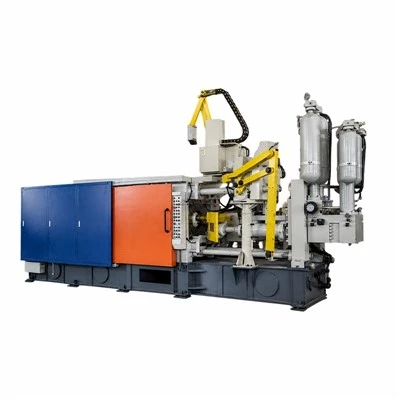
Medium-sized Die Casting Machine References
Sigma Mixers: Principles and Applications. Industrial Mixing Research Institute, 2021.
Rubber Compounding Technology for Modern Manufacturing. Rubber Chemistry and Technology, Vol. 95, No. 2, 2022.
Silicone Processing Equipment and Quality Control. Journal of Polymer Processing, Vol. 38, No. 4, 2023.
Adhesive Formulation and Mixing Kinetics. International Journal of Adhesion and Adhesives, Vol. 112, 2022.
Nantong Hengming Machinary Co., Ltd.
As one of the most professional sigma-type kneader manufacturers and suppliers in China, we also support customized service. Please feel free to buy advanced sigma-type kneader for sale here and get pricelist from our factory. Quality products and reasonable price are available.
Address: B201, Rugao E-Commerce Industrial Park, No.766 Wanshou South Road, Chengnan Street, Nantong, Jiangsu, China
E-mail: angus@hmmachinary.com
WebSite: https://www.hmmachineries.com/
